
Deputy Interior Minister: Central and Regional Synchronisation Crucial for 2027 Government Work Plan
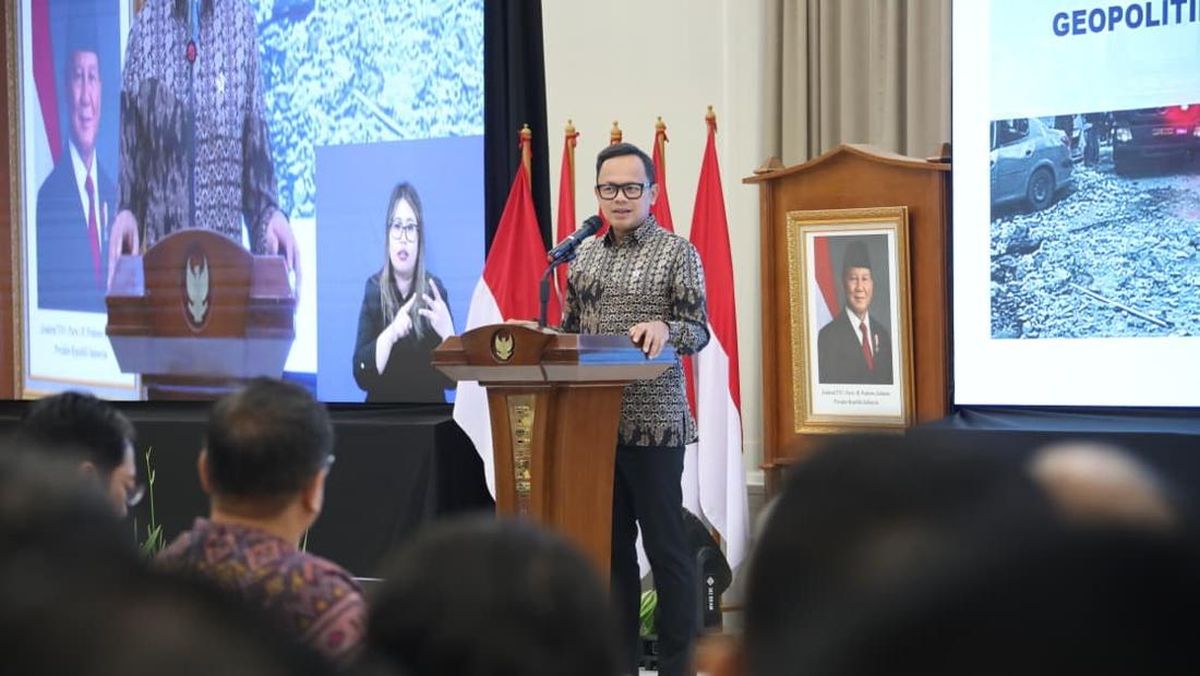
Deputy Interior Minister (Wamendagri) Bima Arya Sugiarto has emphasised the importance of synchronising central government and regional government (Pemda) programmes in preparing the 2027 Government Work Plan (RKP). Alignment of planning and budgeting is key to ensuring that national priority programmes can be implemented effectively at the regional level. He made these remarks as the keynote speaker and provided guidance at the Central Development Coordination Meeting (Rakorbangpus) for the preparation of the 2027 RKP, held in the Djunaedi Hadisumarto Meeting Room at the Ministry of National Development Planning (PPN)/National Development Planning Agency (Bappenas) in Jakarta on Thursday (7/5). According to him, the current synchronisation is crucial in the context of Indonesia’s development journey. This is because regional heads now face challenges that are far different from previous generations. “The challenges now are very different,” he stated. Bima noted that regional heads currently face at least three main challenges: geopolitical challenges at the global level, escorting national priority programmes at the national level, and political promises and public expectations at the local level. Nevertheless, he stressed that the most fundamental requirement is the implementation of Minimum Service Standards (SPM), covering education, health, public works, people’s housing, public security and order, and social protection (Trantibumlinmas), as well as social services. “Well, in Law Number 23 of 2014, this is clear; we have guidelines for carrying out that synchronisation. The Interior Ministry, together with the Ministry of Planning, ensures that synchronisation occurs,” he explained. Bima said that if those six SPMs are not yet running optimally, then synchronisation of central and regional programmes will be difficult to achieve. The reason is that all SPMs must be included in planning documents, budgeted through programmes, and have clear performance targets. Therefore, the Interior Ministry continues to evaluate regional governments that still face obstacles in implementing those programmes. “We ensure whether they are able or not to [meet] the most minimal Minimum Service Standards. This is our homework. Meaning, before we talk about national priority programmes, how about these (SPM),” he said. Bima also emphasised that good implementation of national strategic programmes in the regions can serve as a lever for development progress. He cited the good practice by the Jambi City Government in escorting various national priority programmes, which has enabled support for regional development financing. “Coincidentally, last week we just visited there, Jambi City; after calculating, it’s because the mayor is quite agile too, development financing support from everywhere, the amount is almost equal to its own regional budget, two trillion,” he said. Bima urged regional governments to maintain consistency in planning and budgeting documents. In addition, he also emphasised the importance of alignment with the eight national priority clusters, compliance with mandatory spending, fiscal innovation and investment facilitation, as well as strengthening regional development synergies. The Rakorbangpus was also attended by the Minister of PPN/Head of Bappenas Rachmat Pambudy, Head of BPS Amalia Adininggar Widyasanti, Deputy Minister of Finance Juda Agung, and representatives of Regional Development Planning Agencies (Bappeda) from across Indonesia.