
Deputy Home Affairs Minister: Population Data Integration Strengthens Security Stability
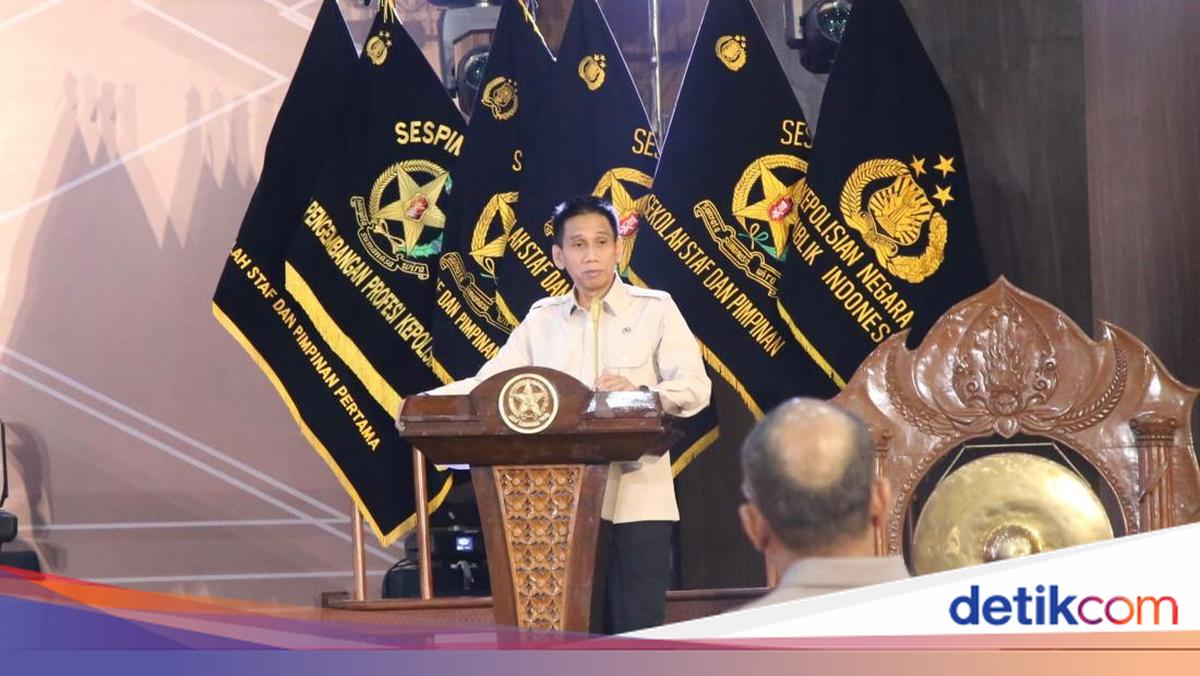
Deputy Minister of Home Affairs (Wamendagri) Akhmad Wiyagus has asserted that the integration of population and regional data serves as a strategic instrument in maintaining domestic security stability amidst increasing global volatility and the proliferation of threats in the digital space.
According to Wiyagus, geopolitical dynamics, economic uncertainty, climate change, and the acceleration of technological transformation demand accurate and accountable data-based decision-making.
“That is why we, as leaders, can no longer rely on conventional methods in deciding something, but must truly be data-based. When speaking of technocracy, decisions must be based on facts and data,” Wiyagus said in a written statement on Friday (19/6/2026).
He conveyed this during the 2026 Police Staff and Leadership School (Sespim) Seminar at the Police Education and Training Institute (Lemdiklat Polri), themed ‘Data-Based Leadership to Face Global Volatility in Order to Realise Domestic Stability’, held at the Oetaryo Building in Lembang, West Bandung Regency, West Java.
Wiyagus explained that the Ministry of Home Affairs (Kemendagri) continues to strengthen the integration and utilisation of population and regional data to support effective governance while maintaining national stability.
He added that integrated population data plays a crucial role in supporting public services and law enforcement, ranging from identity verification and individual identification to case disclosures, which can be carried out more quickly, accurately, and accountably through digital technology support.
Wiyagus also highlighted the growing threats in the digital space in line with changes in the global strategic environment.
“The most significant impact of this phenomenon is the massive migration of crime to the digital ecosystem, such as online fraud, human trafficking, and artificial intelligence-based disinformation,” Wiyagus stated.
According to Wiyagus, law enforcement officers need to prioritise adaptive leadership by utilising data and technology in real time for decision-making, both for the prevention and handling of security disturbances.
In line with this, Kemendagri continues to provide population data utilised by various ministries and agencies, including the Indonesian National Police (Polri).
“This population data is integrated as a strategic infrastructure and the backbone supporting police duties,” Wiyagus stressed.
Furthermore, he said, the strengthening of this data governance is supported by various national regulations that form the basis for data integration and the acceleration of digital government transformation.
On another note, Wiyagus invited the participants of the Police Sespim Lemdiklat to strengthen inter-agency interoperability, comply with regulations in the use of public data, and increase public trust through professional, accountable, and technology-based services.