
Deputy Home Affairs Minister Bima: Government Working Hard on Comprehensive SOE Overhaul
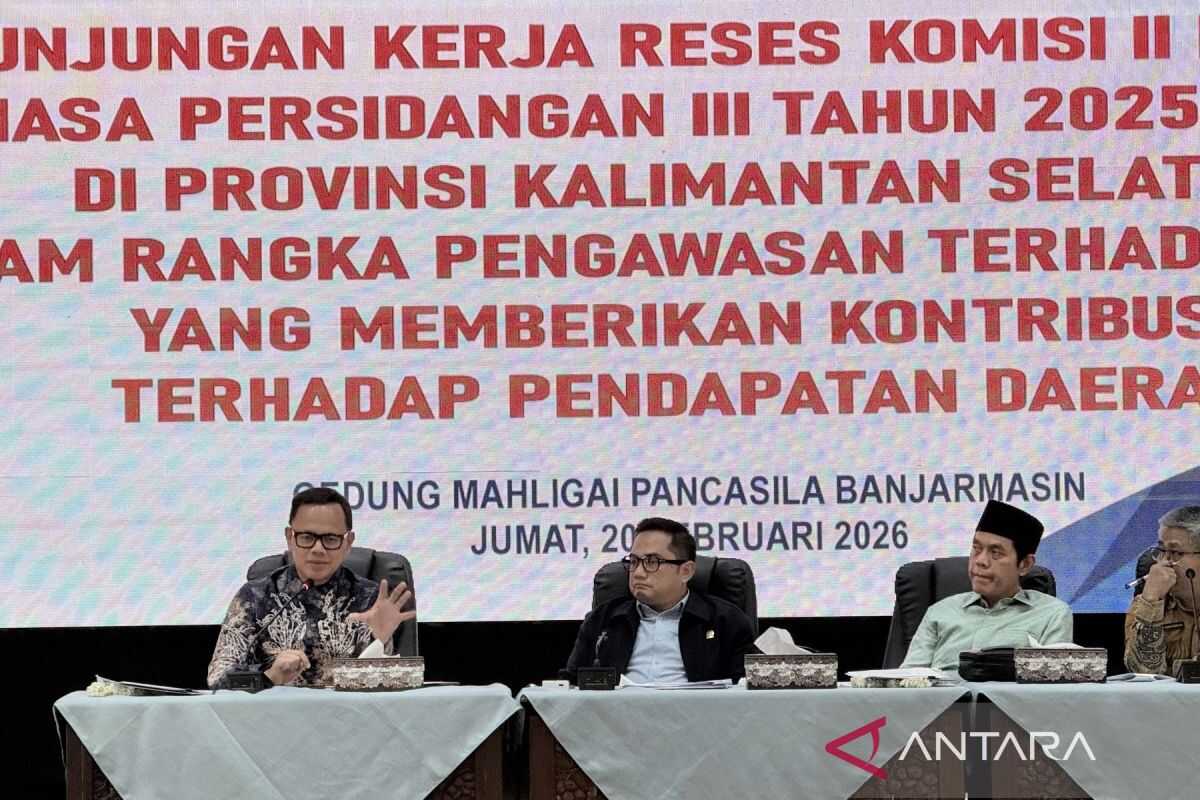
Deputy Minister of Home Affairs Bima Arya Sugiarto has affirmed that the government is working hard to carry out a comprehensive overhaul of state-owned enterprises (BUMN) and regional government-owned enterprises (BUMD) in order to strengthen governance, restore the health of state finances, and ensure alignment with fundamental public interests.
“The President has outlined how mismanagement has plagued the running of SOEs. Approximately Rp5,400 trillion in credit has been disbursed, the vast majority to corporations,” said Bima Arya during a working visit by House of Representatives Commission II during the recess of the Third Session Period 2025–2026 in Banjarmasin, South Kalimantan, on Friday.
He stressed that the management of state finances must serve the most fundamental public interests.
“The reform of SOEs at the central level must be accompanied by improvements in BUMD governance at the regional level. The Ministry of Home Affairs holds three principal roles — synchronisation, acceleration, and synergy between central and regional governments — to ensure policies move in the same direction and reinforce one another,” he said.
He argued it would be inappropriate for SOEs to undergo serious reform at the central level whilst BUMDs continue to face fundamental problems ranging from governance and capitalisation to a lack of clarity over their dual functions of public service delivery and regional revenue generation.
To that end, the Ministry of Home Affairs and House Commission II are endeavouring to conduct a comprehensive overhaul of the regulations and management systems governing BUMDs.
Bima Arya said the government’s presence also serves as an early warning to regional heads to prepare for adjustments.
“This is a wake-up call to the regions that there will be a new way of doing things. At the central level there is a new approach to managing SOEs, and at the regional level there will likewise be a new approach to synergising, maximising, and restoring the health of BUMDs,” he said.
One of the principal instruments of this reform, he explained, is the draft BUMD Bill to be deliberated with House Commission II, which contains a number of fundamental changes in substance to clarify the position and future policy direction of BUMDs.
First, the separation of regional governments’ roles as regulators and as capital owners. To date, the position of regional governments has been considered insufficiently clear-cut, creating the potential for conflicts of interest. Going forward, Bima said, BUMD management will be designed to be more professional, with mechanisms such as general meetings of shareholders and clearly defined ownership compositions.
Second, the establishment of firm key performance indicators (KPIs). Bima explained that BUMDs have long been caught in a dilemma between fulfilling public service functions and pursuing locally generated revenue. The bill will distinguish between KPIs for service delivery and KPIs for financial performance to eliminate overlap.
Third, the provision of greater flexibility in capitalisation and asset management. Bima said that access to capital will be designed to be more adaptive whilst maintaining accountability, so that BUMDs are not perpetually hampered by lengthy procedures yet remain within a strict supervisory framework.
“All of these efforts are being undertaken to restore the health of BUMDs, in line with the President’s commitment to reforming SOEs. We want BUMDs to be more professional, transparent, and to deliver tangible benefits for the public. This is a collective endeavour to strengthen the foundations of the national economy from the centre to the regions,” said Bima Arya.