
Deputy Finance Minister Confirms National Budget Can Withstand Oil Prices up to US$90 per Barrel
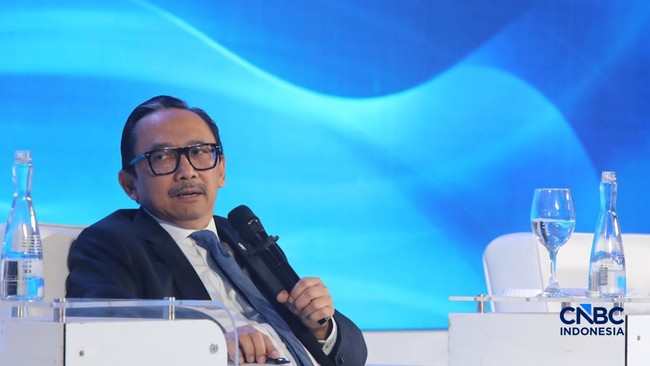
Jakarta — Deputy Finance Minister Juda Agung has affirmed that Indonesia’s economic fundamentals remain solid amid rising global uncertainty, including geopolitical conflicts. Juda assured that Indonesia’s national budget is managed prudently and flexibly.
“Our economic fundamentals remain strong and resilient. Economic growth is being maintained, inflation is under control, and fiscal deficits remain below statutory limits,” he stated during the National Leadership Conference of the Indonesian Muslim Student Movement Alumni Association (IKAPMII) in Jakarta on Monday, 8 March 2026.
Regarding geopolitical conflicts that could drive oil price increases, Juda stated the government has prepared various scenarios to maintain fiscal stability. He confirmed that Indonesia’s fiscal position can still anticipate oil price increases up to US$80-90 per barrel whilst maintaining a deficit below 3%.
Despite these risks, domestic economic performance remains solid. Juda reported that Indonesia’s economic growth in 2025 reached approximately 5.11%, with fourth-quarter growth reaching around 5.39%. Meanwhile, the fiscal deficit remains controlled at below 3%, specifically around 2.92%, in accordance with the State Finance Law.
Regarding debt, Indonesia’s debt-to-GDP ratio remains relatively safe at around 40%, well below the statutory maximum threshold of 60%. According to Juda, these conditions demonstrate Indonesia’s economic resilience compared with several other countries with equivalent credit ratings.
He stressed that these fundamental conditions represent an important foundation for Indonesia to achieve its target of becoming a developed nation by 2045. Currently, Indonesia’s per capita income stands at around US$5,000, whilst the developed nation standard is above US$13,000 per capita annually.
Juda believes Indonesia’s demographic dividend advantage, extending until approximately 2035-2040, must be leveraged to accelerate economic growth. “If we miss this period, we risk becoming an old nation before becoming wealthy,” Juda cautioned.
Therefore, the government is targeting higher economic growth, reaching as high as 8%, to avoid the middle-income trap. To support this development agenda, the government has designed the 2026 national budget focused on strengthening long-term development. Total state spending is estimated to reach Rp3.847 trillion, with revenues of approximately Rp3.153 trillion, maintaining a deficit at around 2.68% of GDP.
Juda remained optimistic that first-quarter 2026 economic growth could exceed last year’s final quarter performance, driven by the Ramadan momentum and holiday allowance distributions, with baseline growth projected at 5.5%.