
Deputy Environmental Minister: Waste Management Must Improve, Violations Must Be Reduced
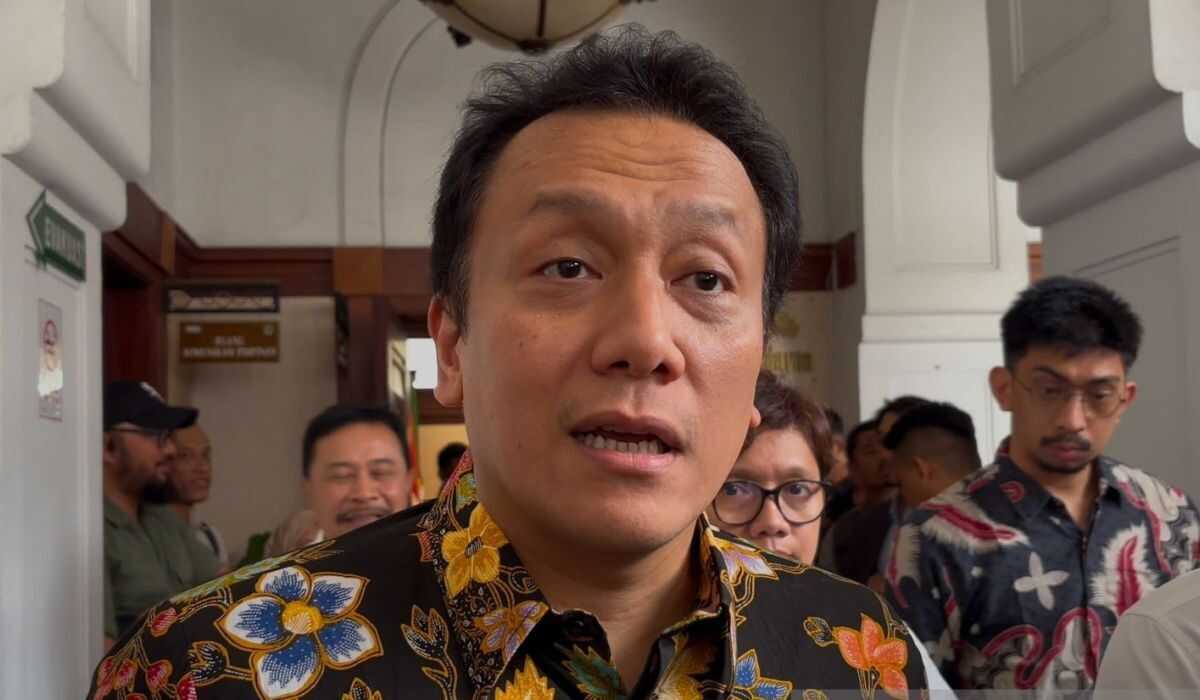
Deputy Minister of Environment and Head of the Environmental Control Agency, Diaz Hendropriyono, has assessed that national waste management performance still requires significant improvement. He emphasised that increases in management achievements must be accompanied by reductions in the number of legal violations in the waste sector.
“All waste management figures must rise—TPS3R must increase, TPST numbers must rise, RDF quantities must increase. But there is one figure that must fall: the number of cases (violations in the waste sector), so as to demonstrate that management is functioning properly,” Diaz stated on the second day of the National Waste Management Coordination Meeting 2026 at Balai Kartini in Jakarta on Thursday, 26 February.
Diaz noted that waste management has become an urgent issue requiring immediate action through cross-sectoral collaboration and active public participation. Management cannot be limited to downstream interventions but must be strengthened from the source in accordance with the existing regulatory framework.
“There are authorities and responsibilities assigned to provinces and regencies/cities under Law 18/2008. This legislation comprehensively sets out guidance for the public, government powers, and enforcement sanctions,” he explained.
He added that the central government through the Ministry of Environment continues to exercise supervisory functions should regional governments fail to take necessary action as mandated by applicable regulations.
“It must also be emphasised that waste management is a complex problem. According to applicable legislation, Law No. 32 of 2009 and Law No. 18 of 2008, the Ministry of Environment/Environmental Control Agency can act as a second line of enforcement when, for instance, a governor fails to take action against a regency or city,” he clarified.
On this occasion, Diaz also commended several regions that successfully improved waste management and obtained Certificates Towards Clean Cities, including Surabaya, Balikpapan, and Ciamis.
“Congratulations to the regions that yesterday received Certificates Towards Clean Cities: Surabaya, Balikpapan, and Ciamis. Hopefully next year some may obtain the Adipura award, or even in subsequent years achieve Adipura Kencana status,” he said.
The National Waste Management Coordination Meeting 2026, held on 25–26 February, was attended by the Coordinating Minister for Food Affairs Zulkifli Hasan, Minister of Environment and Head of the Environmental Control Agency Hanif Faisol Nurofiq, Minister of Home Affairs Tito Karnavian, Minister of Population and Family Development and Head of the National Population and Family Planning Board Wihaji, Deputy Minister of Villages and Development of Disadvantaged Regions Ahmad Riza Patria, and various ministry and agency officials alongside regional leaders from across Indonesia.
Through this forum, the government has targeted national waste management coverage reaching 63.41 per cent by 2026 and increasing to 100 per cent by 2029. This target is expected to suppress legal violations in the waste sector whilst improving the overall and sustainable waste management system throughout Indonesia.