
Deputy Coordinating Minister Otto: Restorative Justice a Pillar of Health Law Enforcement
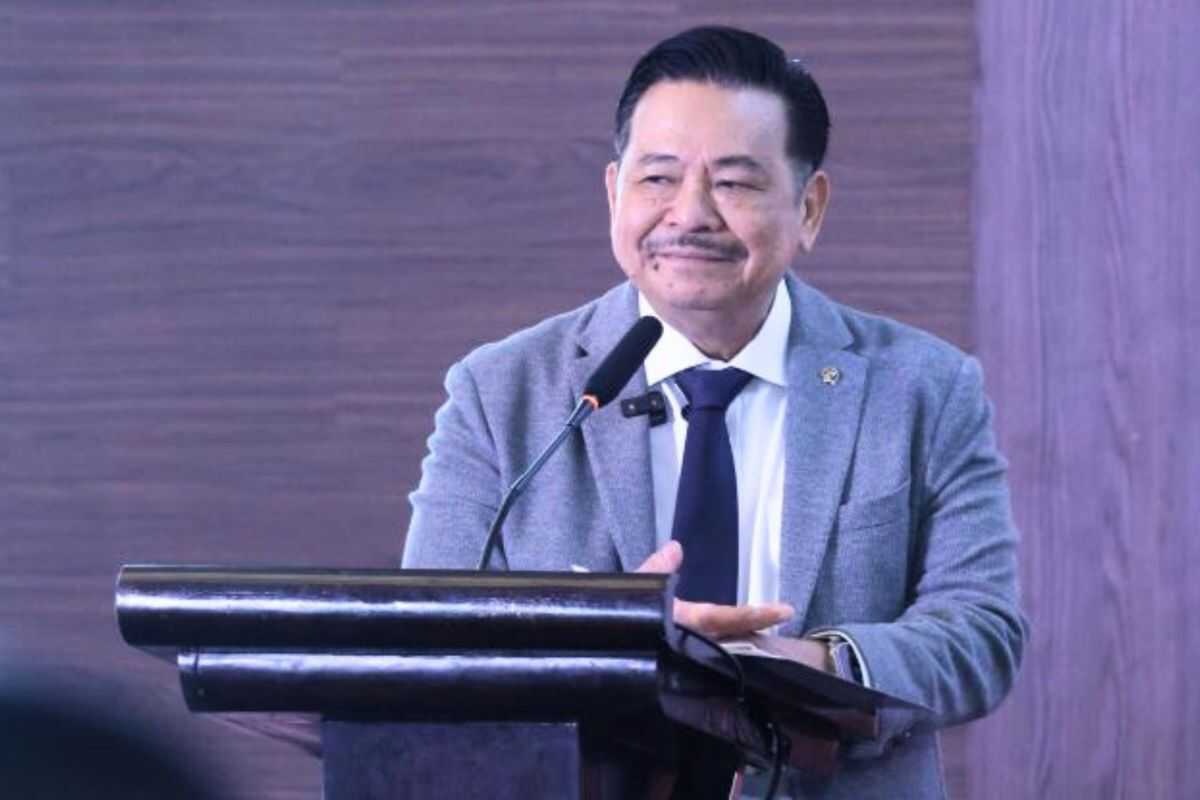
Jakarta (ANTARA) - Deputy Coordinating Minister for Law, Human Rights, Immigration and Corrections Otto Hasibuan has affirmed the importance of applying a restorative justice approach in health law enforcement.
Speaking at the Meet The Professors and Friends (Me-Prof) Symposium and Workshop in Bandung, West Java, on Saturday (14/2), he described this as part of the transformation of the national criminal law system towards one that is fairer, more humane and oriented towards recovery.
“Law Number 17 of 2023 on Health has encouraged the application of restorative justice in the resolution of medical disputes, with an emphasis on restoring the relationship between medical professionals and patients as well as resolving cases in a just manner,” Otto said, as quoted from a statement confirmed in Jakarta on Tuesday.
The restorative justice approach in the health sector, he said, represents an important step in preventing the criminalisation of medical professionals who have worked in accordance with professional standards, whilst simultaneously ensuring that patient rights remain optimally protected.
He stated that the government, particularly the Coordinating Ministry for Law, Human Rights, Immigration and Corrections, continues to promote cross-sectoral policy harmonisation to ensure the effective implementation of the Health Law.
This harmonisation is necessary to strengthen the standing of recommendations from the Professional Discipline Council (MDP) as a basis for the application of restorative justice and to create legal certainty in the resolution of medical disputes.
Otto also called for the development of integrated national guidelines for law enforcement officials and relevant stakeholders to ensure that the application of restorative justice proceeds consistently, transparently and fairly.
The Deputy Coordinating Minister emphasised that medical professionals practise their profession based on two principal instruments: compliance with legislation and adherence to the professional code of ethics.
“These two instruments form the foundation for guaranteeing the professionalism of health workers whilst simultaneously providing legal protection for both patients and medical professionals,” he said.
He also highlighted the strategic role of the MDP in the health law enforcement process. According to him, MDP recommendations serve as an important basis for law enforcement officials in determining the continuation of case handling, ensuring that legal proceedings take into account professional aspects, service standards and protection for all parties.
Indonesia’s criminal law system has entered a new chapter with the enactment of Law Number 1 of 2023 on the Criminal Code (KUHP), which officially came into force on 2 January 2026.
This reform, Otto continued, represents an important milestone in the transformation of national criminal law, not only symbolically but also in strengthening law enforcement governance that is fairer, more accountable and oriented towards legal certainty.
He added that the Criminal Code reform has been accompanied by the passage of Law Number 20 of 2025 on the Criminal Procedure Code (KUHAP), which aims to ensure that the implementation of criminal law norms proceeds effectively and in an integrated manner.
The national criminal law reform carries a strategic mission: decolonialisation through the replacement of colonial-era regulations, democratisation by strengthening Pancasila values, consolidation of the national criminal law system, and adaptation and harmonisation with developments in science and international norms.
The Deputy Coordinating Minister explained that the new national Criminal Code paradigm prioritises corrective, rehabilitative and restorative approaches. This approach is not solely oriented towards punishment but also emphasises the comprehensive restoration of relationships between offenders, victims and the community.
Accordingly, he stated that the current national criminal law paradigm positions restorative justice as an important instrument in achieving justice oriented towards recovery.
“This approach provides space for the resolution of cases in a more constructive, fair and humane manner,” Otto said.
Nevertheless, he cautioned that synergy between the government, academia and the health professions is key to building a health law system that is fair and oriented towards public protection.
The event was organised by the Department of Obstetrics and Gynaecology at the Faculty of Medicine, Padjadjaran University. It was attended by professors, specialist doctors, academics and health workers, serving as a scientific forum to strengthen synergy between the medical world and the national legal system.