
Deputy Chair of MPR States Indonesia's Carbon Industry Development is On The Right Track
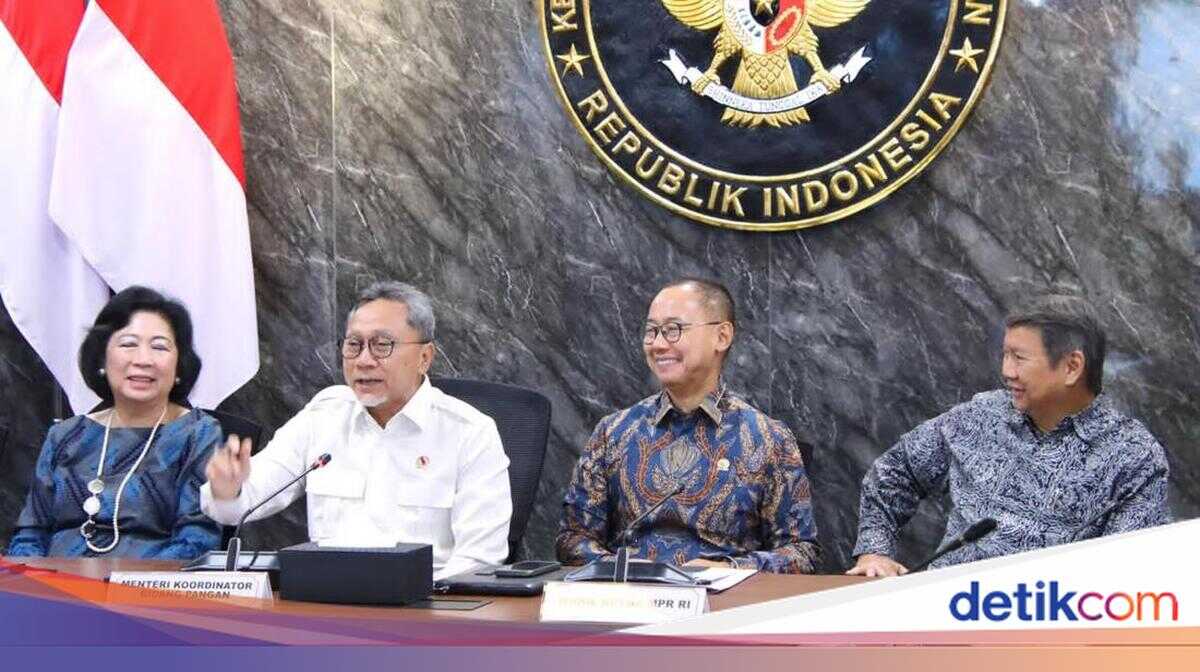
Deputy Chair of the People’s Consultative Assembly (MPR) of the Republic of Indonesia from the National Mandate Party (PAN) faction Eddy Soeparno has stated that the progress of Indonesia’s national carbon industry development is already on the right track.
Soeparno made this statement after attending and providing input at a Limited Coordination Meeting of the Carbon Economy Steering Committee (Komrah), chaired directly by the Coordinating Minister for Food Zulkifli Hasan, on Friday, 27 February in Jakarta.
“Today’s Komrah meeting is extremely important because what we are building is not merely a carbon trading mechanism, but the foundation of Indonesia’s carbon economy that will determine the direction and competitiveness of the nation in the future,” Soeparno said in a statement on Saturday, 28 February 2026.
“We truly appreciate the leadership of the Coordinating Minister for Food, who is directly implementing Presidential Regulation 110 of 2025 on Carbon Economic Value by coordinating all ministries and agencies and resolving various obstacles in the process of establishing the carbon economy sector,” he continued.
Further, Soeparno stated that many carbon projects are currently prepared for launch. However, the process awaits the establishment of a carbon trading ecosystem that is currently being coordinated.
“Policy stakeholders, including the Ministry of Environment and the Financial Services Authority (OJK), are currently preparing a recording system known as the Carbon Unit Registration System (SRUK),” Soeparno explained.
This doctoral graduate in political science from the University of Indonesia explained that from the perspective of public policy and investment, this preparation phase should be viewed as a phase of maintaining momentum. Many carbon projects have begun technical, financial, and institutional preparations.
Therefore, Soeparno continued, what is needed now is assurance that these projects have a clear path towards carbon monetisation and integration into the national system.
“We must send a strong signal to investors that Indonesia is serious about building a low-carbon economy, whilst providing room for domestic industry to gradually and measurably decarbonise whilst remaining competitive in an increasingly low-carbon global market,” he stated.
Regarding progress in developing SRUK, Soeparno emphasised that this is not merely a recording system, but the foundation of market trust. According to him, the carbon economy rests on data integrity, transparency, and traceability.
“Therefore, SRUK must be able to ensure transparency whilst adhering to international standards, so that the credibility of Indonesia’s carbon market is recognised globally,” Soeparno said.
“Beyond that, this system must be built with strong governance, reliable security, and readiness to interact with the international ecosystem. Trust in the system will determine trust in the market,” he continued.
“I am optimistic that through the cooperation forged among all policy stakeholders across ministries and agencies under the leadership of the Coordinating Minister for Food, Indonesia will have a strong and credible carbon industry that can bring economic benefits to the nation from clean air and healthy forests,” he concluded.