
Deputy Chair of MPR: Islamic Economics Must Empower Communities from the Grassroots
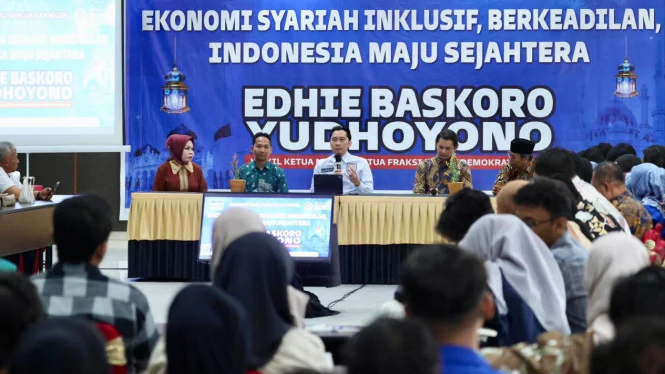
Madiun – Deputy Chair of the People’s Consultative Assembly (MPR) of the Republic of Indonesia, Edhie Baskoro Yudhoyono, commonly known as Ibas, believes that strengthening inclusive and equitable Islamic economics is the key to driving community welfare from the grassroots level.
Ibas reiterated this position whilst attending an audience themed “Inclusive Islamic Economics, Just Distribution, Prosperous Indonesia” on Sunday, 1 March 2026.
He stated that Islamic economics extends beyond Islamic finance-based systems and serves as an instrument for economic distribution capable of strengthening small businesses and regional entrepreneurs. “Islamic economics must be able to empower communities from the grassroots. If SMEs and people’s economies are strong, then families are strong, regions are strong, and ultimately our nation becomes stronger,” Ibas said in a statement on Monday, 2 March 2026.
He explained that the primary challenges in developing Islamic economics currently relate to low financial literacy, limited access to financing, and suboptimal integration between the education sector, financial institutions, and business operators. Consequently, cross-sector collaboration is an important factor in ensuring Islamic economics becomes truly inclusive.
During the session, Ibas also highlighted the importance of easy capital access for SMEs through Islamic financing schemes and the People’s Business Credit programme. He emphasised that the state continues to promote low-interest financing policies and simpler procedures so that small business operators can develop sustainably.
“Capital access must be easy, not complicated, but remain productive and responsible. Appropriate financing will create employment opportunities and stimulate local economies,” he explained.
In responding to various proposals, he stressed the importance of improving financial literacy, business mentoring, and forming mentoring communities for those wishing to access bank financing. He also encouraged universities and educational institutions to produce not only academically qualified graduates, but also a generation ready to create employment through Islamic value-based entrepreneurship.
“Universities, lecturers, and business operators must become engines of Islamic economics education. Young people should not only seek employment, but also dare to create ventures that benefit society,” he said.