
Deputy Chair of DPR Commission X: The State Must Provide Equal Welfare for All Teachers in Indonesia
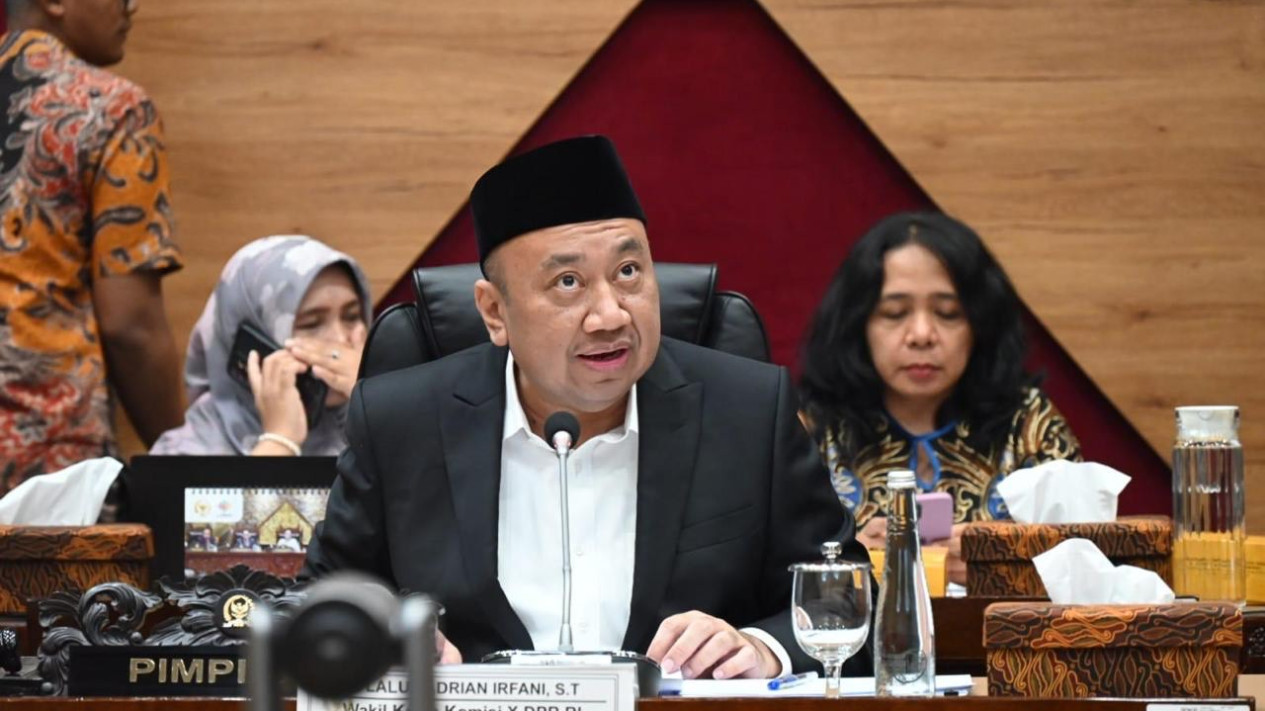
Wakil Ketua Komisi X DPR RI, Lalu Hadrian Irfani, has called on the government through the Ministry of Basic and Secondary Education (Kemendikdasmen) to make all teachers civil servants (PNS) in accordance with criteria, rather than resorting to short-term solutions for addressing the issue of honorer teachers.
He views the Circular Letter (SE) of the Minister of Basic and Secondary Education Number 7 of 2026 on the Assignment of Non-Civil Servant Teachers (Non-ASN/Honorer) in education units managed by local governments, which guarantees payment of salaries for honorer teachers during the assignment period until 31 December 2026, as a short-term solution.
“If the name is changed to Non-ASN, then ensure that their rights are not neglected. The continuity of their status must also be resolved immediately; make them all PNS, of course, in accordance with the criteria,” Lalu said in Jakarta on Monday, 11 May 2026.
He assesses that the main problem in the current teacher governance is the grouping or caste-like categorisation of teacher statuses, which creates disparities, inequalities, and career uncertainties. Therefore, he urges President Prabowo Subianto to take strategic steps by abolishing the teacher clustering system.
The government, he said, must recalculate accurately the needs and availability of teachers throughout Indonesia, both ASN and Non-ASN teachers. The state must be present to ensure that teacher management policies do not cause uncertainty and do not have a negative impact on the future of educators.
“In the future, there must be one national teacher status, namely PNS. No more PPPK teachers or Part-Time PPPK,” he said.
According to him, unifying teacher statuses under one national scheme will make education governance more effective and integrated. With such a system, he believes the central government can fully take over the recruitment process, distribution, career development, and improvement of teacher welfare more equitably across all regions of Indonesia.
“If all teachers are recruited through one national system via CPNS, then the distribution of educators, competency development, and teacher welfare will be more measurable and just,” he stated.
He hopes that the steps to abolish teacher clustering and implement one national recruitment system can become a long-term solution to improve the fate of teachers in Indonesia while enhancing the quality of national education.