
Deputy Chair of DPR Commission X Reminds Government: Online Learning is Not an Energy Efficiency Solution
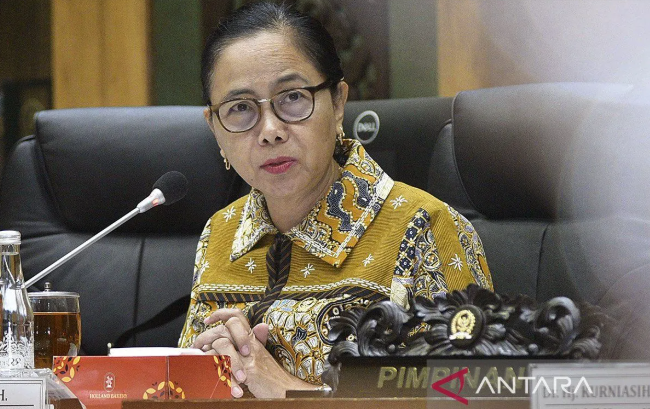
Deputy Chair of DPR Commission X RI, MY Esti Wijayanti, rejects the proposal for school students’ learning activities to resume online starting April 2026 as part of the national strategy for saving energy consumption, particularly fuel oil (BBM). Drawing from Covid-19 experiences, she believes online learning is ineffective for school students.
“When issues regarding online learning start appearing in many media, it is actually something that needs to be reconsidered in depth,” said MY Esti Wijayanti, in a statement received on Tuesday (24/3).
As is known, the Government is examining the implementation of online learning after the 2026 Eid holiday as part of the national strategy for energy conservation, especially BBM. This plan emerges amid global pressures on energy supplies, particularly due to geopolitical conflicts impacting world oil prices.
This policy does not stand alone. The Government is also considering flexible work schemes such as work from anywhere (WFA) for civil servants (ASN), as an effort to reduce daily societal mobility, which is a major contributor to BBM consumption.
Regarding this proposal, Esti reminds of the experiences of online learning implemented during the Covid-19 pandemic, which had impacts that were not easy on the national education system.
“We implemented online learning when the Covid outbreak occurred. And we all know that system left problems that are not simple for our education world,” she stated.
The impacts mentioned by Esti include challenges in children’s ability to absorb lesson materials, discipline, character building, technological constraints, and others.
“These are problems that are not simple,” Esti explained.
Various aspects of concern from Esti align with statements from the Minister of Basic and Secondary Education, Abdul Mu’ti. Mu’ti once stated that it is not easy to catch up on learning loss experienced by students due to the Covid-19 pandemic. Learning loss is one of the impacts of online or distance learning.
“Although effective and a solution to prevent the spread of Covid-19, distance learning caused a decline in the quality of students,” Esti clarified.
Data shows that Indonesian students’ cognitive abilities declined following the online policy. Esti mentioned the decline in Indonesia’s Programme for International Student Assessment (PISA) scores in 2022 across all fields: reading literacy (359 points), mathematics (366 points), and science (383 points).
Besides academics, children’s psychological and character aspects are at stake. Esti assesses that the online system fails to build students’ personalities due to minimal social interaction.
“The online system struggles to implement lessons on affective aspects such as personality, attitudes, and character,” explained the legislator from the DIY electoral district. She added that the absence of direct supervision triggers laziness, gadget dependency, and concerning social phenomena such as early marriages among students.
“The distance learning system also causes low character values in students, which are indeed difficult to teach using an online learning system,” she elaborated.
Therefore, Esti hopes that the government does not implement the online learning proposal as a strategy for energy conservation.
“Do not make online learning an alternative choice for learning,” Esti emphasised.
Esti also stated that she has received many inputs and aspirations from the public regarding this proposal.
“We have also received many aspirations from the public, none of which agree with online learning,” she said.
Esti assesses that if the online learning proposal is for BBM savings, then for primary school students, the zoning system does not have much impact.
“For junior high, senior high/SMK perhaps. And it could also be considered to save BBM through a school transport system with designated pick-up points by empowering existing public transport,” said Esti.
She hopes the government finds other more creative ways to face global economic turbulence without disrupting the growth and development of the nation’s generation.
“Fiscal capacity limitations need to be addressed in better ways without sacrificing the education sector. Hopefully, the online learning issue is just a proposal,” she stated. (Ant/P-4)