
Deployed Amid Hamas Combat Infrastructure: What Risks Does the TNI Face in Gaza?
Indonesia’s involvement in the Board of Peace project in Gaza has generated considerable debate. Over the past 70 years, Indonesia has dispatched troops to participate in UN peacekeeping missions across conflict zones in Africa, Asia, and Europe.
During that period, Indonesian soldiers have earned praise, though some have been kidnapped and others killed. The question now is: what fate awaits them in Gaza?
Indonesia will be one of five nations sending troops to join the International Stabilisation Force (ISF) in Gaza. The other four countries are Kosovo, Kazakhstan, Albania, and Morocco.
Of those four, only Morocco has experience deploying troops to UN-established peacekeeping contingents. However, Morocco’s contribution to peacekeeping contingents is not as substantial as Indonesia’s, which ranks among the top ten contributing nations to programmes under the UN Security Council.
How is it controversial?
The ISF differs from UN peacekeeping missions. It does not operate under the UN Security Council’s authority but rather under the Board of Peace.
Nevertheless, the UN Security Council declared its support for the Board of Peace during its session on 17 November 2025. It also granted UN member states, including Indonesia, the right to join the ISF.
Under UN Security Council Resolution 2803, nations contributing troops to the ISF, including Indonesia, will cooperate and consult closely with Israel and Egypt.
In Gaza, ISF troops will undertake six tasks, including helping secure border areas, protecting civilians, training prospective Palestinian police officers, securing “humanitarian corridors” serving as entry routes for civilian aid, and carrying out additional duties the Board of Peace may deem necessary.
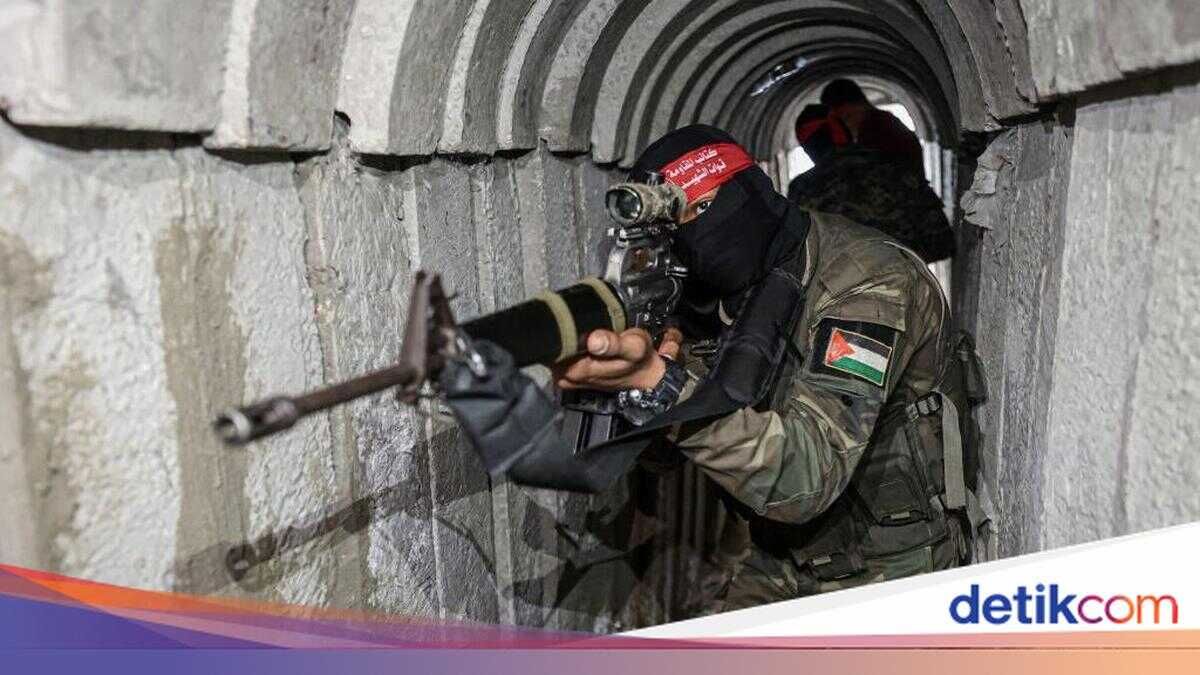
Another ISF task involves participating in the demilitarisation of Gaza by, among other things, destroying military infrastructure and disarming Hamas.
Israeli Prime Minister Benjamin Netanyahu has repeatedly stated, including on 19 February, that without Hamas demilitarisation, the Gaza “reconstruction project” conceived by US President Donald Trump — and supported by every Board of Peace member, including Indonesia — will not proceed.
The task of disarming Hamas and dismantling its infrastructure potentially presents the greatest risk for Indonesian troops, according to Muradi, a defence expert at Padjadjaran University.
“Beyond disarmament, the risky aspect concerns tunnel destruction. That could trigger urban warfare that would prove troublesome for Indonesian forces,” Muradi said.
Muradi added that involvement in Hamas demilitarisation would, in conceptual terms, place Indonesia in a non-neutral position.
Beyond the risk of involvement in combat — particularly with Hamas — Muradi noted that a lack of TNI neutrality would be inconsistent with Indonesia’s constitution and foreign policy principles.
The Israeli government, through its military the IDF, has for years pursued various methods to destroy the underground tunnels built and operated by Hamas in Gaza.
BBC correspondent Quentin Sommerville entered a section of the underground tunnels in 2015. Reuters news agency also documented parts of the tunnel network during a visit arranged by Hamas a year earlier.
Hamas and other militias in Gaza, such as Palestinian Islamic Jihad, have on various occasions acknowledged using the underground tunnels as part of their combat strategy against the IDF.
Where will Indonesian troops be deployed and what are the risks?
Israeli Public Broadcasting Corporation KAN reported in early February that Indonesian soldiers would be stationed in southern Gaza, specifically around Rafah and Khan Younis.
Since 7 October 2023, Rafah has become critically important for Gaza’s residents. It serves as their exit route to Egypt via the Sinai Peninsula. The two other exit points — Erez and Kerem Shalom — have been closed by the Israeli government since the 7 October attacks.
Rafah is also the sole gateway for humanitarian aid entering Gaza.
According to retired IDF General Amir Avivi, Israel has levelled Rafah. Speaking to Reuters in January — though not as an IDF representative — Avivi said Israel would establish camps in Rafah for Palestinian civilians.
The housing to be erected as part of the “reconstruction project,” Avivi said, would be equipped with facial recognition technology and surveillance equipment.
Avivi indicated that the housing complex would be built above Hamas underground tunnels slated for demilitarisation by the Board of Peace using ISF personnel.
This is where the risk lies, as also analysed by Heru Susetyo Nuswanto, an expert in peace studies and human rights at the University of Indonesia’s Faculty of Law.
Heru said Rafah is an area with a dense and complex network of Hamas tunnels. He described Rafah as a “Hamas sensitive zone.”
“Indonesian forces could be regarded as a hostile force — an opposing or enemy force — by Hamas when clearing underground infrastructure,” he warned.