
Denza D9 Tax Without Incentives Now Approaches Toyota Alphard
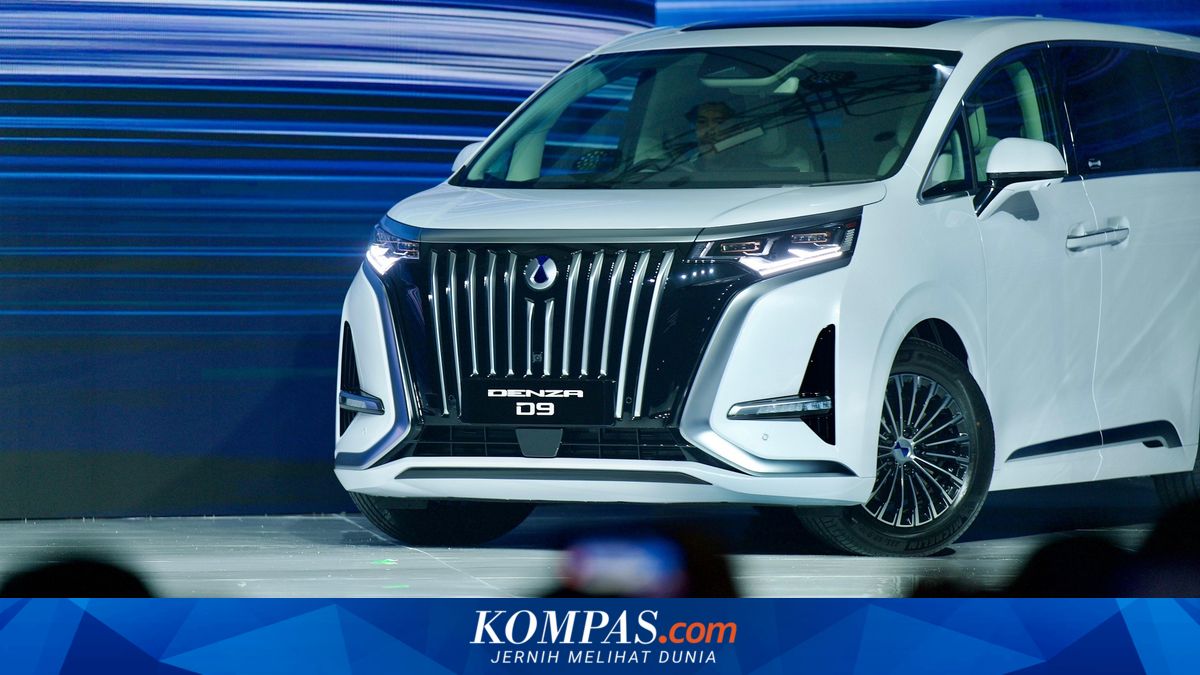
JAKARTA - The difference in taxes between electric vehicles and conventional vehicles has long been known to be quite uneven. Even in the premium segment, the annual tax burden on electric vehicles is considered very low.
Previously, owners of electric vehicles only paid the mandatory traffic accident fund contribution (SWDKLLJ) of around Rp 143,000 per year. Meanwhile, motor vehicle tax (PKB) and motor vehicle transfer tax (BBNKB) were exempted.
This situation began to change following the issuance of Ministry of Home Affairs Regulation Number 11 of 2026. Under the new regulation, battery-based electric vehicles are no longer categorised as exempt from PKB and BBNKB.
This is evident in the Denza D9, which is marketed in Indonesia for around Rp 900 million. Previously, the annual tax for this model was only around Rp 143,000.
However, if calculated without incentives based on the attachment to Ministry of Home Affairs Regulation 11/2026, the value increases quite drastically.
For the front-wheel drive (FWD) variant, assuming a motor vehicle selling value (NJKB) of Rp 765 million and a weight factor of 1.05, the tax base (DPP) reaches Rp 803.25 million.
With a PKB rate of 2 per cent, the annual tax is around Rp 16.06 million (excluding SWDKLLJ), or approximately Rp 16.2 million per year after adding that component.
Meanwhile, the all-wheel drive (AWD) variant with an NJKB of Rp 931 million has a DPP of Rp 977.55 million.
Using the same calculation, the annual tax is around Rp 19.55 million, or approaching Rp 19.7 million per year after adding SWDKLLJ.
For comparison, the petrol Alphard variant has an NJKB of around Rp 710 million. With a weight factor of 1.05, the DPP becomes Rp 745.5 million, resulting in an annual tax of around Rp 14.91 million (excluding SWDKLLJ), or Rp 15.05 million per year.
The hybrid variant with an NJKB of Rp 767 million has a DPP of Rp 803.35 million. The annual tax is around Rp 16.06 million, or approximately Rp 16.21 million after adding SWDKLLJ.
Nevertheless, implementation in the field still depends on the policies of each regional government, whether they continue to provide exemptions or only tax reductions for electric vehicles.