
Denying LG Departure, Rosan Says: We Were the Ones Who Made That Decision
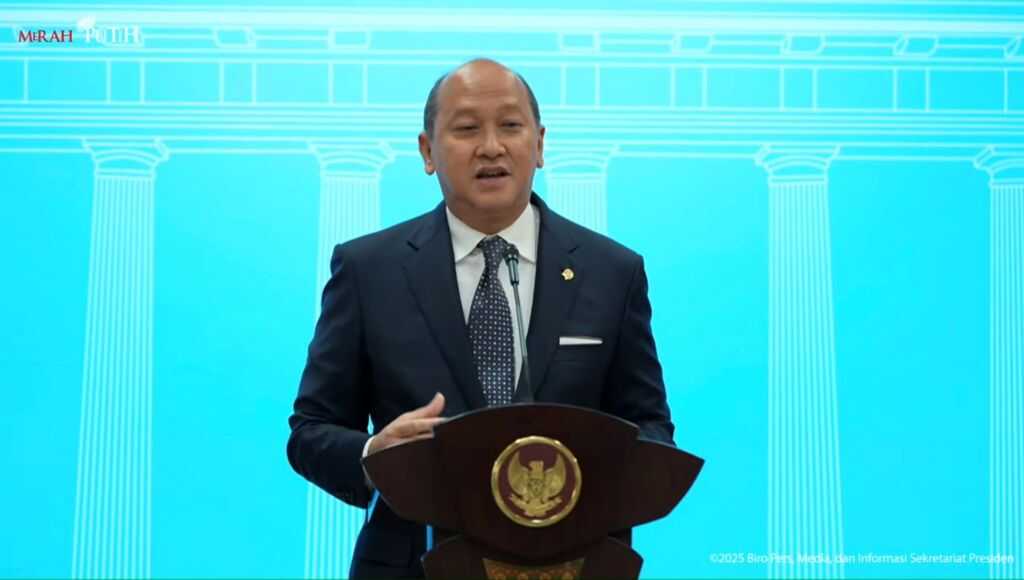
Jakarta: Minister of Investment and Downstreaming/Head of the Investment Coordinating Board (BKPM) Rosan Roeslani revealed that it was the Indonesian government that terminated its cooperation with South Korean company LG Energy Solution (LGES) regarding the Titan Project — not LGES that first withdrew from the electric vehicle battery development project.
“It has been said that they were the ones who terminated [the partnership], when in fact it is more accurate to say that we were the ones who made that decision [to end cooperation with LGES],” said Rosan in an online press statement on Wednesday, 23 April 2025.
According to Rosan, the termination was formalised in an official letter from the Ministry of Energy and Mineral Resources (ESDM) dated 31 January 2025. The termination letter was sent by Energy Minister Bahlil Lahadalia to the CEOs of LG Chem and LG Energy Solution.
The letter was issued due to protracted negotiations with LGES. The negotiations in question concerned the fourth phase of the project, or joint venture 4, with LGES relating to the development of electric vehicle battery cells. “The official letter from ESDM was issued because negotiations had dragged on for far too long — up to five years,” he said.
Rosan then explained that the government had found a replacement for LGES, namely Zhejiang Huayou Cobalt Co, Ltd, a Chinese company. The firm, he said, already possesses the required technology and has previously invested in Indonesia.
“They have also invested in the Weda Bay area, in a nearly identical field. As such, they have a thorough understanding of this project’s development,” Rosan added.
Huayou is known to have invested in the Indonesia Weda Bay Industrial Park (IWIP) in North Maluku, together with Tsingshan Holding Group and Zhenshi Holding Group Co., Ltd in 2018.
IWIP is envisioned as an integrated industrial zone that will process mineral resources from the mine mouth through to finished products including electric vehicle batteries and steel.
Rosan said he had personally met with Huayou representatives to discuss the continuation of the Titan Project.
“I have met directly with Huayou. Their response has been very positive. Since 2024, they have expressed their interest in joining this EV battery development consortium,” he said.