
Densus 88 Proposes Establishment of Anti-Extremism Task Force in Educational Environments
The head of the Special Detachment (Kadensus) 88 Antiteror, Irjen Sentot Prasetyo, has proposed the formation of a national-scale task force (Satgas) to address the spread of extremism in educational environments. He assessed that the handling of radicalism among students remains partial or not yet integrated.
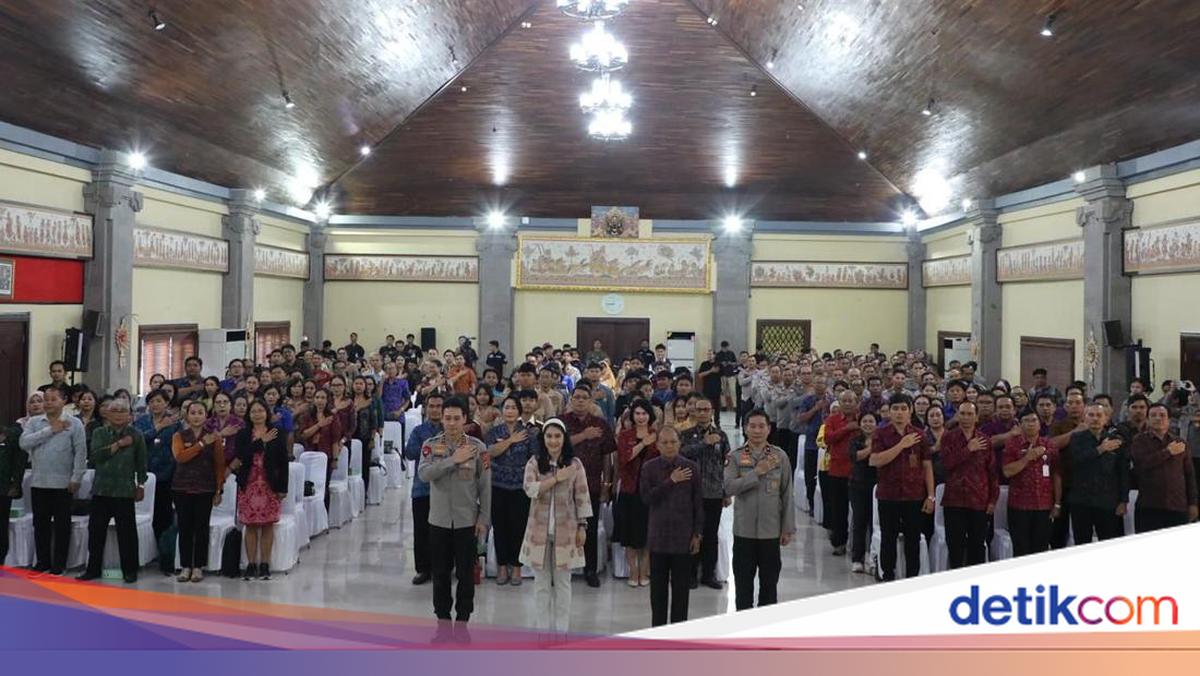
This proposal was conveyed by Sentot in his speech at the talkshow titled ‘The Triangle Ecosystem of Child Protection in the School Environment’. The Deputy Chief of Bali Police, Brigjen I Made Astawa, read Sentot’s speech as he was unable to attend the event.
“Although various efforts have been made by ministries and agencies, the existing handling tends to be partial and not yet integrated. This becomes a shared challenge to strengthen synergy, including pushing for the formation of a national task force capable of coordinating comprehensive handling at both central and regional levels,” said Astawa, representing Sentot, at the Presisi Building of the Bali Police Headquarters, Friday (24/4/2026).
Still based on Kadensus 88’s speech, Astawa touched on the issue of child protection, which has now risen to become a strategic issue as well as a national security issue. According to him, threats to children today are developing dynamically, complexly, and often not visible to the naked eye.
“Child protection today is no longer merely a social issue, but has become a national security issue,” he stated.
He also highlighted the vulnerability of the young generation or digital natives in the technology era. Although superior in gadget mastery, students are deemed vulnerable to exposure to extremist information without filters and low digital literacy.
“The young generation as digital natives are indeed superior in technology, but at the same time, they are also vulnerable to exposure to unfiltered information, echo chamber effects, and low digital literacy,” said Made.
In line with that, the Deputy Minister for Population and Family Development, Ratu Ayu Isyana Bagoes Oka, emphasised the importance of the family’s role as the first fortress.
“Child protection from extremist influences must start from upstream, namely the family. This is part of the investment in developing Indonesia’s human resources,” said Isyana.
Meanwhile, Bali Governor Wayan Koster offered a solution based on local wisdom. He assessed that values such as Tri Hita Karana must be strengthened to build a tolerant and harmonious character in the young generation.
“Local values like Tri Hita Karana must continue to be strengthened to maintain harmony and build a tolerant character in the young generation,” said Koster.
Bali Police Chief Irjen Daniel Adityajaya also affirmed his commitment to a preventive approach. He stated that the National Police cannot work alone in handling radicalism.
“Prevention cannot be done partially, but requires synergy between apparatus, government, schools, families, and society,” explained Daniel.
In the discussion session, Densus 88 AT Polri presented facts that digital space has now become the main field for spreading extremist ideologies with the main target being teenage groups. Therefore, early detection is considered a vital key to preventing exposure to violent ideologies from the start.
The event concluded with a joint declaration against intolerance, radicalism, extremism, and terrorism involving representatives of students, teachers, parents, and various related agencies in Bali Province.
Through an ecosystem involving families, schools, and society, it is hoped that educational environments can be free from the influence of violent ideologies.