
Denpasar Residents Increasingly Dumping Waste into Tukad Badung
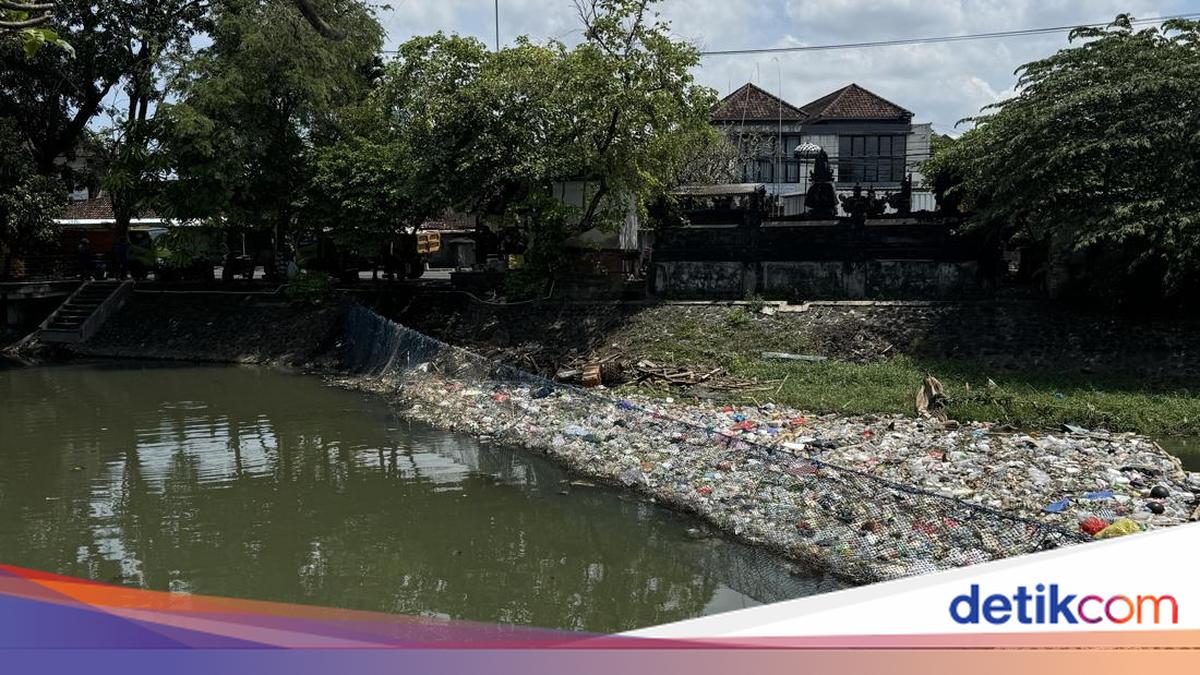
The Denpasar Public Works and Public Housing Department (PUPR) has hauled five trucks of rubbish from Tukad Badung at the Buagan point up to Wednesday (8/4/2026). It is suspected that the public has increasingly been dumping waste into the river since the Suwung landfill was closed.
The collected rubbish has already been sorted. Two trucks carried organic waste, while the rest was non-organic.
“This is rubbish from yesterday afternoon. It’s collected routinely every day, and it comes back in the evening. Yesterday it was all cleared, but it came back again. These five trucks aren’t even finished; the manpower is exhausted. Today has been the most since the new regulations started,” said PUPR staff member Saiin when interviewed by detikBali on Wednesday.
The collection and sorting of rubbish from Tukad Badung requires a total workforce of 25 people. “25 in one day, with shifts of 6 hours a day, working until Sunday, starting at 07:00 WITA. This is just one point, the Buagan network,” Saiin explained.
One of the PUPR Denpasar truck drivers, Saiful Ashar, revealed that the rubbish is still mixed between organic and non-organic. The waste is dominated by non-organic, especially plastic rubbish and bottles.
“Because the public’s mindset isn’t accustomed yet; they usually just put it out and pay. This is still the old mindset. Since the landfill closed, for organic waste, the public has no solution. The river becomes the solution. At night, it’s definitely thrown in,” Ashar added.
According to Ashar, residents tend to use motorbikes while carrying plastic bags of rubbish and then dump it when the area is unsupervised or quiet. “It should have increased a bit with the regulations, but it’s increased a lot. This isn’t just local residents; from everywhere, it all ends up collecting here,” Ashar said.
Challenges in Disposing of Organic Waste at TPST
Ashar, along with other truck drivers Eko Budiyono and Supriyadi, admitted that they are currently facing obstacles in disposing of organic waste. He mentioned that organic waste is being rejected from entering the Integrated Waste Processing Facility (TPST).
“This is what’s a bit difficult now with the organics; there’s no definite place yet. It’s not allowed (into TPST), probably because it’s not ready yet, the equipment isn’t prepared. Only the regulations are in place, but below that, there’s no readiness,” Ashar explained.
“The organics are temporarily placed at the Temporary Collection Point (TPS) on Jalan Gurita, but there our fleet can’t enter; it’s full of public rubbish, piled up,” he added.
Ashar said that if there is still organic waste that can’t be transported, it will be left in the truck for now. Meanwhile, the disposal of non-organic waste at the Suwung landfill is running smoothly.
In addition, Ashar raised the issue of differences in the inspection system because wet non-organic waste is often mistaken for organic waste.
“At the landfill, sometimes the officers don’t believe it. We bring water, and they think there’s still organic. We explain it’s from the river, so it can’t be dry; there’s water. The inspection is different because of the dripping. If someone doesn’t know, they think we’re bringing organic waste,” he clarified.
It turns out that wet rubbish brings its own burden because it requires more manpower, both for direct collection from the river and sorting. “Before the itching, before the hunger, it’s all mixed,” he said.
“Before the regulations, two trucks would finish it, sometimes there was none at all, just a few baskets,” Ashar explained.
Ashar concluded that this sorting has led to an increase in workload, which is also matched by an increase in manpower. “This is the advantage of the dry season; if mixed with rain and flooding, it’s all mixed up. If it’s still raining, Public Works is out and about, drainage blocked. In the dry season, the crowded areas are handled first; this is because it’s a main road under the spotlight, so it’s prioritised.”
“Now, self-management doesn’t want it. It’s the same; if there’s organic in it, it’s not accepted. Now the public is confused: told to sort, but no place; burning not allowed. So the river becomes the landfill,” he concluded.