
Denpasar High School Students Win Gold at MTE 2026 Thanks to AI Agricultural Innovation
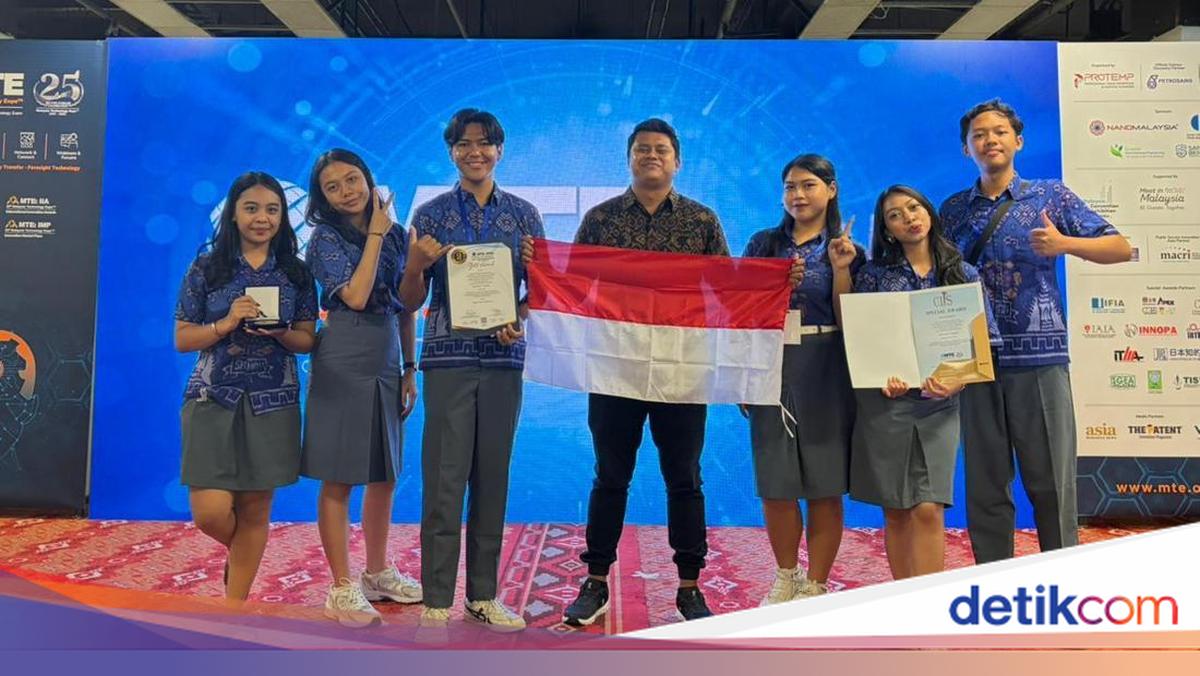
Students from SMA Negeri 1 Denpasar have once again achieved international acclaim. This time, a group of students from the extracurricular Science and Literature Scientific Work (KISS) club at Smansa Denpasar brought home one gold medal and two bronze medals at the Asian Youth Innovation Awards (AYIA).
The gold medal was won in the Energy and Green Technology category thanks to an artificial intelligence (AI) innovation in agriculture. The Malaysia Technology Expo (MTE) 2026 event took place at the World Trade Centre Kuala Lumpur from 9-11 April.
KISS Smansa advisor, Asri, explained that the innovation developed by her students utilises AI and Internet of Things (IoT) technology. “They created a device to check whether the soil is suitable for plantations or not,” said Asri when met by detikBali on Monday (20/4/2026).
According to Asri, the idea stemmed from issues in the agricultural sector. She reflected on the problem of large areas of land that have been cleared but cannot be planted.
“Don’t let the land be cleared, the ecosystem damaged, only to find out the soil isn’t suitable for planting. The losses would be enormous,” added Asri.
One KISS member, Putu Prasista Ardyasaswari Mahavira, explained that their innovation arose from the problems faced by smallholder farmers. The device they developed can measure soil pH, temperature, and humidity.
Additionally, the device is equipped with a camera to detect pests and an AI system that can provide direct analysis of plant conditions. Uniquely, the device can also be used in areas without internet connectivity.
“We saw that small farmers struggle to monitor their land because technology is expensive. So we made a device that’s cheaper and easier to use,” said Prasista.
“The data can be stored directly on the microcontroller, so no signal is needed. This is important because agricultural land often has no network,” she explained.
Although from Bali, which is not a palm oil-producing region, the Smansa students still considered the relevance of their innovation to conditions in Malaysia. Therefore, the device is designed not only for one type of crop but can be used for various types of plants.
In addition to being multifunctional, the device developed by the Smansa students is also made at a relatively affordable cost, around Rp 1 million. This innovation also promotes an environmentally friendly concept, adding value.
“We used recycled materials like used PVC pipes and plastic bottles, and we also used solar panels as an energy source,” said Prasista.
The PALMORA team from KISS SMAN 1 Denpasar consists of six Year 11 students, namely:
Putu Anindya Deivana Griandari
Putu Savitri Kaniotami
Putu Prasista Adyaswari Mahavira
Putu Ngurah Gede Angga Panji Kenanta
Kadem Nysa Adia Pramesti Joniartha
I Gede Abi Bhaskara Mulya Utama.