
Denpasar City Government Prepares Sanctions for Civil Servants Unreachable During WFH
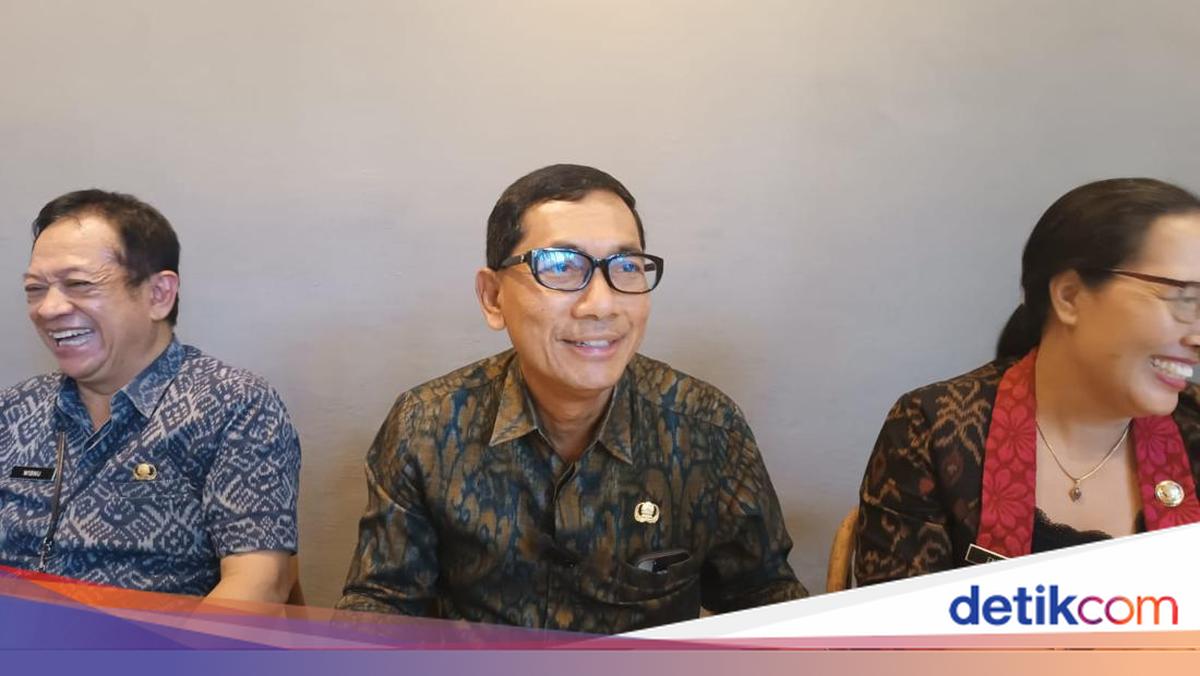
The Denpasar City Government (Pemkot Denpasar) is implementing a work-from-home (WFH) policy starting Friday, 10 April 2026. All civil servants (ASN) under Pemkot Denpasar affected by WFH will be closely monitored.
The Secretary of the Regional Government (Sekda) of Denpasar City, I Gusti Ngurah Eddy Mulya, explained that employees must conduct attendance checks during WFH at their registered residential locations. According to him, sanctions will be prepared for employees who cannot be reached during WFH.
“Attendance outside the designated point (residential location) is not permitted, and employee responsiveness is prioritised. Sanctions will be applied gradually; ASNs who are difficult to reach within 5-15 minutes during work hours will receive a warning,” said Eddy when confirmed on Wednesday (8/4/2026).
The implementation of WFH every Friday for Pemkot Denpasar ASNs is based on the Mayor of Denpasar’s circular letter Number B/000.8.3/602/SETDA of 2026. This policy focuses on work flexibility as well as regional budget efficiency.
Eddy explained that the WFH implementation will be evaluated weekly. According to him, ASNs who fail to conduct attendance or cannot be reached—either by phone or when instructed to report to the office during WFH—will face sanctions ranging from verbal reprimands to administrative penalties.
“If needed at the office, employees are required to report immediately. There is no excuse for not responding. We conduct periodic evaluations every week,” he added.
Eddy assured that services to the public will continue uninterrupted despite ASNs working from home every Friday. According to him, ASNs in several vital sectors will continue full office-based work (WFO).
ASNs not subject to WFH include health services at Wangaya Regional General Hospital and community health centres, education from early childhood to junior secondary levels. Then, transportation, licensing, and population services. Similarly, emergency services such as the Regional Disaster Management Agency (BPBD) and fire department (Damkar), public order by the Civil Service Police Unit (Satpol PP), environmental and hygiene services (DLHK), and local taxes and levies by the Regional Financial and Asset Management Agency (Bapenda).
“In addition to service units, all echelon II officials (senior managers), echelon III (administrators), sub-district heads, village heads, and hamlet heads must continue to report to the office as usual,” Eddy added.
Eddy explained that the savings from this policy will be allocated to priority programmes for community development. Some efficiency measures also include gradually reducing the use of official vehicles and directing towards electric vehicles or public transport.
In addition, the use of air conditioning, lights, and electronic devices in offices will be tightened. Pemkot Denpasar will also maximise virtual meetings to reduce consumption and operational costs for face-to-face interactions.
“This work culture transformation also aims to curb regional operational expenditures. The policy, guided by directives from the Ministry of Home Affairs, will be evaluated weekly,” Eddy concluded.