
Demographic Dividend Opens Overseas Employment Opportunities for Indonesian Migrant Workers
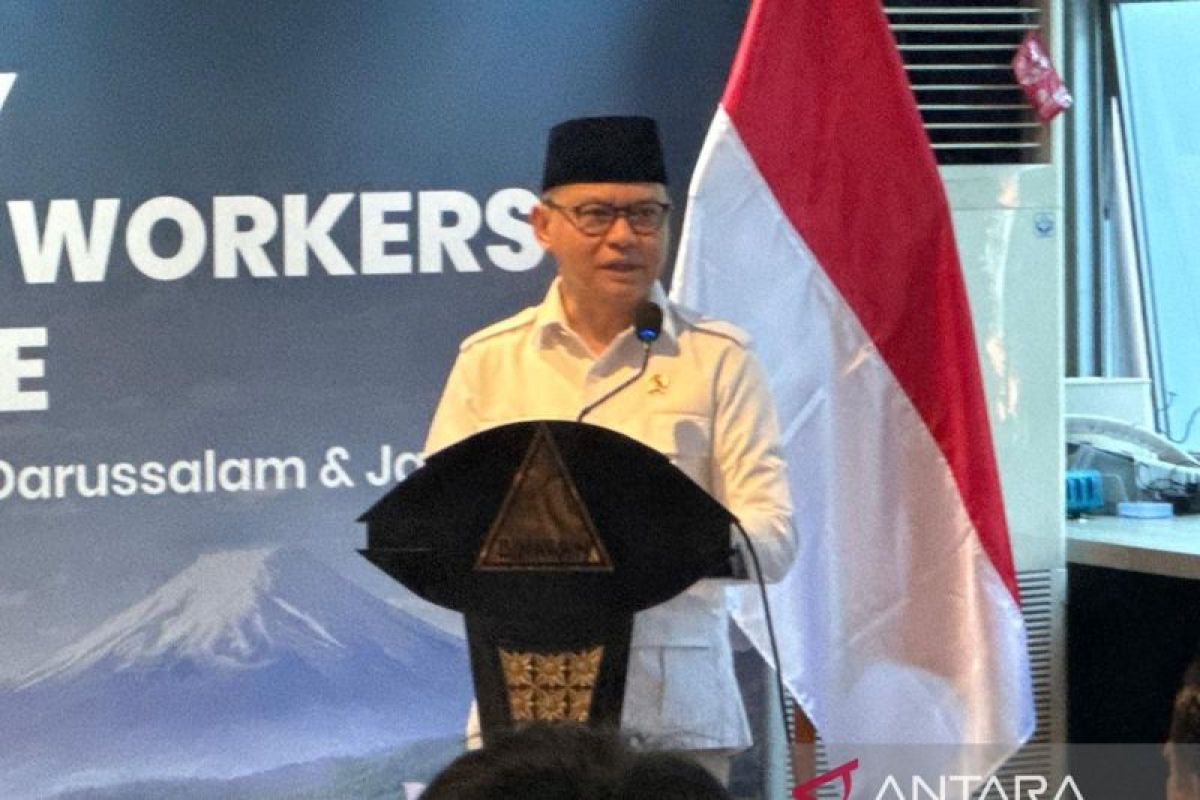
Jakarta — Indonesia’s Minister for Migrant Worker Protection (P2MI) Mukhtarudin has stated that young Indonesians have significant opportunities to work overseas, as several countries across Asia and Europe face ageing populations whilst Indonesia enters its demographic dividend phase.
Mukhtarudin made the remarks during a ceremony to dispatch 344 prospective Indonesian migrant workers (CPMI) by Binawan Group in Jakarta on Tuesday.
According to him, these opportunities can be leveraged by preparing truly productive human resources with relevant skills. Without proper preparation, the demographic dividend could transform into a disaster, with increased unemployment among the working-age population.
“This golden opportunity must be maximised by producing human resources so that the productive age group becomes genuinely productive. The state must be present to prepare these young generations,” he said.
Mukhtarudin also noted that remittances from migrant workers constitute a significant contribution to the national economy.
Based on Bank Indonesia’s economic and financial statistics for 2024-2025, remittances reached approximately IDR 253 trillion in 2024 and increased to around IDR 288 trillion in 2025, strengthening family economies and purchasing power in regions across the country.
According to him, beyond supporting household economies, remittances also increase the nation’s foreign currency reserves. These funds play a role in supporting national economic stability, including in international trade transactions and strengthening foreign currency reserves.
At the same event, Binawan Group’s President Director Said Saleh Alwaini stated that the organisation is placing prospective migrant workers in several countries across various employment sectors.
Among these, he said, 66 nurses and midwives were placed in Saudi Arabia, 47 nurses in Germany and Austria, 46 nurses in the Netherlands, 30 nurses in Brunei, 19 nurses in Australia, and 10 nurses and midwives in Oman.
In other sectors, Binawan will dispatch 40 flight attendants to Saudi Arabia, 31 welders to Slovakia, and 65 professional architects and civil engineers will work in Japan.
He emphasised that the process leading to worker dispatch is not straightforward, as participants must undergo selection, language training, document preparation, and health examinations.
Said expressed appreciation for the prospective migrant workers’ efforts in completing all these stages and being ready to work abroad.
He also urged the prospective workers to make the most of their overseas employment opportunities, take care of themselves, and maintain their original goal of building a better future for themselves, their families, and Indonesia.
Said also conveyed appreciation to the P2MI Ministry and BP3MI for their support and collaboration in facilitating the worker placement process.
He expressed hope that future regulations on migrant worker placement will better differentiate between skilled professionals and other sectors, allowing faster and more efficient placement for skilled workers.
“Because the regulations are uniform, even though the risks differ greatly in different types of work, skilled and professional workers bear the burden, having to navigate so many regulatory obstacles, when we know that placement risks in destination countries are very low,” Said said.