
Demilitarisation of Protest Security
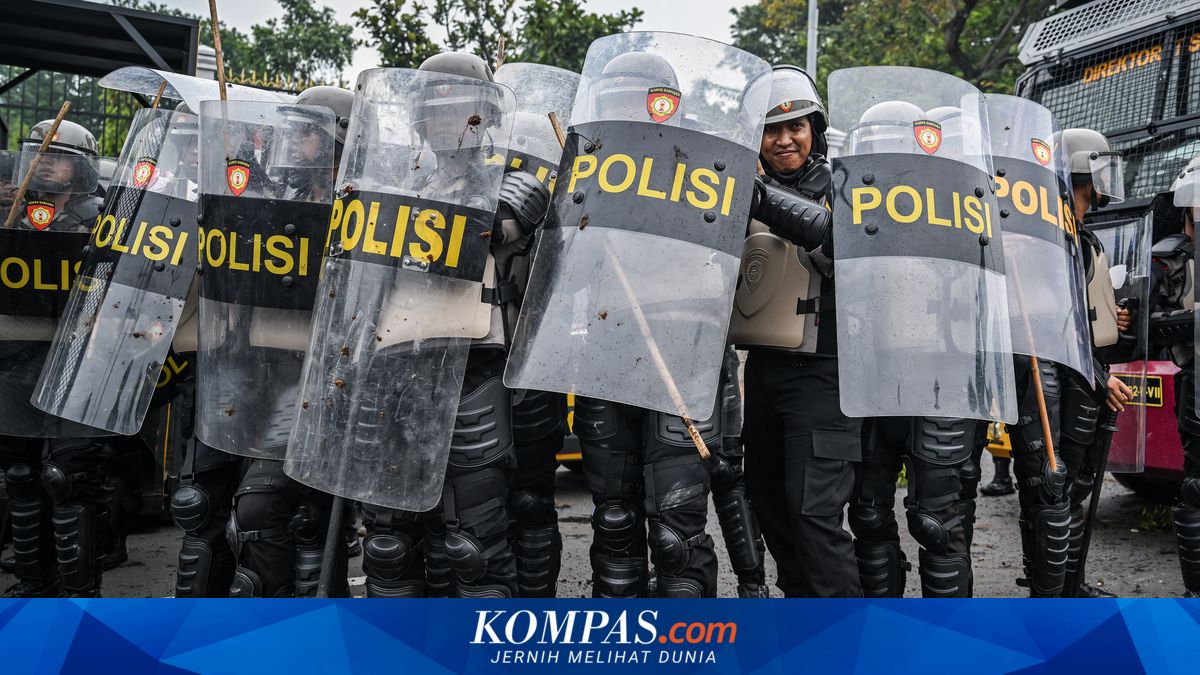
Tuesday, 5 May 2026, may be recorded as a significant milestone in the history of security reform in Indonesia. At the State Palace, the Commission for Accelerating Police Reform (KPRP) submitted its work report to President Prabowo Subianto. Among the series of recommendation points presented, one deserves public attention: the proposal for a fundamental repositioning in handling protests, from a ‘security’ model to a ‘service’ model. This step must be viewed as one of the efforts to reconstruct the security paradigm that, for nearly three decades post-Reformasi, still leaves residues of repressiveness. If previously protest crowds were often positioned as ‘opponents’ or threats to public order, the KPRP recommendation demands that Polri place protesters as ‘friends’—fellow citizens whose constitutional rights must be served and protected. The root of the problem in handling protests in the country stems from Law No. 9 of 1998 on Freedom of Expression in Public. Although born from the spirit of reform, this law—originally intended as an umbrella for democratic protection—has, in its implementation, often been trapped in narrow administrative interpretations. The public notes three structural factors that perpetuate the repressive pattern. This shift in meaning provides too much discretionary space for authorities to disperse crowds merely for procedural reasons. As a result, physical friction often begins from such administrative debates. Second, is the rigidity of the Mass Control (Dalmas) stages as regulated in Police Regulation No. 16 of 2006. Categorisation of situations from Green (orderly), Yellow (disorderly), to Red (anarchic) gives significant authority to the subjectivity of field commanders. Without precise parameters, the transition from negotiation to the use of tear gas often occurs in seconds. Escalation becomes an instant response that ignores sustained dialogue efforts. Third, concerns the acute issue of impunity and accountability. Violence in protests is often viewed as a ‘field excess’ that is commonplace, not as a serious violation of legal procedures.