
Demand Surge Prompts KAI Logistik to Double Kalog 3 Train Service Frequency
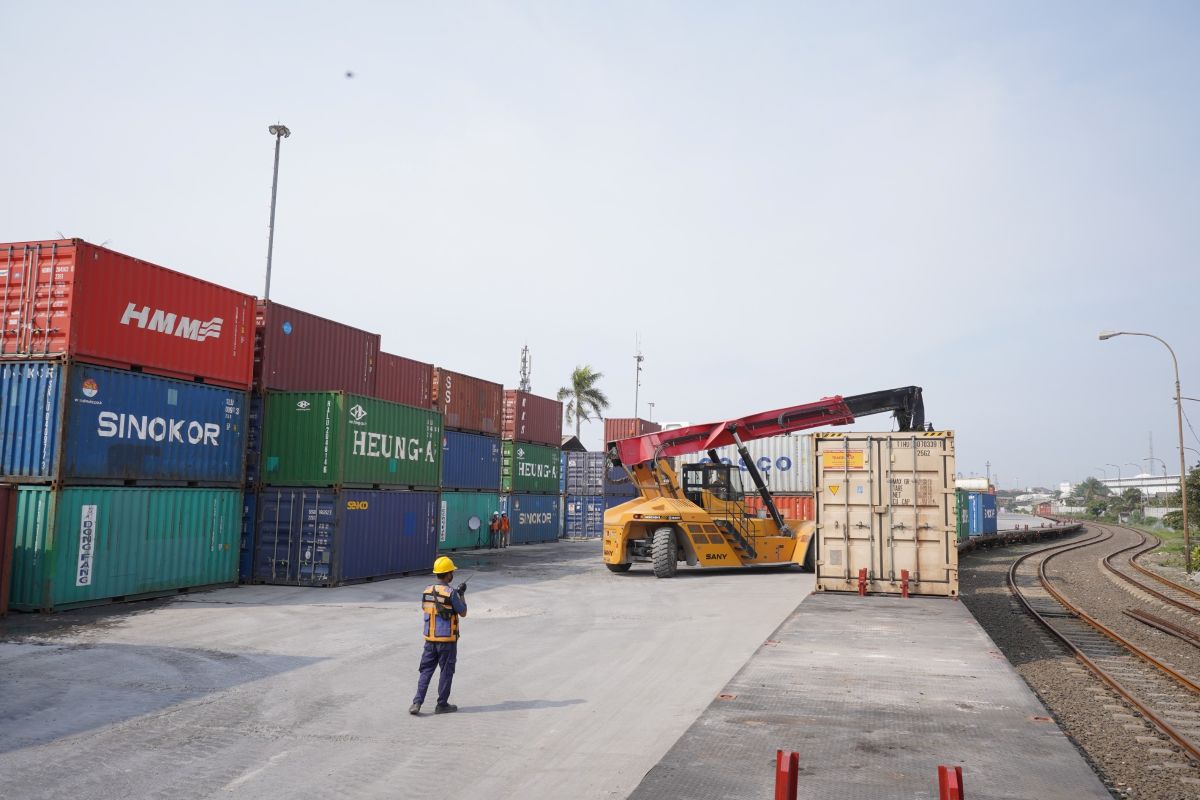
Growing demand for distribution of domestically consumed goods has prompted KAI Logistik (Kalog) to take strategic action by increasing container transport capacity on its Kalog Plus service, particularly the Kalog 3 freight train line. This policy forms part of the company’s efforts to maintain supply chain resilience and promote efficient goods distribution, especially for the Fast Moving Consumer Goods (FMCG) sector.
Fahdel Akbar, Commercial Director of KAI Logistik, stated that the company is witnessing sustained growth in container transport demand, particularly from FMCG and manufacturing operators. Consequently, effective 20 February 2026, the company has increased the frequency of the Kalog 3 service from twice weekly to six times weekly. With this expansion, transport capacity has increased approximately 67 per cent, from 1,800 TEUs per month to 3,000 TEUs per month. This capacity adjustment is part of the company’s strategy to strengthen the role of rail transport in the middle mile segment of the national supply chain.
“This service enhancement is not merely to accommodate volume increases, but also to ensure schedule consistency and service certainty for customers. We wish to deliver logistics solutions that are more reliable, faster, and competitive for industry,” he explained.
Fahdel added that internal data recorded approximately 8 per cent growth in container transport volume throughout 2025 compared to the previous year. This achievement aligns with national economic growth. This trend also corresponds with data from the Central Statistics Agency (BPS) on 5 February 2026, which reported that Indonesia’s economy in 2025 grew 5.11 per cent, higher than the 2024 achievement. This reflects increased production and distribution activity, including in the consumer goods sector.
“The increase in consumption is also reflected in the latest data from Compas.co.id presented by Hanindia Narendrata, Co-Founder and CEO of Compas, which indicates that FMCG transaction values on digital platforms surged 168.7 per cent during the 2022–2025 period, moving from Rp48 trillion to Rp129 trillion,” he emphasised.
According to Fahdel, this increasingly dynamic goods movement is one of the driving factors for distribution service optimisation, including through capacity strengthening on the Kalog 3 line. This service specifically serves the strategic route Jakarta (Sungai Laga) – Surabaya (Kalimas), with a transit point in Karawang (Klari). The presence of this transit point responds to growing customer needs in the Klari industrial zone, where operations are predominantly in the FMCG sector.
“With our increased container transport capacity, we hope to become a strategic partner for FMCG companies and other consumer industries in facilitating more optimal, consistent and timely goods delivery,” he explained.
Beyond improving distribution efficiency, Fahdel continued, the use of rail transport also offers a safer, more reliable and sustainable transportation solution. Through the green logistics concept, rail-based transport contributes to reducing carbon emissions and traffic burden on land routes, in line with the company’s commitment to supporting a more environmentally friendly national logistics system.
KAI Logistik is targeting revenue of Rp2.47 trillion, or 119 per cent growth compared to the 2025 realisation of Rp1.1 trillion, with profit targeted at Rp176 billion.
To strengthen 2026 Lebaran transport operations, KAI Logistik will dispatch 12 locomotive units from Sumatra to Java.
During the extended 2026 Chinese New Year holiday period from 13 to 18 February 2026, KAI Logistik successfully delivered 45,854 retail goods shipments totalling 17,773 kilogrammes.
KAI Logistik continues to strengthen and optimise rail transport as a reliable alternative mode for businesses, including through its Container Train service.
KAI Logistik continues to optimise safety and security aspects in the transport of specialised commodities, including hazardous and toxic materials.