
Defending Honorary Teachers and Religious Instructors
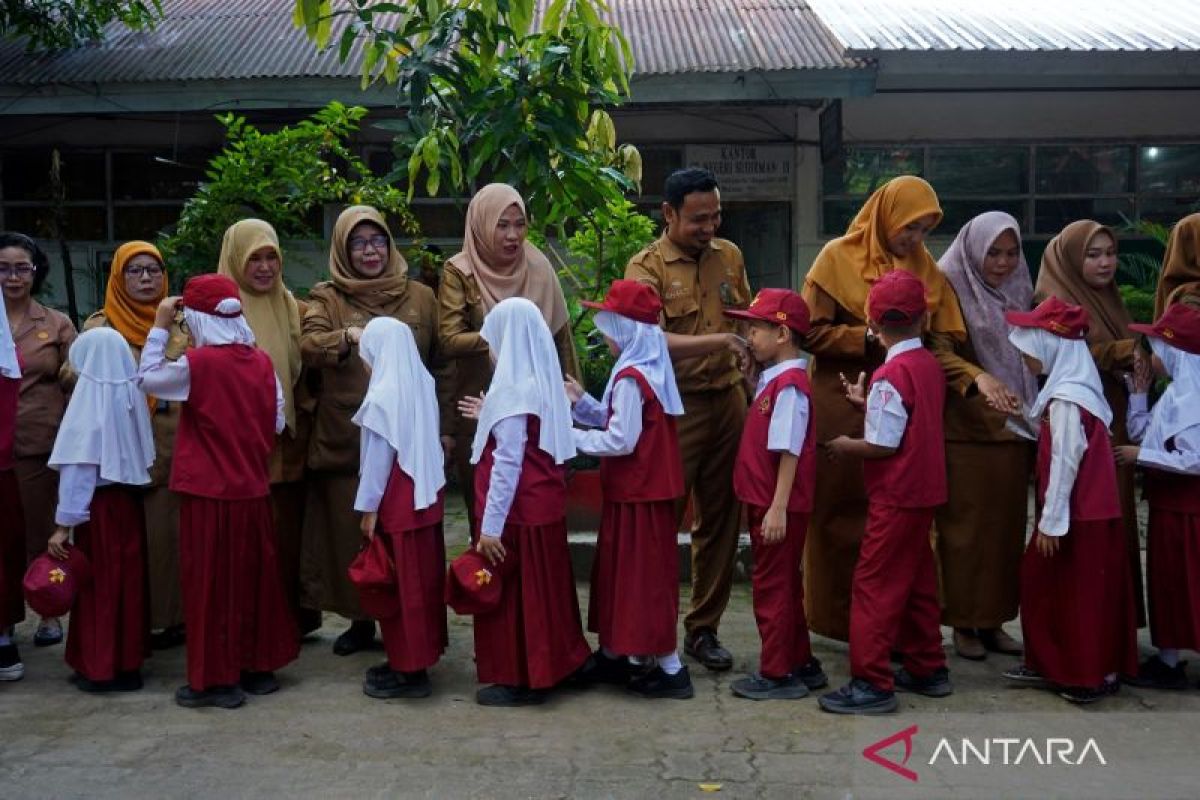
The state needs to position religious instructors as a crucial component of the strategy to maintain national social cohesion.
Jakarta (ANTARA) - Discussions regarding the termination of assignments for non-ASN teachers on the cusp of 2027 have triggered waves of anxiety at the grassroots level of Indonesian education. Although the government has emphasised that there will be no mass dismissals, many honorary teachers continue to live in uncertainty and unease due to the policy transition towards ASN and PPPK restructuring.
This anxiety has arisen particularly following the issuance of Circular Letter from the Minister of Education, Culture, Research, and Technology Number 7 of 2026 on the Assignment of Non-ASN Teachers in Public Schools. The circular states that assignments for non-ASN teachers will continue until 31 December 2026 for those already registered in the Dapodik system as of 31 December 2024.
Previously (2024-2025), religious instructors in the Ministry of Religious Affairs were reorganised in accordance with the mandate of Law No. 20 of 2023 on ASN. Thus, the current religious instructors hold ASN/PPPK status. Thousands of honorary religious instructors who failed to pass or were absorbed into PPPK/CPNS recruitment have ultimately faced unprotected fates. Some continue to serve as honorary religious instructors without remuneration, while others have been forced to cease their services altogether.
Data from the Ministry of Religious Affairs indicates that national religious services have been heavily supported by non-ASN instructors for years. Even the national need for Islamic religious instructors is estimated at around 71,000 personnel. This does not yet include the requirements for Christian, Catholic, Hindu, Buddhist, and Confucian religious instructors in various regions of Indonesia.
The fate of honorary workers
The fates of honorary teachers and religious instructors remain uncertain. They are anxious. For years, honorary teachers and religious instructors have served as the “silent backbone” of public services: they are present in remote schools, places of worship, grassroots communities, and even areas difficult for the state to reach. Ironically, their positions often exist in policy uncertainty and lack of welfare.
The government is indeed undertaking the reorganisation of non-ASN personnel. One direction of its policy is to reduce or eliminate traditional honorary recruitment patterns and replace them with ASN schemes, particularly PPPK.
The true objective is to improve governance and avoid practices of appointing honorary staff without status certainty. However, in practice, the impacts are not straightforward. Many honorary teachers and religious instructors feel squeezed: not yet appointed as ASN, while support in the form of honoraria or incentives gradually diminishes.
For the world of education and religious life, this is a serious issue. Teachers are not merely subject instructors, and religious instructors are not simply administrative supplements to religious affairs. They perform fundamental social functions: building moral and religious literacy, preventing intolerance and radicalism, assisting communities in social conflicts, shaping the character of the younger generation, and safeguarding national spaces at the grassroots level.
Therefore, if the state overly emphasises administrative efficiency without considering the sustainability of humane services, what will result is a “social vacuum” in society. The state may succeed in tidying up its bureaucratic structure, but it will lose the social servants who have long supported communal life.