
Defence Spending Amid Risks of Budget Deficit
Facing the threat of the APBN deficit against GDP exceeding the three per cent limit due to external and internal factors, the government appears poised to pursue efficiency policies, or budget cuts. This naturally raises questions about which spending positions will be targeted for trimming in the budgets of ministries and agencies, as well as which regional transfer funds will face reductions.
On the other hand, two major government priority programmes that consume vast budgets are assured to be spared from reductions, even though many parties urge a review of the MBG and KDMP programmes in terms of their scale.
In such conditions, the government’s commitment to avoiding an expansion of the budget deficit beyond three per cent this year is doubtful, as other policies like reducing government employees’ working days do not contribute significantly to curbing government spending activities.
Besides the MBG and KDMP programmes, the next spending activity that adopts a rather fantastical budget is defence spending, where the value of that budget cannot be viewed solely through pure rupiah allocations (RM), but also those derived from debt, both foreign loans (PLN) and domestic loans (PDN).
Although debt withdrawals do not directly widen the deficit, debt costs will become more expensive following the assignment of negative outlooks to Indonesia by Moody’s and Fitch Ratings.
New debt withdrawals, particularly PLN, also require accompanying pure rupiah funds (RMP), although in the context of defence spending, RMP could be zero per cent if the lender agrees. If there are defence spending programmes funded by PLN with zero per cent RMP, it can be assured that the cost of that debt is more expensive than when the lender only funds 85 per cent of the total programme value.
Can defence spending contribute to fiscal management so that the budget deficit does not breach the three per cent limit? Theoretically, the answer to that question is that defence spending can contribute to deficit management.
However, whether this can be translated empirically into policy very much depends on how great the fiscal pressures the government will face in the coming months. As long as the government considers the economic condition to be fine, including by implementing a widening of the budget deficit, it will be difficult to expect that defence spending can be reduced based on a scale of priorities.
If observing the 2020-2024 Blue Book for the Ministry of Defence worth US$34.7 billion, there are more than 10 programmes that are actually not urgent or even unnecessary at all. Such activities appear to be created merely for narrow interests and do not provide significant impact to Indonesia’s defence capabilities as if those programmes did not exist at all.
Although so far the allocation of the Special Medium-Term Foreign Loan Plan List (DRPLN-JM) for 2025-2029 is only US$28 billion, it is reasonable to suspect there are various spending plans that are actually not urgent or significant, thus deserving to be eliminated as part of efforts to maintain fiscal health.
Among the problems related to spending plans using PLN over the 2025-2029 period is the immature planning process because it is top-down in nature and lacks transparency, even though the funds to be financed come from government debt and not from anyone’s personal accounts.
With the application of a scale of priorities, the US$28 billion PLN allocation can certainly be saved up to half of the initial quota, which will imply a reduction in the need for RMP funds. That scale of priorities can be divided into three spending groups, namely platform spending, munitions and missile spending, and weapon system maintenance spending.
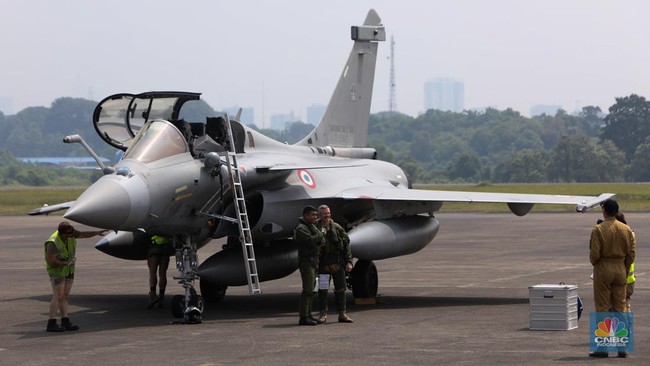
Platform spending includes the acquisition of only two types of fighter jets, namely Rafale and KF-21, along with the Integrated Logistic Support (ILS) package. Similarly, the procurement of two types of frigates and one type of ocean-going submarine, which of course must be one package with ILS to maintain operational readiness for several years since entering service.
Regarding munitions and missile spending, the priority purchases are missiles AIM-120, AIM-9X, AGM-65, JDAM kit, and Mk.82 bombs to support F-16 operational readiness. Imports of Meteor, MICA RF, MICA IR, and HAMMER are a necessity so that the 42 Rafales have hard kill capabilities, in addition to acquiring Talios.
Several ammunitions and missiles used by F-16 and Rafale can also be adopted by KF-21, such as Meteor, Mk.82 bombs, and JDAM kit, besides acquiring KGGB as an alternative to the JDAM kit. The procurement of Exocet MM40 Block III, VL MICA, Teseo, Aster 15, and Aster 30 missiles is non-negotiable because without that armament, Sigma-class corvettes and frigates along with PPA frigates would merely be toothless tigers.
Regarding defence equipment maintenance spending, PLN should be focused on supporting the operational readiness of platforms currently in operation, such as Leopard 2A4 tanks, AH-64E attack helicopters, transport helicopters, various missiles, surface combatant ships, fighter aircraft, and transport aircraft.
For example, will the F-16 fleet be upgraded in capability to match Viper as planned in the 2020-2024 MEF? Similarly, maintenance of the C-130J and A400M fleets that have not long been delivered to Indonesia.
The existence of the Ministry of Defence’s Maintenance and Care Agency is inseparable from the intention and efforts to improve the operational readiness of various combat platforms that have so far been assessed to have readiness levels not up to expectations.
Regarding munitions and missile spending matters, to date data