
Deepfakes and the Direction of Human Happiness
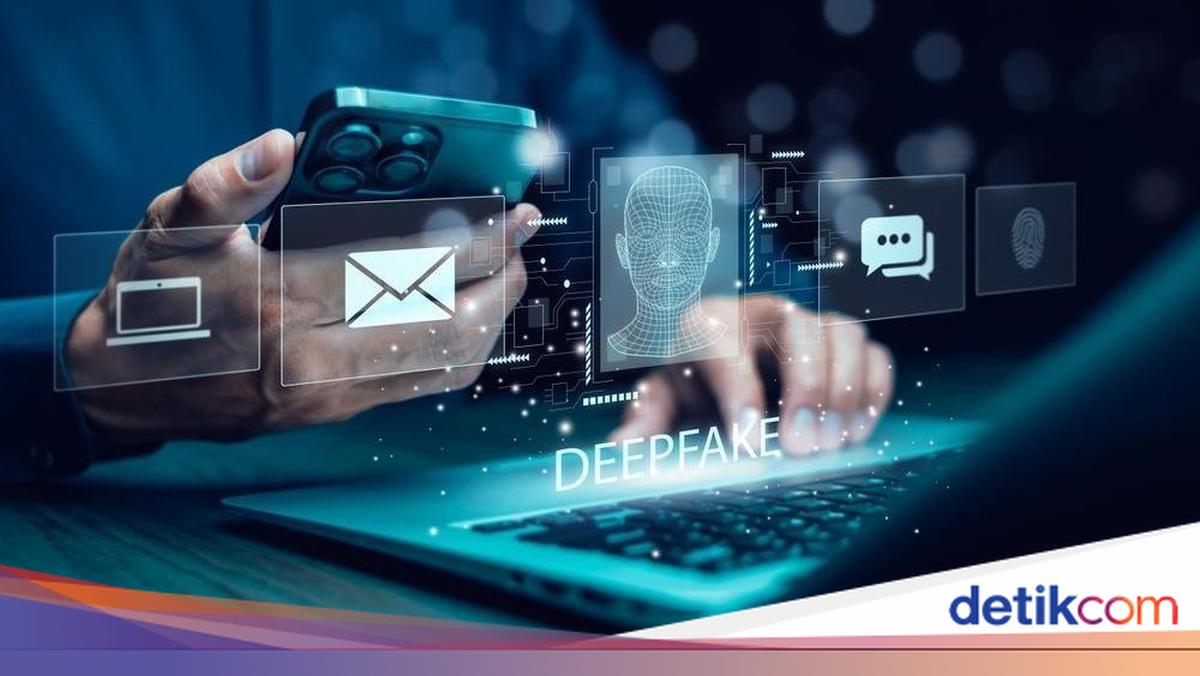
Would humanity be happy if technology could breach the boundaries of life itself, freeing it from death? Today, technologically speaking, it is remarkably simple to “resurrect” deceased people using deepfakes. If life requires certain conditions to be met, the output of artificial intelligence (AI) production can satisfy them.
The first condition: living humans always communicate. One cannot not communicate. This is a reality whose concept was introduced by Paul Watzlawick in 1967 through a book he co-authored with Janet Beavin Bavelas and Don D. Jackson, titled “Pragmatics of Human Communication: A Study of Interactional Patterns, Pathologies, and Paradoxes”. He explains: in a conscious state—even whilst silent—humans communicate. At minimum, they communicate with themselves. In anxiety, daydreaming, and imagination, humans engage in communication. Therefore, Watzlawick’s account can be interpreted as: the ability to communicate becomes a sufficient condition for humans to be called human. Without it, humans are not human. At least, they are not alive.
Deepfakes fulfil this condition through digital traces collected from humans during their lifetime. The source is the interaction of humans with various digital platforms—emails, social media applications, work applications, shopping applications, information-seeking applications—which can be arranged into communicative material. Machine learning maps it as an algorithm that gathers the communicative behaviour of the resurrected human.
Zeyi Yang, in 2024, in “Deepfakes of Your Dead Loved Ones are a Booming Chinese Business”, provides an illustration. It tells the story of Sun Kai, who frequently makes video calls with his “mother”. The conversations concern work, pressures he faced, and thoughts he had not even shared with his wife. His mother occasionally responds and asks him to take care of himself. From that communication, the emotional connection Sun Kai has with his mother, who passed away five years previously—although her appearance still looks somewhat unnatural—proceeds satisfactorily.
In recent years, the demand to create digital immortality—such as what Sun Kai did—has become a strong trend in China.
Although the deepfakes produced are still rigid like robots, the sheer volume of demand drives the growth in the number of companies supplying them. This triggers an increase in the production tools used, and also pushes forward the maturity of the technology. All of this perfects the product, yet at costs that have dropped dramatically compared to when the technology was first introduced. That cost reduction has made resurrecting deceased people a lifestyle in China.
The tendency to use deepfakes in this manner seems unlikely to remain limited to satisfying domestic emotional connection. Deepfakes have been used in various public realms: marketing, finance, education, social communication and politics. Therefore, creating digital immortality for public purposes is not a complicated matter. The difference with deepfakes that enter the public sphere is that they require more complex intelligence. Beyond the ability of basic communication, such as that achieved by Sun Kai’s mother’s deepfake. The manifestation of this complex intelligence also meets a second condition: living humans are capable of producing creativity, transcending their biological routine.
The AI system, in its advanced process—through deep learning—is capable of producing more complex intelligent products. In the context of deepfakes that resurrect deceased people, this manifests as distinctive responses, identical to the expressions of the person being imitated. Whilst basic communication deepfakes display voice, intonation, pauses between words, complete with facial expressions and body movements identical to the person being imitated, complex intelligence deepfakes are capable of responding to requests in real time.
The complex intelligence described above can be illustrated when financial fraud occurs. In the process of opening an account digitally—through digital onboarding—it is not required that the prospective customer meet face-to-face with a bank officer. The identity verification process can be conducted without an in-person meeting. In the process known as know your customer (KYC), customer identification and verification are conducted through requests to upload photos and other identity documents, followed by a selfie whilst holding the required identity document.
Also as an additional step, a video call is made with activation of the customer’s mobile camera. In the communication through this video call, there is a request to show the face from different angles, according to the bank officer’s instructions. The real-time response becomes an indicator: the person encountered is real. However, today, in banking fraud using deepfakes, that real-time response can be produced for manipulation purposes. Its real-time nature is no longer an indicator of human authenticity.
It appears from the account above that resurrecting the deceased with complex intelligence deepfakes is not something new. Let alone complicated, since the technology is already available. So when someone—a country’s president, a military commander, or a company’s CEO—is needed to remain alive, deepfakes as described above can meet that need. “Maintaining” a human in a living state is useful for preserving state stability, maintaining troop morale during war, and retaining market confidence in a company. For individuals with charismatic characteristics, their death must be concealed.
The necessity for leaders with long lifespans is mentioned by directors-institute.com, 2023, in an article titled “Are Long-term CEOs Beneficial to Business?”. It states: CEOs serving long term create stability and consistency for organisations. Their prolonged tenure enables the CEO to establish a clear vision and implement long-term strategy without the disruption of frequent change.