
"Deep State" in the Prabowo Government
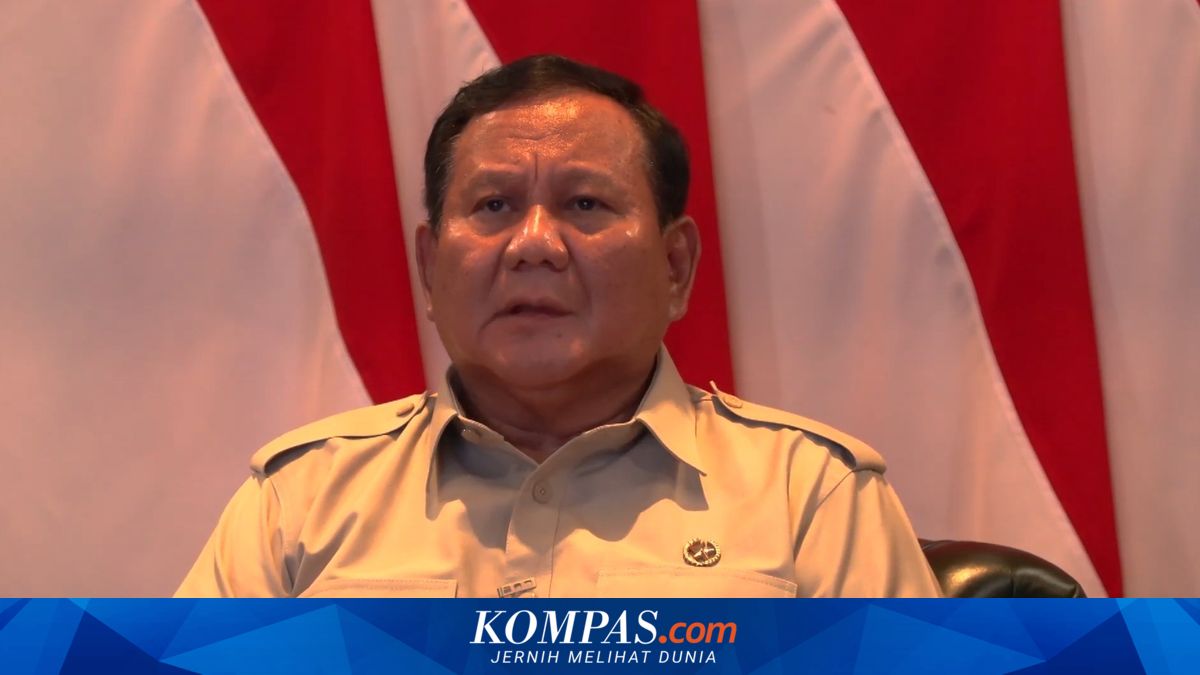
Public Works Minister Dody Hanggodo has acknowledged the existence of a “deep state” in the ministry he leads.
“I admit the deep state exists, it is real. Of course, this triggers fierce clashes between the vision of national renewal and the lust to maintain old hegemony in the bureaucracy involving big players,” said Dody (Kompas.com, 30/3/2026).
This acknowledgement responds to President Prabowo Subianto’s remarks during a discussion with several journalists and experts some time ago. At that time, President Prabowo suspected the presence of a group of officials allegedly engaging in systemic defiance against political authority. These officials include echelon I or those equivalent to director generals (dirjen), who are suspected of practising untouchable defiance.
The term “deep state” is not as popular in Indonesian political studies as “oligarchy” or “state capture”. However, the Public Works Minister’s acknowledgement is intriguing to dissect, not merely for academic consumption, but as a warning and challenge for the Prabowo government.
The term “deep state” (shadow state or state within a state) refers to a hidden power network consisting of elements within the government—such as the military, police, intelligence, or senior bureaucrats—that operates independently outside official political authority.
They possess significant power to shape domestic and foreign policy. They have their own agenda. They can even resist or hinder official policies, and are often unaccountable to the public.
The bureaucracy is considered an important part of the “deep state” because it is needed in the implementation of government policies. The problem is that although presidents change as a result of elections, bureaucratic officials do not necessarily change.
The Public Works Minister’s acknowledgement confirms that the shadow state in the ministry managing a massive budget is not an illusion. The minister admits that the institution he leads is a fertile ground with strong appeal for officials to engage in illegal actions.
For 2026 alone, the Public Works Ministry’s budget reaches approximately Rp118.5 trillion. This figure has seen a significant increase of Rp47.64 trillion from the initial indicative allocation of only Rp70.86 trillion.
Dody Hanggodo assesses that several senior bureaucrats are no longer mere implementers of policy, but architects of networks that control the flow of information, technical regulations, and closed procurement schemes from external oversight. He suspects that these senior officials feel they have a more permanent position compared to ministers who are transitional political appointees. Mastery of data and complex technical networks becomes their main capital to dictate policy.
He admits that the form of defiance expressed by President Prabowo during the discussion with several journalists and experts is not always in the form of open confrontation, but through “silent resistance” that damages policy acceleration.
The weak also have models of silent resistance. James C. Scott calls it “everyday forms of resistance”. The difference is that the silent resistance of the “deep state” is organised in the form of networks; the everyday resistance of the weak is individual and unorganised.
The Public Works Minister has identified three main patterns of such defiance. First, slowing down policy execution by withholding technical approvals administratively to accommodate the interests of certain vendors or partners.
Second, cutting off the minister’s access to real field data, so that the policies taken become inaccurate. And third, directing budgets to projects that technically appear crucial, but are actually only to benefit the “deep state” network.