
Dedi Mulyadi: WFH in West Java can reduce operational costs
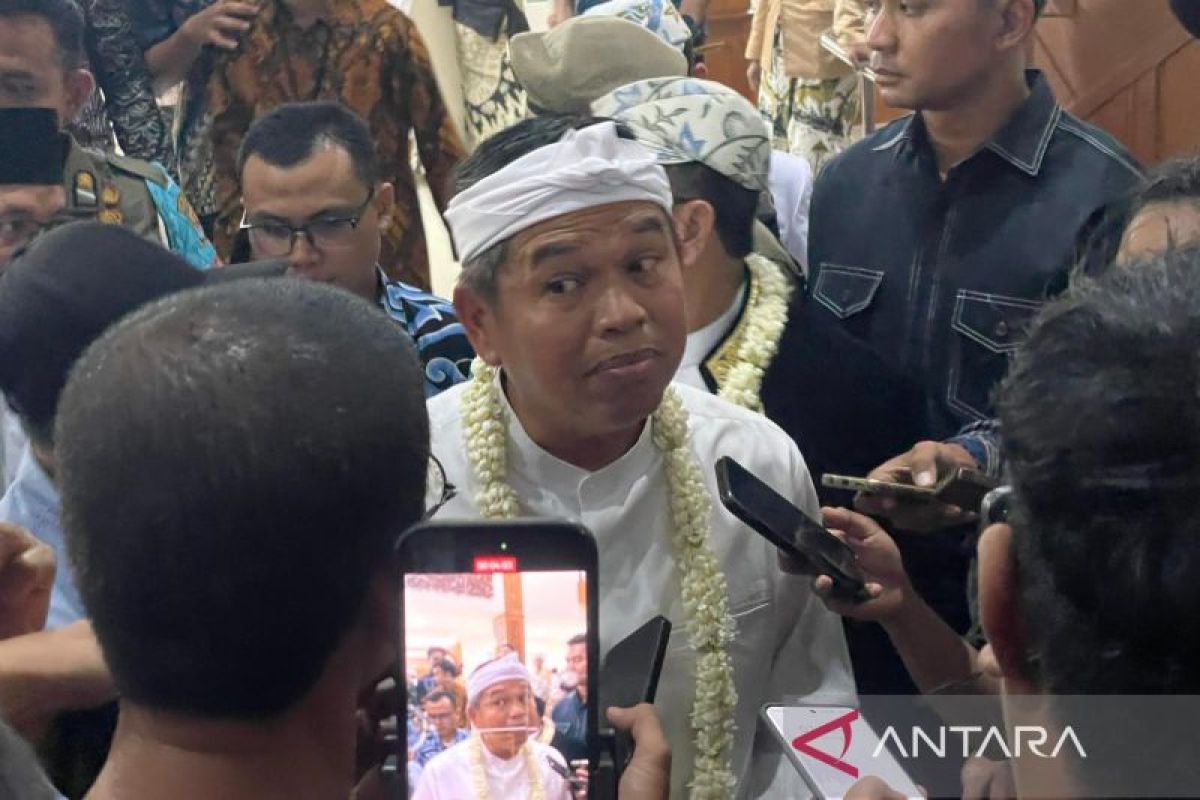
Cirebon (ANTARA) - West Java Governor Dedi Mulyadi stated that the implementation of work-from-home (WFH) policies within the West Java Provincial Government (Pemprov Jabar) can reduce bureaucratic operational costs and improve regional budget efficiency.
He said that WFH in West Java is not a new initiative, as it has been running for some time before the recent reinforcement from the central government.
“WFH in West Java has been ongoing for a long time and has been running well. So if today there is reinforcement from the central government, we are even happier,” Dedi said in Cirebon on Thursday.
According to him, the policy has been applied since around six months ago and is part of the changes in work patterns within the government environment.
In addition to WFH, Pemprov Jabar is also promoting changes in public habits, such as encouraging students to walk to school and limiting the use of motorised vehicles.
“We have long encouraged children to walk to school. And not to bring motorised vehicles,” he said.
Dedi explained that the policy has two main objectives: internal government efficiency and reducing energy consumption.
From the internal side, he said, WFH is considered capable of reducing bureaucratic operational costs, which have previously been quite substantial.
“The first, from the internal government side, it lowers the government’s production costs,” he stated.
He mentioned that savings are achieved through reduced usage of electricity, internet, and water, allowing the budget to be redirected to development sectors.
The saved budget, Dedi continued, can be utilised for infrastructure development, education, and health services.
Furthermore, his side assesses that the policy also impacts the reduction in petroleum fuel (BBM) usage as the mobility of civil servants (ASN) in Pemprov Jabar decreases.
“The second is that today WFH also aims to reduce BBM usage,” Dedi said.
He explained that the implementation of the policy is evident from the declining bureaucratic costs within Pemprov Jabar and the reduction in official travel expenses.
Dedi stated that the composition of employee spending in West Java is now more controlled, while the portion of the budget for development is larger.
“West Java’s employee spending is now only 30 percent. 60 percent is already for building,” he said.