
Dedi Mulyadi: Rp2 Trillion Infrastructure Loan Not Due to Vehicle Tax Exemption
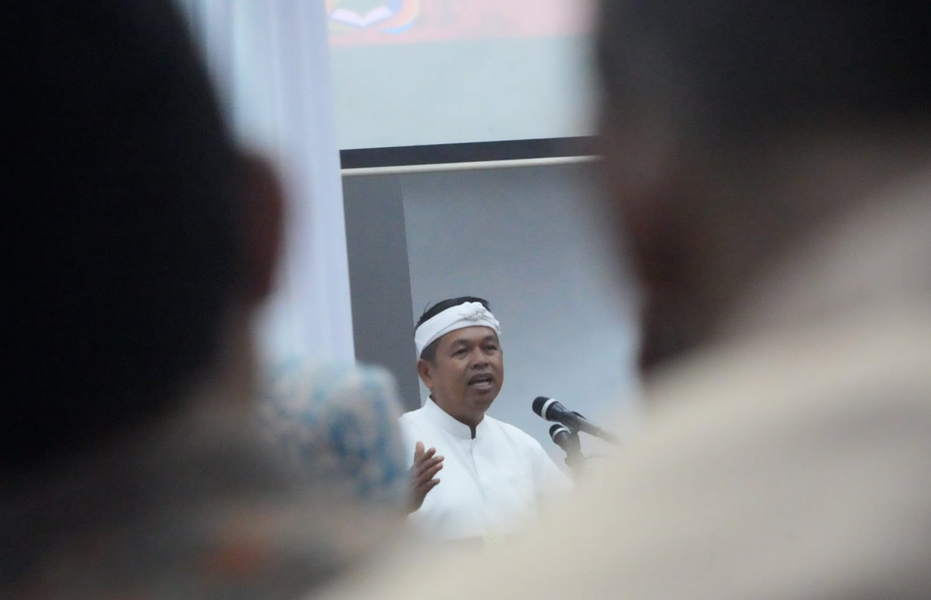
West Java Governor Dedi Mulyadi (KDM) has clarified that the planned regional borrowing worth Rp2 trillion has no connection to the vehicle tax exemption (PKB) policy previously implemented. He claimed the tax amnesty programme had a positive impact on regional revenue, adding approximately 1.4 million new taxpayers in West Java.
“The vehicle tax exemption was actually very beneficial. It was able to increase vehicle tax revenue. As for the planned infrastructure development loan currently directed to BJB, it is still in the assessment stage. This option emerged not because of a decline in tax revenue, but as a result of delayed financial rights of the West Java Regional Government from the central government,” Dedi explained on Monday (2 March 2026).
Dedi outlined two main reasons for the loan option. Firstly, the Tax Revenue Sharing Fund (DBH) for 2023–2025 has not been fully received, with the value estimated to approach Rp1.5 trillion, of which more than Rp1 trillion has been recognised. Secondly, there is a delay in the 2026 tax revenue sharing of approximately Rp2.43 trillion. “This amounts to more than Rp3 trillion of West Java Regional Government finances delayed from the central government,” he said.
Despite tight fiscal conditions, Dedi affirmed that the strategic development agenda remains on track. Priority projects including the construction of Puncak II Road (more than Rp1 trillion), Cimahi underpass (Rp150 billion), Citayam underpass in Depok (Rp170 billion), and Bulak Kapal flyover in Bekasi (Rp270 billion) remain the focus.
Dedi added that if the loan is realised, the repayment period will be limited until the end of his tenure in 2030. “The loan will only apply during my leadership; it will not burden the next administration,” he said.
Deputy Chair of the West Java Regional House of Representatives (DPRD) Ono Surono expressed support for the planned Rp2 trillion regional borrowing to cover fiscal burdens and finance 2026 infrastructure projects. This step is considered realistic given the fiscal pressure on the West Java Regional Government, a reduction in Transfer to Regions (TKD) of Rp2.4 trillion, outstanding revenue sharing since 2023, and suboptimal Original Regional Revenue (PAD) achievement.
“Not to mention outstanding payments of approximately Rp631 billion that must be settled this year. This borrowing scheme is more appropriate than halting or postponing priority programmes already agreed with the DPRD,” said Ono.
Ono added that the loan is not for new projects outside the 2026 budget, but rather to support activities already planned, including the development of Puncak Bogor II and other strategic projects. The process will still go through DPRD approval, likely to be included in the 2026 budget amendment. Instalments are estimated to be divided over three to four years, starting from 2027 to 2030, with a burden of approximately Rp200–300 billion per year.
“West Java’s budget structure is still capable of bearing the instalments, even though the province is also paying old debt obligations of approximately Rp600 billion per year, including the National Economic Recovery (PEN) programme. Priority infrastructure projects are important for promoting economic growth and alleviating congestion in activity centres such as Puncak Bogor, Bekasi City, and the Rebana area,” Ono added.