
Deconstructing the Tax and Zakat Paradox: Does Salary Deduction Really Burden Workers?
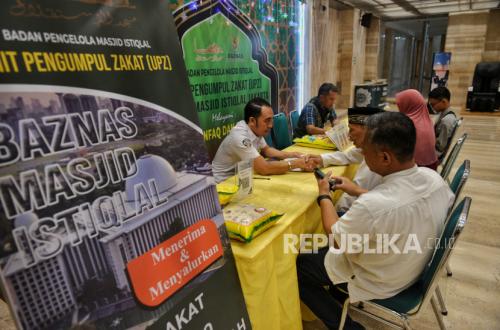
The debate surrounding automatic payroll deductions for zakat (Islamic alms) consistently generates heated discussions among workers. On one hand, there is concern that such deductions are burdensome, particularly for employees with modest salaries. Conversely, tax instruments with far larger deductions rarely spark debate due to clear penalties: late tax return filing incurs fines of Rp 100,000 per month, and tax manipulation can result in criminal prosecution.
Why do citizens comply more readily with state law than with the religious law they profess to believe in? The answer lies in misconceptions about the nature of zakat and the absence of positive legal sanctions. People shelter themselves behind assertions that “zakat must be given willingly” or “I am not yet ready”, yet in Islamic literature, zakat is not voluntary charity like sadaqah, but rather an absolute obligation for the capable—just as taxes are mandatory for citizens.
The greatest criticism of automatic payroll deduction systems is the fear that low-wage employees will be stripped of funds entirely. Herein lies the misconception that requires correction.
Zakat has its own version of a “Non-Taxable Income Threshold”, called Nishab. The absolute requirement for zakat on professional income is that earnings reach the value of 85 grams of gold annually. Based on current gold prices, the zakat nishab threshold stands at approximately Rp 7 million per month in income.
This means that employees earning the regional minimum wage or below the nishab threshold are forbidden by Islamic law from being compelled to pay zakat. They instead occupy a vulnerable position and potentially qualify as mustahik (zakat recipients) rather than muzakki (zakat payers). A correct zakat payroll policy must employ a strict nishab filtering system. For those earning below the nishab, the option should be purely redirected to voluntary infak/sadaqah with any amount (such as Rp 10,000 per month), not a fixed 2.5 percentage, and depends entirely on mutual agreement. Nevertheless, funds entering sadaqah/infak channels remain dedicated to social assistance that supports the needy or helps eradicate poverty in Indonesia.
Many remain sceptical and ask, “What is the point of paying zakat through official institutions if the government already has social assistance budgets from tax revenue?” In fact, taxes are allocated at a macro level (infrastructure, bureaucracy, energy subsidies), whilst zakat operates at a micro level and directly targets grassroots needs (emergency healthcare, education, small business capital). Zakat is a parallel social safety net that is crucial for the nation.
Recent data from the National Zakat Collection Agency (BAZNAS) demonstrates the power of zakat: The first fact requiring joint evaluation is the significant gap between the potential and actual zakat collection realisation in Indonesia. According to the latest research, national zakat potential is projected to reach Rp 327.6 trillion annually. Unfortunately, collection realisation through 2024–2025 has only reached approximately Rp 41 trillion to Rp 45 trillion, or merely 10 to 12 per cent of total potential. This demonstrates that public reluctance to give zakat through structured and institutional channels remains very high, often hindered by ego or zakat literacy misconceptions.
Despite incomplete collection, the funds successfully gathered have demonstrably delivered massive impact on the government’s poverty alleviation programmes. Data records that throughout 2024, BAZNAS RI successfully lifted 577,000 people from poverty. Beyond this, more than 23,000 individuals were rescued and pulled above the extreme poverty line—an intervention crucial for societal social resilience.
This positive impact correlates directly with the expanding reach of social fund distribution to those genuinely in need. The number of mustahik directly benefiting from zakat funds has surged dramatically, from 27.7 million people in 2023 to 37.4 million in 2024. Assistance provided is not merely consumed but realised through productive programmes such as educational scholarships, capital injection for micro and small enterprises, and fulfilment of urgent basic needs.
The most essential achievement of zakat management is its capacity to permanently break the cycle of poverty; zakat not only “gives fish” but “provides a fishing rod”. Throughout 2024, zakat intervention helped thousands meet the Had Kifayah standard (adequate living threshold). Most touchingly, nearly 4,400 individuals achieved status transformation—transitioning from mustahik (assistance recipients) to standing independently as muzakki (new zakat payers).