
Deconstructing the Meaning of Poverty
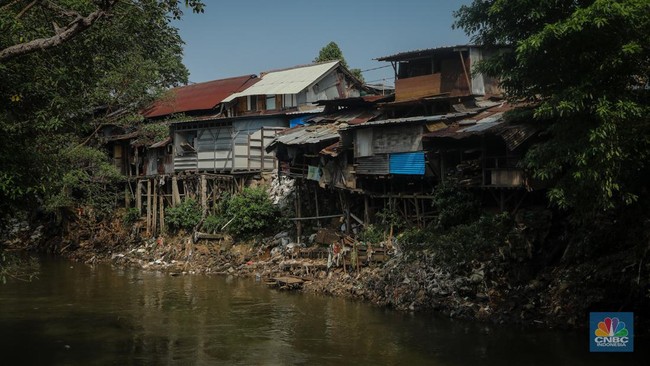
Deconstructing the Meaning of Poverty
In mainstream thinking, economic growth is considered the primary tool for poverty eradication. However, in reality, economic growth frequently becomes a cause of poverty through the appropriation and extraction of natural resources by capital-owning groups.
This practice triggers the phenomenon of “growth immiserizing effect,” a condition where macroeconomic expansion occurs whilst populations living in centres of exploitation experience impoverishment through loss of access to their land and living space.
The growth immiserizing effect is clearly evident in Central Statistics Agency (BPS) data from 2025. Poverty rates in several regions linked to the nickel industry remain above the national average.
In Southeast Sulawesi, the poverty rate stands at 10.54 percent. Central Sulawesi recorded 10.92 percent in March. In Morowali Regency, one of the largest nickel industrial centres, the poverty rate in March was 10.38 percent. Meanwhile, Maluku recorded a higher poverty rate of 15.38 percent in March.
By comparison, Indonesia’s national poverty rate in 2025 stands at 8.47 percent. The nickel extraction and downstream processing that the government takes pride in for economic growth is instead impoverishing communities.
Impoverishment
Poverty in Indonesia is not merely misfortune or individual failure to compete, but rather systematic impoverishment that serves as an operational prerequisite for the growth economy model to continue functioning.
Land seizure, the primary prerequisite, destroys the base capital of indigenous peoples and local communities. Communities that were previously self-sufficient through subsistence economies, supported by natural ecosystem services that sustained their economic and livelihood systems, are now forced into complete dependence on the free market supply chain as a result of losing access to those ecosystem functions.
As occurred in Lebak Rawang, South Sumatra, where company activities and marsh channelisation killed local rice-planting traditions, forcing residents who were formerly rice producers into becoming rice buyers.
Similarly, the indigenous Sawai people of Halmahera lost their subsistence capacity due to extensive nickel mining. Whilst previously food and drink needs were met from their own gardens at no cost, all food items must now be purchased. Bananas, cassava, sago, coconut for cooking oil, vegetables, chillies, and tomatoes that were once available in their yards can now only be obtained at the market.
These two examples represent only a fraction of the many cases of systematic impoverishment increasingly occurring. The practice of enclosure (privatisation), whereby shared resources (the commons) are converted into capital production space for corporations in the name of economic growth.
Difference Between People’s and State Accounting
“Nobody can starve here. There are plenty of pigs, plenty of fish. We grow rice ourselves,” stated Lusang Arang, Customary Head of Lung Isun Village, East Kalimantan (WALHI, in the book Nusantara Economy: 2021). This statement illustrates the fundamental difference between indigenous peoples’ and the state’s perspective and economic accounting.
The state uses Gross Regional Domestic Product (GRDP) per capita or Regional Minimum Wage (RMW) as instruments to label areas managed by indigenous peoples and local communities as “poor” or “underdeveloped.” The Gross Domestic Product (GDP) accounting framework used by government measures the total household expenditure on goods and services.
This means household subsistence consumption by communities through forest foraging, livestock rearing, fishing in rivers, harvesting from their own gardens or home orchards, do not appear in government accounting ledgers. At this point, the “poor” label is attached to indigenous peoples and local communities.
Studies by WALHI (Nusantara Economy: 2021) and AMAN (Indigenous Community Economic Valuation: 2018) expose the state’s misconceived thinking regarding poverty among indigenous peoples and local communities untouched by state-style economic development.
When natural resource wealth such as forest products, river resources, fields, and community gardens are systematically calculated using the lowest market prices, the true economic value of indigenous peoples often far exceeds both the GRDP of the regency and the local RMW.
For example, in Moi Kelim, Sorong, the real per capita income of the community reaches Rp41.2 million annually, surpassing government welfare indicators. Another example: the agroforestry gardens of Tanjung Aur Village, Bengkulu, producing coffee, pepper, cloves, durian, jengkol and other products, generated revenue of 34 billion rupiah in the 2018 harvest season based on the lowest yield estimates.
The economic prerequisite for these communities is the preservation of natural ecosystem services and the security and tenure of communities against threats from extractive licensing expansion. These figures are themselves “extremely minimalist-conservative,” representing an economic valuation approach deliberately conducted with the lowest and most cautious estimates (AMAN: 2018).
Many non-material forms of wealth such as ecosystem services, cultural value, and local wisdom cannot be quantified in rupiah but form the core of community resilience in facing crises.
Thus, the “poor” label is often merely a consequence of the state’s failure to recognise the true economic wealth of communities based on people-managed spaces. As found in the indigenous Lung Isun community, where most needs for customary agricultural rituals or rice planting originate from their ancestral forest (WALHI: 2021).
Nusantara Economy
The economic facts of the people outlined above represent local economic practices that integrate economic, social, and environmental aspects within a single interconnected circle.