
Death of TNI Soldiers in Lebanon Urged to Be Brought to International Court
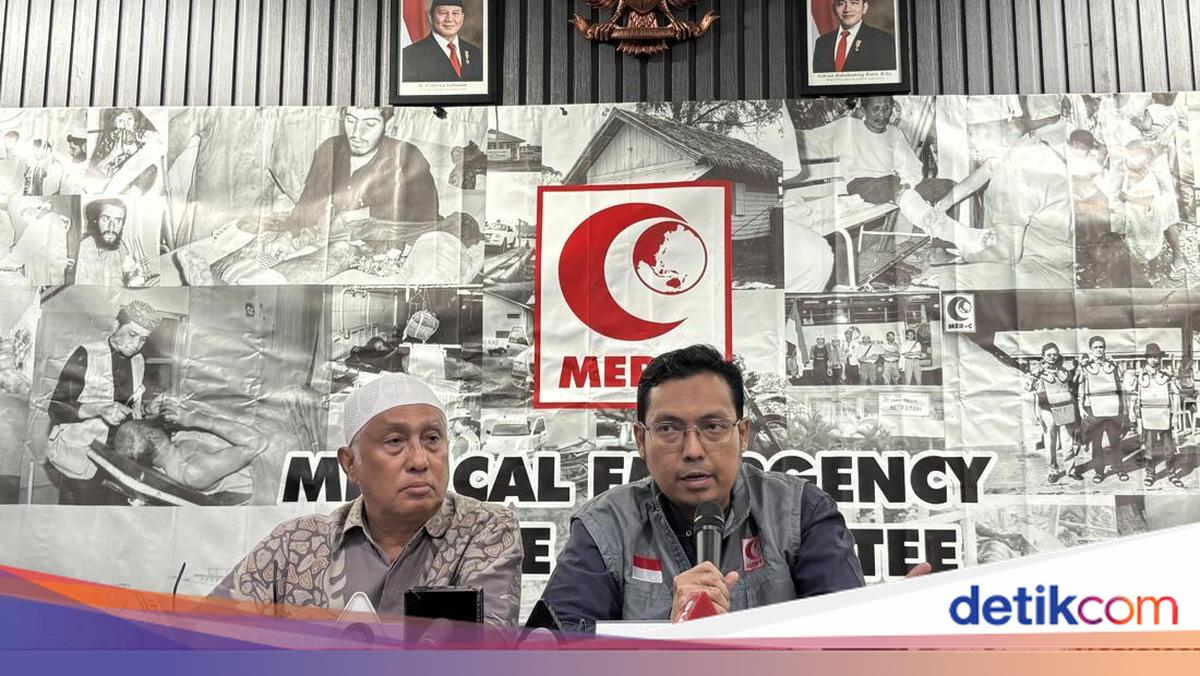
The Medical Emergency Rescue Committee (MER-C) Indonesia, together with the Muslim Lawyers Team (TPM), has strongly condemned the incident resulting in the deaths of three TNI soldiers serving as part of the United Nations Interim Force in Lebanon (UNIFIL). They view the attack as a war crime and are urging the government to promptly bring the case to the International Court.
“MER-C expresses condemnation of the murder carried out against this humanitarian team, as humanitarian tasks in conflict areas should naturally receive protection and not be targeted by violence from any conflicting parties,” stated MER-C Presidium Chairman, Dr Hadiki Habib, during a press conference at MER-C headquarters in Jakarta on Wednesday (1/4/2026).
The three TNI personnel attached to the UNIFIL mission perished while carrying out duties in southern Lebanon. Private First Class Farizal Rhomadhon was killed in an attack between the Israeli military (IDF) and Hezbollah at the UNIFIL base near Adchit Al Qusayr on Sunday (29/3). Meanwhile, Captain (Inf) Zulmi Aditya Iskandar and Sergeant Major Muhammad Nur Ichwan died while escorting a UNIFIL vehicle near the Bani Hayyan area on (30/3).
TPM representative Achmad Michdan stated that the attack on UN personnel constitutes a serious violation of the Rome Statute. He emphasised that the attack meets the elements of a war crime.
“Based on Article 18 Paragraph 2 Letter B Number 3 of the Rome Statute of the International Criminal Court (ICC), an intentional attack directed against personnel, installations, material, units, or vehicles involved in a peacekeeping mission under the UN Charter is categorised as a war crime,” said Michdan.
“Furthermore, UN Security Council Resolution 1701 of 2006 and the Fourth Geneva Convention also explicitly protect peacekeeping forces from all forms of attack,” he added.
Michdan noted that Israel’s repeated targeting of international personnel cannot be tolerated. TPM and MER-C are urging the Indonesian Government, particularly the Ministry of Defence (Kemhan) and the Ministry of Foreign Affairs (Kemlu), to immediately bring the case to the International Court.
“We request that the government take firm diplomatic steps by bringing this case to the International Court of Justice (ICJ) and the International Criminal Court (ICC). In addition, an evaluation of protection protocols for TNI personnel in conflict zones must be conducted immediately,” he said.
Challenges in Repatriating TNI Remains
The evacuation of the three fallen TNI soldiers during the peacekeeping mission in southern Lebanon is still facing obstacles. Michdan stressed that the United Nations (UN) has full responsibility in the repatriation process of peacekeeping remains and must be accountable both morally and technically.
“The UN has an important role in returning the remains on the basis that the UN requested the Indonesian government to send personnel involved in the UNIFIL contingent. Naturally, the Indonesian government must also, perhaps through the Minister of Defence, request the UN’s role in this matter to secure the remains and even return them to their home country,” said Michdan.
Meanwhile, MER-C emphasised that security factors are the primary consideration in the repatriation process amid escalating conflict.
“Indeed, victims who die in conflict areas face the greatest risk for their remains, which cannot be evacuated,” stated MER-C Presidium Chairman Dr Hadiki Habib.
“The repatriation process should not endanger those still alive in the process,” he added.
He highlighted the incident involving the TNI soldiers’ deaths, where the second attack occurred precisely as personnel attempted to evacuate the first victim. Regrettably, the attack took place within the UNIFIL operational area, which should be a safe zone.
He said that the evacuation and repatriation process requires high-level coordination with various conflicting parties, including Israel and the United States (US). Strong advocacy from the Indonesian Government is essential to ensure the safety of teams in the field.
However, Dr Hadiki also emphasised the worst-case scenario if security conditions remain unfeasible for evacuation in the near term.
“Certainly, security here requires connections with various parties. If it is indeed not safe, we must reach the point of accepting that (the remains) are laid to rest or buried in the war area,” he explained.
MER-C Prepares Medical Mission to Lebanon
Despite the heating situation in Lebanon, MER-C has expressed its readiness to send aid. Currently, MER-C is conducting intensive coordination with various parties, such as Kemhan, Kemlu, and the Lebanese Embassy.
“MER-C Indonesia will prepare a humanitarian mission to the area and is currently conducting formal coordinations with relevant parties,” said Dr Hadiki.
“MER-C will focus on medical aid, yes, medical assistance for war victims, both personnel and health logistics. Medicines and so on,” he continued.
The plan is for MER-C to send a team consisting of 4 to 5 people. However, the departure is still awaiting security clearance and a suitable location given the high risks in the war zone.