
Days of Overnight Rain Trigger Flash Floods, Dozens Killed
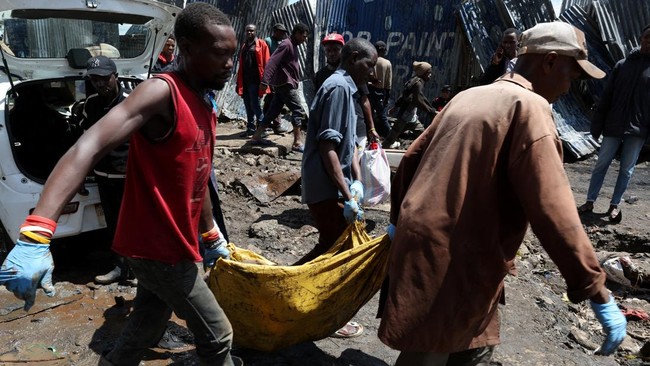
Heavy rainfall battered the Kenyan capital, Nairobi, triggering flash floods that have killed at least 23 people. Local police said search and rescue operations were ongoing amid widespread damage plaguing the city.
The heavy rain has battered Nairobi since Friday night, 6 March 2026, turning main roads into torrents. Thousands of homes and businesses were reported to be submerged.
Rescuers on Saturday continued to evacuate those trapped and recover bodies from various affected locations. AFP reported severe damage to roads and infrastructure, across dense urban areas as well as affluent districts such as Parklands.
Frederick Wasonga, a car-accessory trader in central Nairobi, said the floods arrived after the riverbanks overflowed due to the relentless rain. “The river banks gave way due to the continued rain, vehicles were swept away and water entered our shops, destroying the belongings of many people,” Wasonga told AFP, quoted Sunday 8 March 2026.
Derrick Juma, a workshop worker in the same area, said two of his neighbours, including a person who died in the incident, were among the casualties. “One person was electrocuted… while the other, drenched by the heavy rain, died of the cold while sheltering outside a restaurant,” Juma told AFP.
Kenyan police said that at least 29 people were rescued overnight as the floods raged. The authorities were also still receiving reports from residents in need of assistance.
Officials said they remained fully on alert at affected points.
“We remain fully deployed, actively responding to emergency calls and continuing search and rescue operations,” the police said.
Rescue operations were becoming more challenging as rain fell again on Saturday night.
Kenya Red Cross spokesperson Munir Ahmed said the damage was very extensive, not limited to the capital. “We are witnessing widespread devastation… many parts of the city have been affected, but also several other areas across the country,” he said.
Meanwhile, President William Ruto said the government had ordered the deployment of emergency response teams to coordinate rescue operations. “We realise that these floods once again underline the urgent need for long-term solutions to the recurring flooding problem in our urban areas,” he wrote on X.
Nevertheless, the disaster has sparked public anger towards the Nairobi city government. Many residents blamed the authorities for failing to fix the drainage system and road infrastructure that have long been a problem.
Nairobi Governor Johnson Sakaja had previously promised to improve the drainage system and road conditions when he took office in 2022. However, some activists say the promise has not been fulfilled. “Sakaja should be in jail, not in the government offices,” said the renowned activist Nelson Amenya on X. Amenya also said Nairobi lacks an adequate flood management system, noting, “There is no rainfall drainage system… I do not see any active flood management or even any preparation by the Nairobi city government,” he said.
Several studies in the past two decades show East Africa experiencing an increased frequency of extreme weather events, including heavy rains and drought. One study on rainfall variation published in Scientific Reports in 2024 is among those cited.
AFP had previously reported that Mandera in the northeast of Kenya faced emergency-level drought last month, causing the deaths of many livestock.
These extreme weather phenomena are not confined to Kenya. Neighbouring countries such as Somalia and Ethiopia are also facing similar impacts.
The heavy rains that triggered floods also affected the transport sector. Kenya Airways said several flights were diverted from Nairobi to the coastal city of Mombasa because of the weather.
The Kenya Red Cross also reported hundreds of households in surrounding county areas affected by the floods.
In addition, large tracts of farmland were reported damaged by the flooding.