
Data Centre Boom in Indonesia: Great Opportunities but Real Challenges - ICT Magazine
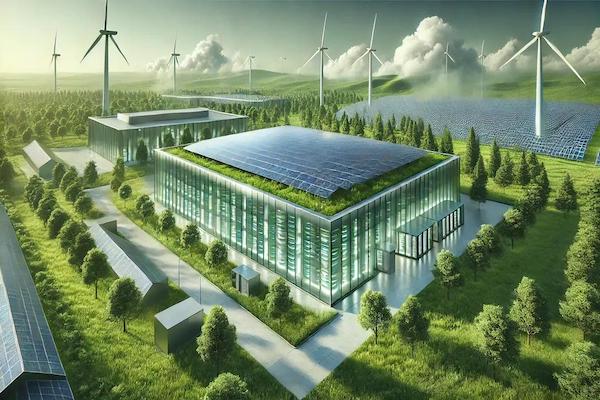
In recent years, Indonesia has transformed into one of the most attractive markets for the data centre industry in Southeast Asia. The surge in digital needs, internet-based economic growth, and increasingly pro-investment government policies have created an unmissable momentum.
This phenomenon is not merely ordinary growth—it is a “boom” that is reshaping the national digital infrastructure landscape.
Surge in Demand: The Main Engine of Growth
The growth of data centres in Indonesia is not occurring in a vacuum. It is driven by an explosion of digital activity that permeates almost all sectors.
The continuously increasing number of internet users, widespread smartphone penetration, and adoption of cloud-based services have created a massive need for data storage and processing. E-commerce platforms, fintech, and streaming services are the main contributors to the surge in data traffic.
On the other hand, the pandemic a few years ago drastically accelerated digital transformation. Habits of working, learning, and transacting online have become the new norm—and that need has not diminished, even after the situation returned to normal.
Indonesia as a Regional Investment Magnet
Its geographical position and domestic market potential make Indonesia a target for expansion by both global and regional players.
Several technology giants and international data centre operators have begun building large-scale facilities in the Jakarta area and its surroundings. Areas such as Bekasi, Cikarang, and Karawang are developing into new data centre clusters.
The reasons are clear: Indonesia is the largest digital market in Southeast Asia, with growth far from saturation. Additionally, regulations on data placement (data localisation) also encourage companies to build infrastructure domestically.
Shift to Hyperscale and Cloud
A prominent trend in this boom is the emergence of hyperscale data centres—facilities with very large capacities designed for cloud needs and global technology companies.
This model differs from conventional data centres. It is built on a massive scale, with high efficiency and rapid expansion capabilities. Along with that, cloud services are also experiencing significant growth, making Indonesia an important hub in the region.
In addition to hyperscale, the concept of edge computing is starting to attract attention, especially to support applications with low latency needs such as IoT and real-time services.
Economic Impact: More Than Just Technology
The data centre boom does not only impact the technology sector but also creates multiplier effects for the economy.
Large investments in building these facilities open up job opportunities, drive growth in the construction sector, and increase demand for energy and network connectivity.
Furthermore, the presence of data centres strengthens the national digital ecosystem. Startups, technology companies, and even traditional sectors now have access to more reliable and scalable infrastructure.
In the long term, this has the potential to enhance Indonesia’s competitiveness on a global level.
Challenges: Energy, Land, and Regulation
However, behind the great opportunities, there are no small challenges.
Energy consumption is the main issue. Large-scale data centres require enormous amounts of electricity, thus putting pressure on the national energy supply. This also raises questions about sustainability and carbon footprint.
Additionally, the availability of strategic land around economic centres is becoming increasingly limited. Supporting infrastructure such as fibre networks and stable electricity supply also become crucial factors in determining construction locations.
On the regulatory side, although there has been progress, industry players still face challenges in terms of permitting and policy certainty.
Towards Southeast Asia’s Digital Hub?
With all the potential and challenges that exist, the big question that arises is: can Indonesia become the main data centre hub in Southeast Asia?
The answer depends on policy consistency, energy infrastructure readiness, and the ability to attract and retain investments.
If managed properly, this data centre boom will not only strengthen the domestic digital ecosystem but also position Indonesia as a key player in the regional digital architecture.
In the end, data centres are not just buildings full of servers. They are a symbol of the economic shift—from physical-based to data-based. And Indonesia, at present, is at a crucial point in that journey.