
Danantara's Gold Mine Gambit Stalls
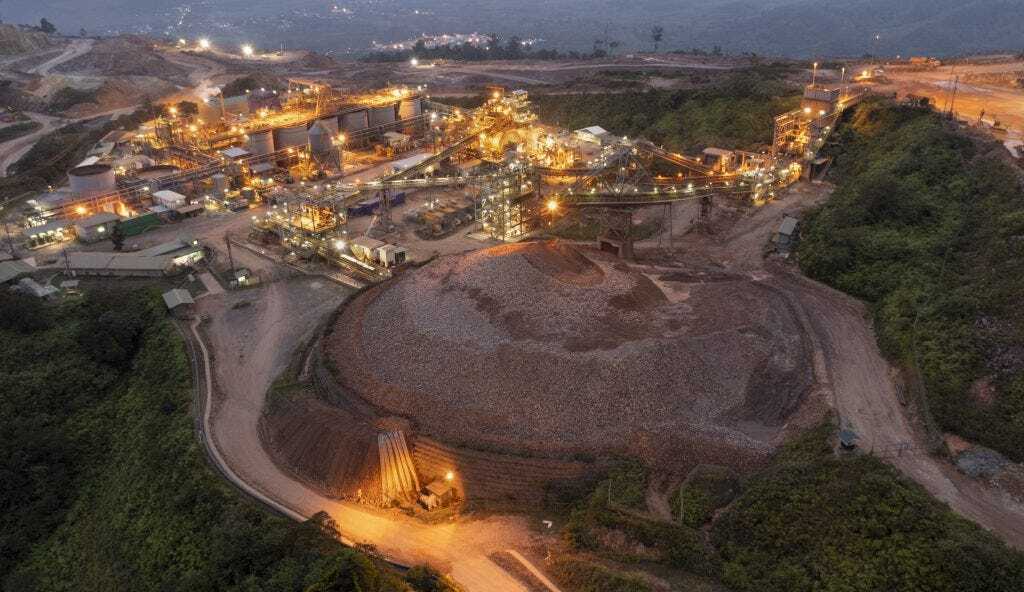
By: Ainur Rohmah The ambition was as glittering as the ore buried deep beneath the rainforests of northern Sumatra. Danantara, Indonesia’s formidable new sovereign wealth super-agency, had set its sights on the Martabe gold mine, a crown jewel of the archipelago’s mining sector. The plan was bold: seize the asset from its current operators and place it under the mantle of a newly minted state-owned enterprise, Perusahaan Mineral Nasional, or Perminas. But in the corridors of power in Jakarta, the gears of this high-stakes takeover have begun to grind and screech. What was initially presented as a swift exercise in environmental accountability has morphed into a cautionary tale of regulatory overreach, sending tremors through the international investment community and forcing the government of President Prabowo Subianto into a delicate, and public, retreat. At the heart of the dispute is PT Agincourt Resources, the operator of Martabe and a subsidiary of United Tractors, which is in turn part of the Astra International conglomerate—a pillar of the Indonesian economy majority-owned by the Singapore-based Jardine Cycle & Carriage. The international ownership structure has only heightened sensitivity around the proposed takeover. Investors warn that abrupt intervention in a project of this scale could reverberate far beyond Sumatra. Floods drive uncertainty The government’s opening gambit was framed by tragedy. Following devastating floods and landslides in Sumatra that claimed more than 1,200 lives, a government task force on forest land use (PKH) pointed an accusatory finger at 28 companies, including Agincourt. The authorities alleged that mining operations had compromised the soil’s ability to absorb rainfall, catastrophically worsening the natural disaster. On these grounds, the government moved to revoke the licenses of the accused firms. Yet, the mining elite and legal scholars greeted the move not with applause for environmental stewardship, but with profound skepticism. Rumors began to swirl that the revocations were executed without formal administrative warnings or written notices—a breach of the very due process that Indonesia has spent years trying to convince global markets it upholds. Ari Setiyawan, the corporate secretary of United Tractors, confirmed that the Ministry of Environment had filed a lawsuit seeking Rp200.99 billion (US$12.8 million) for environmental damages. However, he noted a conspicuous silence regarding the main event: “Agincourt has not received any official information regarding the government’s plan to transfer the Martabe mining business license to the state-owned Perminas.” Climate of Fear The Martabe mine has no peripheral operation. Spanning a 635-hectare core within a massive 130,252-hectare concession, it operates under a “Contract of Work”—a prestigious, legacy legal framework from the 1990s that offers investors more stability than standard mining permits. For decades, Martabe has been a symbol of lucrative, large-scale extraction, boasting reserves estimated at 6.1 million ounces of gold and 59 million ounces of silver. When Dony Oskaria, the Chief Operating Officer of Danantara, prematurely announced that Perminas would take over Agincourt’s operations, he perhaps underestimated the backlash. Industry advocates quickly rallied, portraying the move as a threat to the sanctity of contracts. Rachmat Makkasau, Chairman of the Indonesia Mining Association, stepped forward to defend Agincourt, noting that the company had consistently received “Green Proper” ratings—the government’s own badge of excellence for environmental management. He warned that the state must ensure a fair assessment if it wishes to keep the investment climate from freezing over. The legal arguments are even more pointed. Sudirman Widhy Hartono, Chairman of the Association of Indonesian Mining Professionals (Perhapi), argued that the government’s approach was fundamentally flawed. Because Agincourt holds a Contract of Work, the state cannot simply “revoke” a permit; it must terminate a bilateral contract, a process that usually requires three formal warnings and, if disputed, a trip to international arbitration. “Administrative actions that do not follow legal procedures are at risk of being qualified as defective, both procedurally and substantively,” Sudirman said. The stakes for Indonesia are not merely local. If Agincourt chooses to fight, the Indonesian government could find itself in an international arbitration court, facing claims for billions of dollars in lost investment and potential revenue. As the pressure mounted, the government began to blink. Bahlil Lahadalia, the influential Minister of Energy and Mineral Resources, recently revealed that the President had ordered a re-evaluation of the environmental allegations against Agincourt. “If there are indeed no violations, we must restore the rights of the investors,” Bahlil said, adopting a significantly more conciliatory tone than the administration had struck weeks earlier. He was quick to deny that any “special lobbying” had influenced the change of heart, framing it instead as a commitment to “legal certainty.” Rosan Roeslani, the Minister of Investment, corroborated this pivot, noting that his office is now reviewing Agincourt’s hydrological and environmental data. It appears the government is looking for an off-ramp from a confrontation it may have provoked too hastily. The Perminas Enigma The saga has cast a harsh light on Perminas, the vehicle intended to spearhead this new era of resource nationalism. Public records show the company was incorporated on November 27, 2025—the very week the floods devastated Sumatra. To many observers, the timing was too coincidental to be ignored; it looked less like a strategic state enterprise and more like a “repo-man” for private assets. The State Secretary, Prasetyo Hadi, has defended the entity, stating that Perminas is designed to secure “critical minerals” that have been