
Danantara Invests US$1 Billion in Waste-to-Electricity Project in Jakarta
Jakarta, CNBC Indonesia — The Investment Management Agency Daya Anagata Nusantara (BPI Danantara) has revealed that the total investment for the Waste-to-Electricity Processing (PSEL) project in DKI Jakarta amounts to US$1 billion.
Danantara’s Chief Executive Officer, Rosan Roeslani, stated that the calculation is based on processing 8,000 tonnes of waste per day.
“So, if we’re talking about 8,000, the investment is approximately US$1 billion,” he said at the Graha Mandiri building in Jakarta on Monday (4/5/2026).
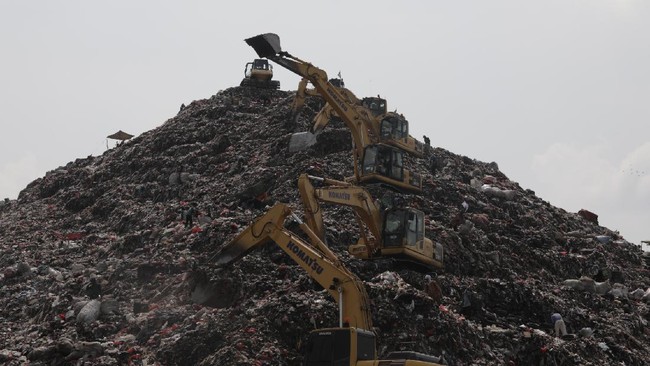
Rosan explained that the construction of the PSEL in Jakarta will exceed the capacity of 8,000 tonnes per day. This is to process old waste, with the hope that the final waste processing site in Bantar Gebang will be clean without the need for waste sorting.
“It could be 10,000, it could be 12,000. So that the old waste can be taken. Because with this new technology, even old waste can be processed. Not just new waste,” he revealed.
Rosan disclosed that the total waste in DKI Jakarta currently reaches 60 million tonnes and falls into the category of a waste emergency area, attracting special attention from President Prabowo Subianto of the Republic of Indonesia.
“This will now be followed up immediately, and the plan is indeed to proceed with the construction process,” he said.
The waste will then be collected by PT PLN (Persero) at a rate of US$0.20 or 20 cents per kWh.
He mentioned that there will be three PSEL locations in DKI Jakarta, targeted to operate in 2028.
“Whether in Bantar Gebang or Sunter, or one more—there are three, but we will study which is more efficient, better, and faster, because the target is that if we process this, at least by early 2028 it can already operate,” he explained.
Rosan assured that with the sophistication of the technology applied in this waste processing, it will not only be faster but also environmentally friendly.
“So it can be done directly, because we also consider the environment, the odour issues, the land problems. We pay very close attention to all of that,” he concluded.