
Danantara CEO Reveals Key Criteria for Prioritising Downstream Industry Project Financing
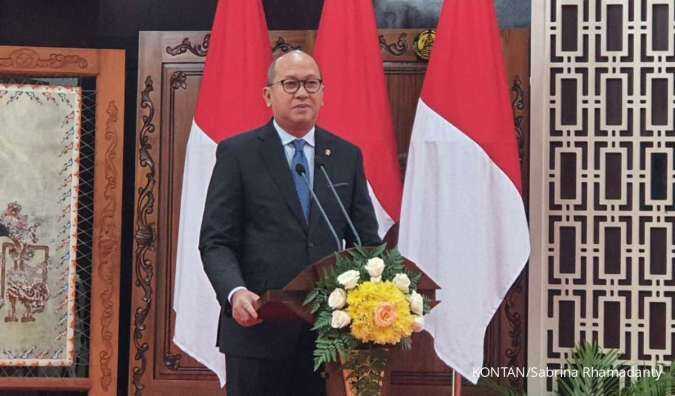
Chief Executive Officer (CEO) of Danantara and Minister of Investment and Downstreaming/Investment Coordinating Board (BKPM) Rosan Perkasa Roeslani has disclosed the main criteria that must be met for downstream industry projects to be prioritised for financing by Danantara.
Rosan made the remarks after receiving 18 downstream industry projects that had undergone preliminary studies or pre-feasibility studies from the Chairman of the Task Force for the Acceleration of Downstreaming and National Energy Security, who is also Minister of Energy and Mineral Resources (ESDM) Bahlil Lahadalia, on Tuesday (22/07) in Jakarta.
One of the key criteria that must be met, according to Rosan, is that the downstream project must create the greatest number of jobs.
“We have to assess from all angles, of course. But one thing I can perhaps convey is that for us, the greatest job creation is paramount,” Rosan said.
Of the 18 downstream projects, 12 are in the energy sector, three in the marine and fisheries sector, and three in the agriculture sector. According to data from the Downstreaming Task Force, the highest labour absorption comes from mineral and coal downstream projects at 104,974 workers, followed by marine and fisheries downstream projects at 67,100 workers and energy security projects at 50,960 workers.
If all 18 projects proceed, they are predicted to create employment for 276,636 people.
Regarding the financing scheme, Rosan said financing options could come from Danantara, or through a combination with state-owned enterprise (BUMN) members and the private sector.
“The financing remains open, actually. So it could come from Danantara, through existing BUMNs, or through cooperation between existing BUMNs and Danantara,” he added.
For cooperation with the private sector, Rosan also expressed his desire for investment in these downstream projects to utilise the best available technology.
“We could also invite the private business sector, both domestic and foreign, because we also want to ensure that when we invest, the technology we use is the very best,” he explained.