
Danantara Becomes the Sole Exporter of Strategic Natural Resources
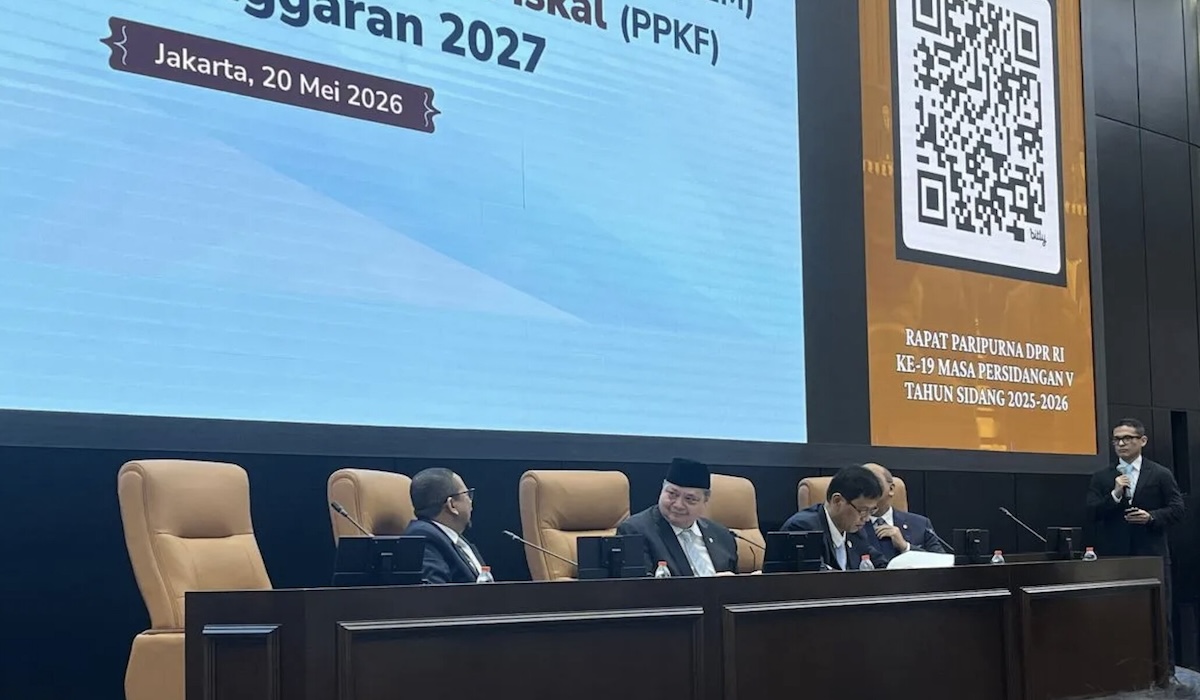
The Government is preparing a major overhaul of the governance of exports for Strategic Natural Resources (SDA). From September 2026, the entire process of exporting coal, palm oil, and ferro alloy is planned to be carried out through a dedicated state-owned enterprise established under Danantara.
The Coordinating Minister for Economic Affairs Airlangga Hartarto said the policy is a direct instruction from President Prabowo Subianto to strengthen oversight of strategic resource exports while optimising the country’s foreign exchange earnings.
“The government will regulate the governance of all exports of strategic SDA commodities so that they can only be conducted by an export-oriented state-owned enterprise or Danantara Sumber Daya Indonesia,” Airlangga said at a press conference at the DPR Building, Jakarta, on Wednesday (20/5).
According to Airlangga, the move was taken because the export of natural resources still dominates national trade. The three main commodities to be the initial focus are coal, with an 8.65% contribution to total national exports, CPO 8.63%, and ferro alloy 5.82%.
The government considers that export management needs tightening following ongoing mis-invoicing and under-invoicing practices in international trade. These practices occur when Indonesia’s export data differs from the records of the destination country, impacting foreign exchange, exchange rate stability, and the accuracy of trade data.
He explained that the government has prepared a special company named Danantara Sumber Daya Indonesia to perform supervisory functions as well as manage the exports of the strategic commodities. The formation of the company is said to have been carried out by the Ministry of Investment together with Danantara.
In the initial phase, the new scheme will be applied in a transitional three-month period. During this phase, export transactions will still be conducted directly by exporting companies with buyers abroad. However, all export documents will be processed through Danantara Sumber Daya Indonesia.
“Once again I reiterate that export transactions will still be conducted by the company with the buyer, but the export documentation will be carried out by the BUMN Danantara Sumber Daya Indonesia,” he said.
After the evaluation period ends, the government targets that all processes—from trade contracts, shipment, to payment—will be fully carried out through Danantara Sumber Daya Indonesia starting 1 September 2026.
Airlangga assessed that this policy can strengthen Indonesia’s bargaining position in global markets while maintaining the stability of national commodity prices. The government also hopes the move will increase foreign exchange reserves, strengthen the rupiah’s exchange rate, and curb illegal trade practices.
“With the President’s remark earlier, this is a marketing arm; it strengthens Indonesia’s bargaining position with buyers abroad, thus stabilising prices and increasing market share in the export market,” he said.
In addition to strengthening the control of export-derived foreign exchange, the government also aims for the new governance to enhance trade data transparency and optimise state revenue from taxes, export duties, and non-tax state revenue from the natural resources sector. (Z-10)
The government requires 100% repatriation of DHE SDA from 1 June 2026 to maintain macroeconomic stability and support domestic downstream industry.
Cahyo argues that the problems faced by indigenous Papuans over the past 5-10 years include the seizure or exploitation of natural resources.
Conservation: Water in production facilities must be managed to ensure the sustainability of water resources from upstream to downstream.
Jasa Tirta II closed 2024 with a reflection on achievements and challenges in water resources management.
Prabowo’s confidence is based on Indonesia’s abundant natural resources. He cited one of the riches found in Indonesia’s seas.
President Prabowo Subianto issued the PP Tata Kelola Ekspor SDA, obligating exports of palm oil to coal through a single appointed state-owned enterprise.