
Danantara and China Investment Corporation Sign MoU to Explore Joint Investment Opportunities
JAKARTA, KOMPAS — The Danantara Investment Management Agency and China Investment Corporation have signed a memorandum of understanding to explore joint investment opportunities. The cooperation between the two parties is expected to span various sectors in Indonesia, the ASEAN region, and China.
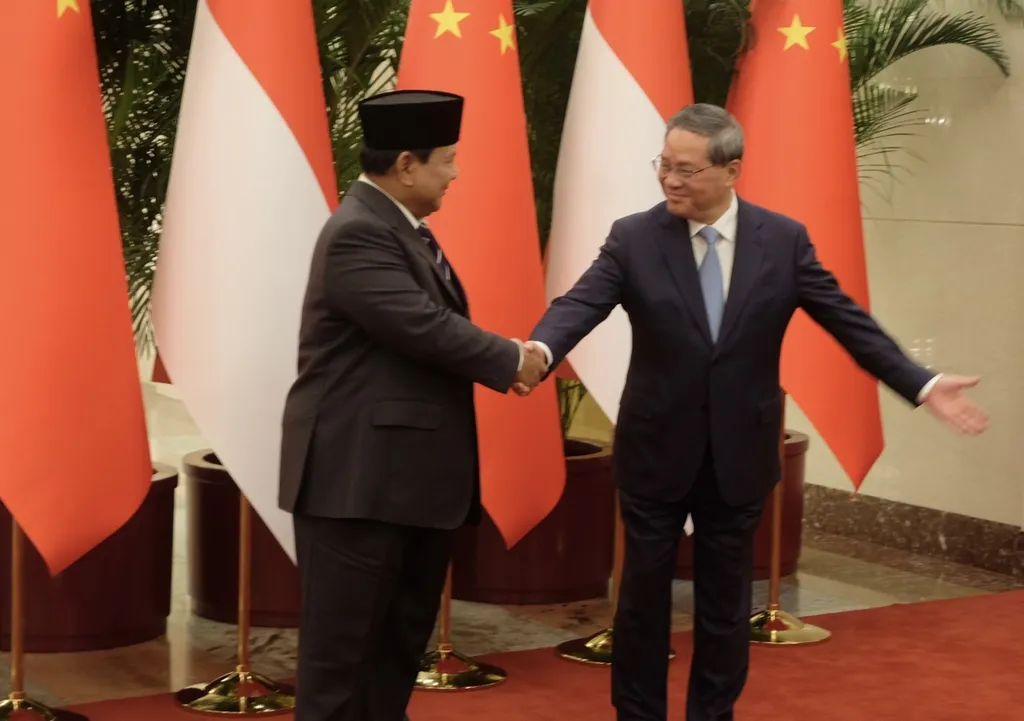
The signing of the memorandum of understanding (MoU) between Danantara and China Investment Corporation (CIC) took place on the sidelines of Chinese Premier Li Qiang’s visit to Indonesia on 24-26 May 2025. The agreement represents an important step in deepening investment cooperation between the two countries and building a long-term platform for economic development.
Danantara Chief Executive Officer Rosan Roeslani, speaking in Jakarta on Monday (26/5/2025), said the MoU establishes a framework for potential joint investment between Danantara and CIC. The aim is to deliver measurable development impact and optimal investment returns with appropriate risk adjustment.
One of the key pillars of the agreement, according to Rosan, is the joint exploration of a China-ASEAN investment programme work plan. This means the proposed investment fund would operate with a broad mandate across various sectors, including industrial manufacturing, consumer goods, healthcare, and technology, as both countries possess significant potential that can be maximised.
The collaboration between CIC and Danantara represents a strategic synergy of shared priorities. CIC holds a mandate to manage China’s foreign exchange reserves through global investment diversification, whilst Danantara serves as a long-term engine for reinvesting Indonesian state assets into future industries. The partnership is believed to go beyond mere financial alignment, representing a shared commitment to reshape the region’s economic landscape.
With more than 800 state-owned enterprises in its portfolio, Danantara is poised to lead in the strategic mobilisation of capital for green industries, food security, and digital transformation. “This is how we build Indonesia’s future economy and strengthen our position on the global stage,” said Rosan.
Danantara was inaugurated by President Prabowo on 24 February 2025. It was established as a sovereign wealth fund (SWF), serving as an investment management institution owned and operated by the Indonesian Government with the objective of generating returns. The institution is projected to manage state-owned enterprise assets worth Rp 14,700 trillion. A similar institution established by the previous administration, the Indonesia Investment Authority (INA), had managed only Rp 160 trillion in funds.
Economist Syafruddin Karimi of Andalas University in Padang said Danantara must be transparent and possess rigorous accountability mechanisms. Supervisory systems must also be created to ensure transparency can be implemented, he added.
Syafruddin further stated that Danantara must avoid high-risk projects that lack clear economic impact, particularly those that benefit only a select few. Danantara must remain free from short-term political interests, with decision-making based on clear economic principles.
“If Danantara encounters financial difficulties, the government must not immediately use state budget funds to bail it out. Risk mitigation mechanisms must be prepared from the outset,” said Syafruddin.