
Danamart Launches Blended Finance to Expand ESG Investment Access in Indonesia
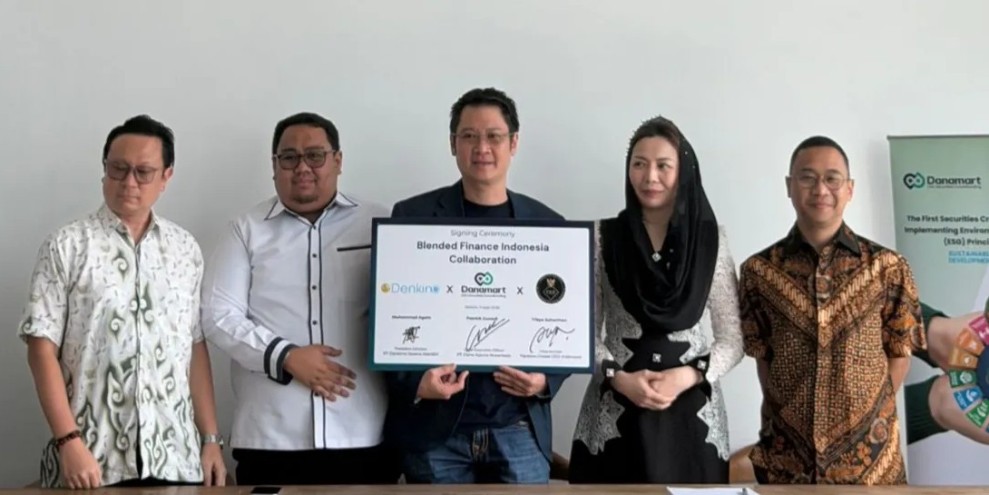
JAKARTA - The development of sustainability-based investments is increasingly gaining attention in Indonesia. As awareness of environmental, social, and corporate governance issues rises, various financing initiatives are being directed to support projects that deliver positive impacts for society.
One of the main challenges in developing Environmental, Social, and Governance (ESG)-based investments is limited access to financing, particularly in sectors with significant social and environmental impacts. To address this challenge, innovative financing models are being introduced to bridge capital needs while expanding investor participation.
It is in this context that the securities crowdfunding company PT Dana Aguna Nusantara, or Danamart, has introduced a new initiative through the launch of a blended finance scheme. This innovation is expected to serve as an initial step in expanding ESG investment access in Indonesia while strengthening the sustainable financing ecosystem.
Through a structured financing approach, the blended finance model enables collaboration between philanthropic capital, investors, and project issuers within a single investment ecosystem. The scheme is designed to reduce risks while increasing the attractiveness of investments in sectors with social and environmental impacts.
Launch of Blended Finance Scheme in Indonesia
The securities crowdfunding or equity crowdfunding company PT Dana Aguna Nusantara (Danamart) has officially launched Indonesia’s first pilot blended finance programme. This initiative represents an important step in developing a financing model that combines various funding sources to support impact investments.
The company, which focuses on the Environmental, Social, and Governance (ESG) segment, explains that this step is the initial phase in building a more structured and sustainable blended finance ecosystem in Indonesia.
Through this structured financing model, Danamart aims to bring together various parties with interests in impact investments. This collaboration includes investors, philanthropic institutions, and project issuers in need of financing.
Danamart CEO Patrick Gunadi explained that this approach allows various funding sources to work together in a complementary investment mechanism.
Investment Approach to Support Sustainable Development
Patrick Gunadi explained that the blended finance approach is designed to address financing gaps in high-impact sectors aligned with the Sustainable Development Goals (SDGs).
The sectors targeted for financing include health, clean water access, and renewable energy development. These three sectors are considered to have a significant impact on improving quality of life for society as well as environmental sustainability.
In addition, the initiative is expected to provide broader social benefits. Patrick stated that the programme also contributes to expanding education access and supporting communities that are not optimally served by conventional financing systems.
“This initiative is not just about donations, but about building investments that can operate and grow,” he said during a press conference in South Jakarta on Thursday (9/4/2026).
Through this approach, investments are not only oriented towards financial returns but also deliver tangible impacts on social and environmental development.
Role of Philanthropic Funds in Reducing Investment Risks
In the blended finance scheme developed by Danamart, philanthropic funds play a crucial role in helping to reduce investment risks in the early stages of projects.
Patrick explained that philanthropic funds are used as a risk mitigation mechanism, thereby giving investors higher confidence to participate in project financing.
Through this mechanism, projects with significant social and environmental impacts can obtain financing support that was previously difficult to access through conventional investment schemes.
Patrick stated that Danamart’s ESG initiative is still in its early stages. Nevertheless, several positive impacts have already begun to emerge from its implementation in Indonesia.
These impacts include increased food security, particularly for 7,000 children. In addition, the programme has successfully helped reduce approximately 11,000 tonnes of carbon dioxide (CO2) emissions.
On the other hand, the programme’s implementation has also contributed to the creation of around 3,000 jobs and improved healthcare access for 12,000 individuals.
Opportunities for Collaboration to Expand ESG Financing
Through this pilot project, Danamart applies a layered financing scheme. In this model, foundation partners act as risk protectors in the early stages of investment.
Patrick explained that this approach helps maintain investment risk stability while opening opportunities for more investors to engage in ESG projects.
Investors who can participate in this scheme are not only from institutional circles but also retail investors who wish to engage in impact investments via the Danamart platform.
Furthermore, Patrick explained that all securities issuances in the programme are managed through Indonesia’s official capital market infrastructure. This process is conducted via the Indonesian Central Securities Depository (KSEI) to ensure transparency, good governance, and investor protection.
Although the blended finance trend is continuously developing globally, Patrick assesses that its implementation in Indonesia is still in the early stages. Therefore, Danamart is striving to encourage broader participation in financing sectors aligned with the SDGs.
Looking ahead, the company also plans to