
Cyber University Student Designs Futures Exchange System
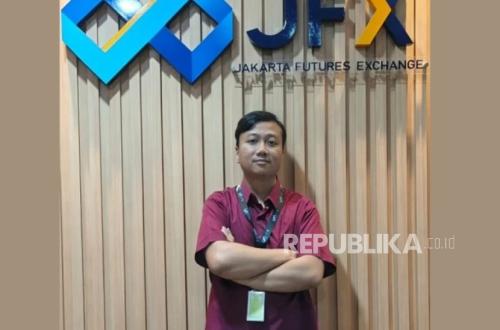
Ignatius Lucky, a student from the Information Systems and Technology (STI) study programme at Cyber University, has been given the opportunity to participate in a strategic project at the Jakarta Futures Exchange (JFX) through the Company Learning Program (CLP) 3+1 internship.
The 2023 cohort student was entrusted to design the full-stack architecture for the Traders Quote MT4 and MT5 systems at one of Indonesia’s futures trading exchanges. During this internship, Ignatius acted not merely as a learner but was directly involved in developing the technological infrastructure that supports the company’s operations.
His responsibilities included designing database structures, API Gateways, Admin Dashboards, and a Market Data Hub. The project required deep expertise in data management, system integration, and information technology security, specifically regarding trading systems that demand high speed and accuracy in financial data processing.
“Interning at the Jakarta Futures Exchange is an extraordinary opportunity for me to step out of my comfort zone. Designing a full-stack architecture to collect data from trading systems such as MT4 and MT5 demands a high level of precision and strong architectural logic,” Ignatius stated on Wednesday.
Throughout the project, he utilised the NestJS framework integrated with SQL Server to build the designed system. This experience provided him with direct insight into how software engineering concepts are applied within a real-world industrial environment. He noted that the academic foundation provided by his university was instrumental in helping him adapt quickly to technologies like NestJS and designing enterprise-scale databases.
The Head of the Information Systems and Technology programme at Cyber University, Neneng Rachmalia Feta, noted that student involvement in large-scale industrial projects serves as vital evidence of the importance of practical-based learning. She stated that such experiences allow students to develop competencies relevant to the current needs of the digital industry.
“Ignatius demonstrates that Cyber University STI students are capable of adapting and contributing to complex technological projects. This experience proves that learning integrated with the industrial world can produce talent ready to face professional challenges,” said Feta. She added that the project required not only technical skills but also analytical, problem-solving, and business-oriented capabilities.
The CLP 3+1 programme implemented by Cyber University follows a concept of three years of academic study followed by one year of internship. The programme is designed to bridge the gap between education and industry through relevant work experience. The success of Ignatius’s project at the Jakarta Futures Exchange (JFX) illustrates how collaboration between universities and industry can unlock opportunities for student competency development.