
Cyber Experts Support Polri in Uncovering Fake e-Ticketing Scam Case: Organised Crime
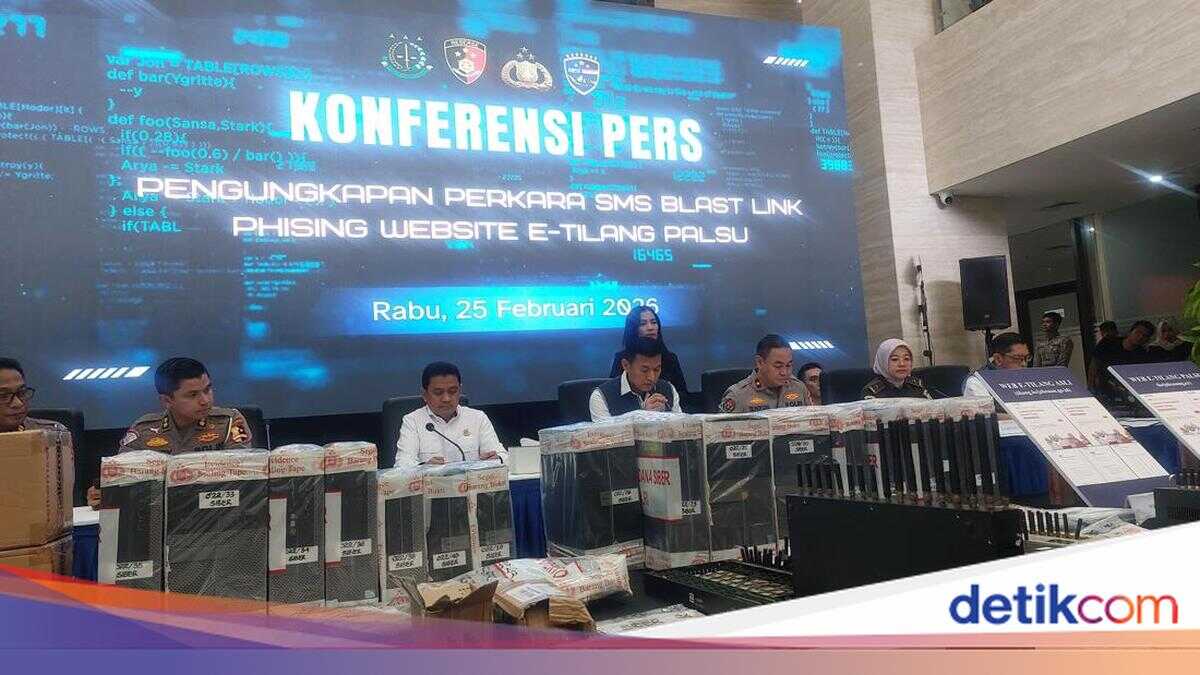
Indonesia’s Cyber Crime Directorate (Dittipidsiber) at the National Police’s Criminal Investigation Command (Bareskrim Polri) has dismantled an SMS blast phishing case mimicking the official e-tilang website. Ardi Sutedja, a cybersecurity expert and practitioner, commended Polri’s enforcement action, characterising the digital fraud as a form of organised crime.
“Cybercrime is no longer perpetrated by individuals, but rather by organised groups possessing resources, expertise, and international networks. They exploit system vulnerabilities, user negligence, and inadequate oversight to carry out their operations,” Sutedja said in a telephone interview on Friday (27 February 2026).
Sutedja, Chairman of the Indonesia Cyber Security Forum (ICSF), stated that Bareskrim Polri’s exposure of the cybercrime network should serve as a serious warning for Indonesia’s digital security. He cautioned that Indonesia has become a target for organised digital crime groups.
“The uncovering of the fake e-Tilang network allegedly controlled by Chinese nationals, as reported in recent news, represents a stark warning for Indonesia’s cybersecurity posture and resilience. The fact that an international syndicate was able to infiltrate our digital systems not only demonstrates weak cyber defences, but also reminds us that Indonesia has become a target of organised digital crime groups with complex motives and objectives,” Sutedja stated.
Sutedja referenced the concept of the “Iceberg of Ignorance” in digital crime, arguing that the currently exposed cybercrime cases represent only a small fraction of cybercrimes that have escaped detection by authorities.
“Most vulnerabilities, threats, and cybercriminal methods remain hidden beneath the surface, far beyond the reach of public knowledge and policymakers’ awareness. We—the public and government—remain largely consumers of digital products and services without sufficient understanding of the hidden layers that are vulnerable to exploitation,” he said.
Beyond enforcement efforts from Bareskrim Polri, Sutedja also urged enhanced digital literacy among the public. He highlighted the need for improved digital security systems using cutting-edge technology, regular audits, and adaptive regulation.
“The fake e-Tilang case is merely the tip of the iceberg of various threats lurking in the digital world. If we remain negligent, the ‘Iceberg of Ignorance’ will continue to grow, and Indonesia’s socio-economic losses will become increasingly inevitable. It is now time for us to move together, building awareness, digital literacy, and robust national cyber resilience,” Sutedja concluded.
As previously reported, Dittipidsiber Bareskrim Polri uncovered an SMS blast phishing case imitating the official e-tilang portal. The fraud syndicate was allegedly controlled by two Chinese nationals.
The case came to light following a report submitted by the Attorney General’s Office (Kejagung) in December 2025 regarding the circulation of fraudulent links impersonating government institutions. The police subsequently initiated proceedings to address the matter.
The National Police Chief General Listyo Sigit Prabowo previously disclosed the case during a working meeting with Commission III of the Indonesian House of Representatives at the parliamentary complex in Senayan, Jakarta, on Monday (26 January). The National Police Chief reported that suspects had been identified in the case.
“One of the prominent cybercrime cases is the handling of SMS blast phishing with the e-tilang modus operandi,” the National Police Chief stated.
The National Police Chief outlined how the case was initially uncovered through reports received by police. Initially, officers identified 11 phishing links and 5 internationally-formatted telephone numbers used in the cybercrime. From this report, similar cases were subsequently discovered in Central Sulawesi Police.
The SMS containing phishing links directed victims to a fake e-tilang website, where they fell victim to fraud.
A total of five individuals have been arrested in the case. Police are currently pursuing two Chinese nationals identified as the intellectual architects of the syndicate.