
Customs Seals 29 Yachts in Jakarta for Breaching Regulations
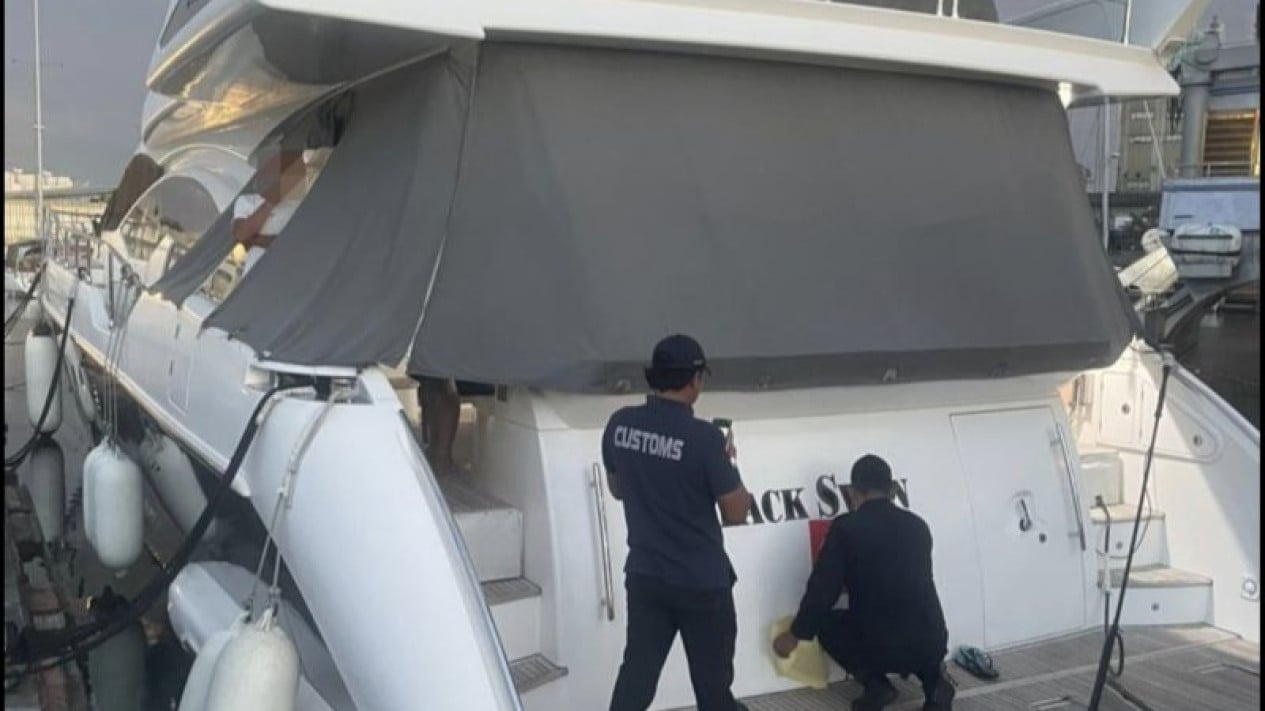
Jakarta, VIVA – The Directorate General of Customs and Excise of the Ministry of Finance’s Jakarta Regional Office has sealed 29 yacht units suspected of violating customs and tax regulations.
The sealing was carried out when officers from the Jakarta Customs Regional Office conducted a high-value goods (HVG) patrol and inspected 112 yacht units, comprising 57 foreign-flagged vessels and 55 Indonesian-flagged vessels.
“Meanwhile, officers sealed 29 foreign-flagged tourist yachts,” said the Head of Enforcement and Investigation Division (P2) of the Jakarta Customs Regional Office, Agus D.P., in his statement in Jakarta on Saturday, 11 April 2026.
Agus explained that field officers discovered suspected violations, including yachts remaining in Indonesian territory despite their entry permits, in the form of vessel declarations (VD), having expired.
Furthermore, the yachts present were not solely used for tourism by their owners or VD holders but were rented out.
“The income obtained was, of course, not reported for income tax,” he stated.
In addition, the yachts that were imported were then sold to Indonesian citizens (WNI), thus failing to meet the customs import obligations for use in Indonesian customs territory.
“For yachts that did not commit the above violations, no sealing was carried out,” Agus said.
Agus further emphasised that HVG patrols with other commodities continue to be conducted by the Jakarta Customs Regional Office. The aim, he said, is to ensure optimal state revenue from high-value goods.
“So far, they have not complied at all or only partially with customs obligations, so they must be regulated,” he revealed.
Furthermore, Agus added that HVG patrol activities are conducted to ensure fiscal justice for all, so that those capable of purchasing HVG goods should contribute more to state financial obligations in the form of import duties and taxes on imports.
“In accordance with the President’s instructions to the Minister of Finance to ensure and use the law to protect the state’s wealth,” he said.
However, Agus stated that the state’s losses in figures cannot yet be disclosed to the public because they are still in the process of research or calculation between the Directorate General of Customs and Excise and the Directorate General of Taxes (DJP). He stressed that officers prioritise thoroughness and caution in calculating the amount of losses due to the alleged violations of customs and tax rules.