
Currency Exchange Surge Before Eid: Islamic Economics Expert Explains How to Avoid Riba
The surge in new currency exchanges ahead of Eid al-Fitr is often accompanied by value discrepancies. An Islamic Economics expert from Airlangga University in Surabaya has warned that informal street currency exchanges carry the risk of riba (usury).
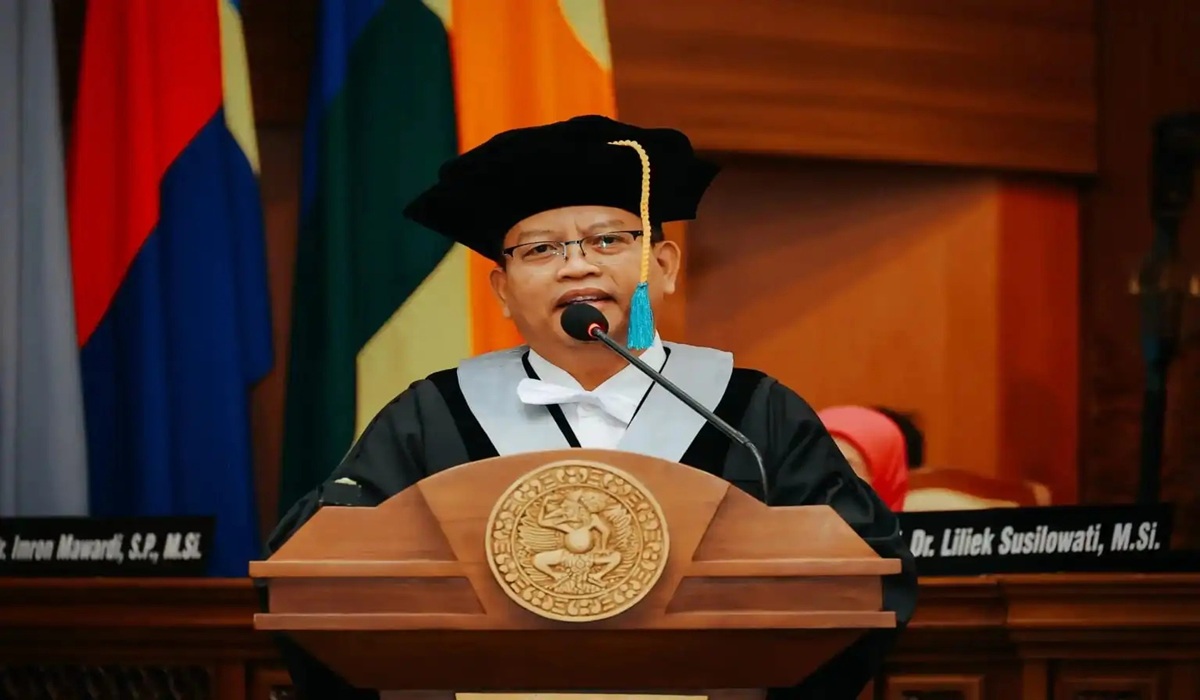
Professor Dr Imron Mawardi, Dean of the Faculty of Economics and Business at Airlangga University (UNAIR), stated that theoretically, money is categorised as a fungible good (barang ribawi), comparable to gold as described in hadith and reinforced by a fatwa from the Indonesian Ulema Council (MUI).
Professor Imron explained that as a medium of exchange, money must be treated according to the principles of equal-value exchange. If money is exchanged for an unequal amount, he stated that such transactions fall into the category of riba fadhl, which is forbidden in Islam.
From an Islamic perspective, the requirements for valid money exchange are that the amounts must be equal and the transaction must be completed on the spot. Therefore, 100,000 rupiah notes must be exchanged for denominations totalling exactly 100,000 rupiah.
“In the MUI fatwa, money is described as a medium of exchange that must comply with hadith. If not exchanged in equal amounts, riba is involved. This is not permissible,” Professor Imron stated firmly.
He added that ignoring the principle of equal value in currency exchanges can damage the blessedness of religious observance, given that the Islamic prohibition on riba is absolute.
Regarding arguments from service providers who claim the difference represents payment for effort or queuing fees, Professor Imron noted that this could be a legally acceptable solution, provided the contract is clearly separated during the exchange transaction.
Separating the nominal value of money from service fees (ujrah) is the best option for avoiding riba practices. Under this arrangement, the public should still exchange equal nominal amounts, whilst queuing fees are paid as a separate and distinct transaction.
Beyond this contractual approach, Professor Imron encourages the public to better utilise official currency exchange systems provided by banks, such as exchanges through Bank Indonesia or using ATMs offering specific denominations still available at certain locations.
“Using online registration through the official bank website is far safer than exchanging on the street corner,” he concluded.
Although street currency exchanges have become an annual practice, public awareness to switch to official channels is crucial for protecting physical safety and ensuring compliance with religious law.