
Currency Exchange Requests for Lebaran 2026 Surge 85% as Indonesian Consumer Activity Accelerates
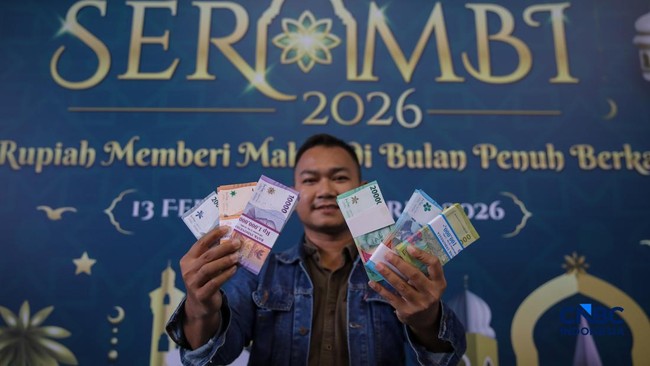
Jakarta, CNBC Indonesia - Bank Indonesia (BI) has recorded a sharp increase in the number of citizens exchanging currency ahead of Eid or Lebaran 2026.
Currency exchange has become a tradition in Indonesia during major religious observances for charitable giving or distributing monetary gifts (angpau) to relatives and loved ones.
“Public demand to exchange Rupiah ahead of Eid 2026 is very high,” said Anwar Bashori, Head of Bank Indonesia’s Currency Management Department, in a written statement on Monday 16 March 2026.
Based on BI data as of 13 March 2026, the number of people exchanging currency through official channels reached 1,076,282 individuals, an increase of approximately 85.4% compared to the previous year’s figure of 580,496 people.
BI believes the high demand for currency exchange correlates with increasingly vigorous household economic activity.
“The high demand and expanded service network demonstrate that citizens’ need for small denominations for charitable sharing traditions, holiday bonuses, and economic activity during Ramadan and Eid remains very substantial,” said Anwar.
To meet these needs, BI claims to have expanded its currency exchange service network from 5,202 locations in 2025 to 9,294 locations this year.
Additionally, on 16-17 March 2026, Bank Indonesia conducted supplementary exchange services called “SERAMBI Peduli Mudik” at 55 service points throughout Indonesia, focusing on areas with high homecoming traffic, such as airports, train stations, terminals, ports, and rest areas, to facilitate currency exchange needs for travellers.
The total quota for these supplementary services reached approximately 11,900 exchange packages.
“Bank Indonesia ensures adequate supply of Rupiah in appropriate denominations through various official service channels, including mobile cash services, integrated services, and banking networks,” said Anwar.
Bank Indonesia urged the public to only exchange Rupiah through official Bank Indonesia and banking services to guarantee currency authenticity and transaction security. Currency exchange through unofficial channels carries various risks, including unverifiable authenticity, inaccurate amounts, lack of consumer protection or liability, and vulnerability to fraud that can cause financial harm to the public.