
Culture Minister Urges Surakarta Palace to Become a Sustainable Cultural Area
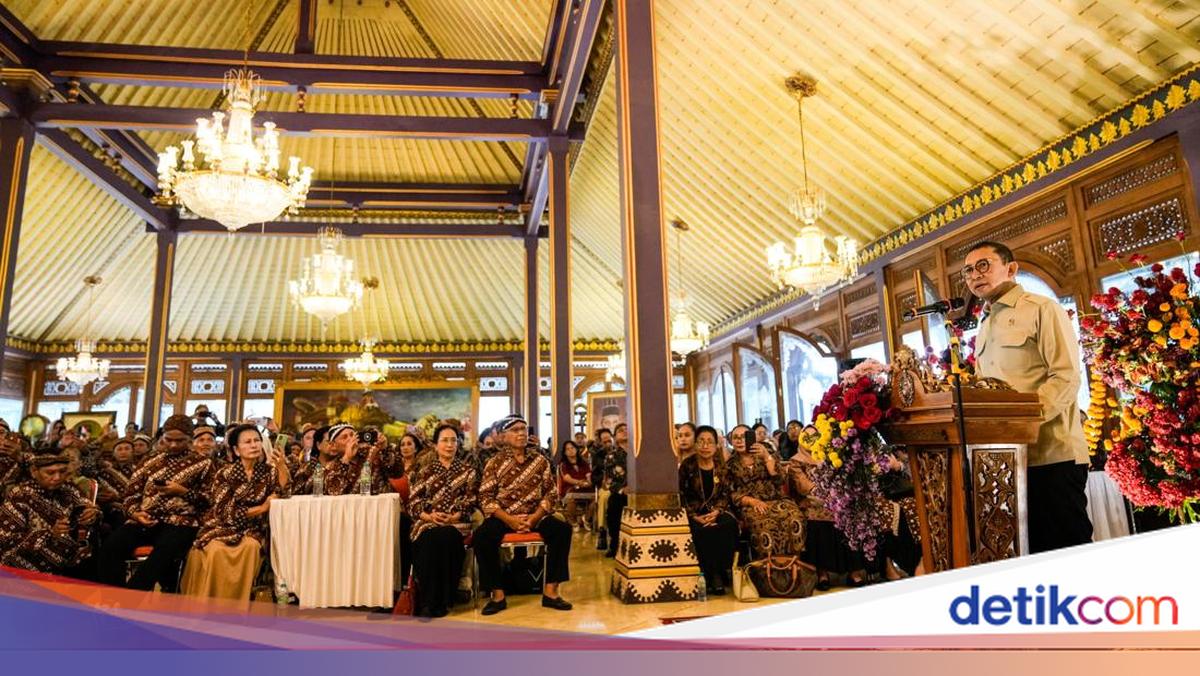
Indonesia’s Culture Minister, Fadli Zon, attended the Eid al-Fitr Silaturahmi event at the Keraton Kasunanan Surakarta Hadiningrat, held at Sasana Handrawina yesterday. The event also served to strengthen joint efforts in protecting, developing, and utilising the keraton cultural heritage area as a national cultural heritage.
In his speech, Fadli extended Eid al-Fitr greetings to the extended keraton family and invited guests. He stressed that the tradition of silaturahmi is part of Indonesia’s cultural richness, reflecting values of togetherness, mutual forgiveness, and strengthening social harmony within society.
Fadli emphasised the important position of the Keraton Kasunanan Surakarta Hadiningrat as a centre of Javanese culture that holds historical values, traditions, and a long civilisation. He stated that the government, through the Ministry of Culture, continues to encourage gradual and sustainable revitalisation efforts for the keraton, museums, and cultural areas.
According to him, revitalisation does not only focus on physical building improvements but also includes strengthening historical narratives, professional management, and the use of technology to enhance public experiences. With this approach, the keraton is expected to develop as a flagship destination that integrates cultural, historical, religious, and educational tourism.
“The Keraton Kasunanan Surakarta Hadiningrat is one of the centres of Javanese cultural civilisation with great potential to become a world-class cultural destination. Through planned and collaborative revitalisation, we aim to present a living, competitive, and sustainable cultural area,” Fadli said in his statement on Friday (27/3/2026).
He also reminded that the keraton’s status as a national-ranked cultural heritage area demands shared responsibility in safeguarding, maintaining, and preserving the values contained within it. This is in line with the constitutional mandate to advance national culture amid world civilisation.
During the event, Fadli also inspected several areas within the keraton complex, including Siti Hinggil and the Keraton Museum. The visit aimed to directly assess the condition of the buildings and the potential for developing the area as a cultural destination.
He also reviewed the Keraton Kilen area, which is planned for revitalisation. This inspection forms the initial part of the revitalisation planning process, encompassing technical studies, mapping, and concept development for area utilisation.
“Keraton Kilen has very important historical value. We will conduct comprehensive studies, planning, and mapping, with implementation targeted to begin this year. In the future, this area will be developed as part of an open museum accessible to the public,” he explained.
Fadli hopes that the Keraton Kasunanan Surakarta Hadiningrat can develop as an icon of Indonesian culture that plays an active role at both national and global levels, in line with the constitutional mandate to advance culture amid world civilisation.
On the same occasion, Panembahan Tedjowulan, as the executor of the protection, development, and utilisation of the Keraton Kasunanan Surakarta Hadiningrat cultural heritage area, stated that Eid al-Fitr is an important momentum to strengthen unity within the keraton environment. He invited the entire extended keraton family to prioritise common interests for the progress and preservation of the keraton.
Panembahan Tedjowulan also appreciated the presence of Fadli and his team, as well as the government’s support in preservation efforts. He affirmed that the keraton area revitalisation plan will be implemented gradually, sustainably, and requires synergy among various parties.
“Eid al-Fitr is a momentum for us all to reunite, strengthen togetherness, and prioritise the keraton’s interests above personal or group interests, for the sustainability and progress of the Keraton Kasunanan Surakarta Hadiningrat,” he said.