
Culture Minister Urges Stronger Cross-Sector Collaboration to Advance Culture
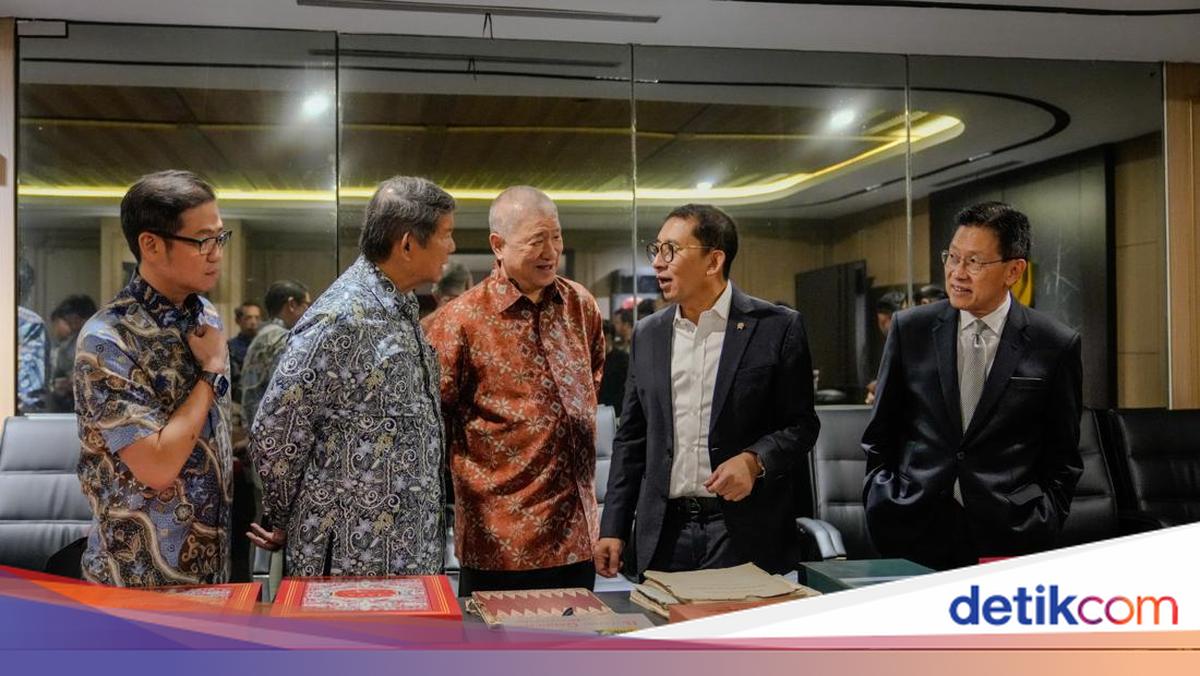
In Jakarta, the Minister of Culture, Fadli Zon, chaired a strategic meeting with the Museum and Cultural Heritage Board (MCB) as part of the ministry’s early-2026 planning at the Ministry of Culture’s offices. The forum served as a dialogue and a strengthening of collaboration between the government and stakeholders in efforts to protect, develop, and utilise Indonesia’s culture. In his remarks, Fadli Zon expressed appreciation to the Board of Patrons for their contributions to promoting culture. He noted that cooperation between the government and the private sector is key to accelerating museum management and the preservation of cultural heritage in Indonesia.
“We express our gratitude for the support and contributions of the Board of Patrons. Collaboration between the government and the private sector is very meaningful in strengthening the management of museums and the sustainable preservation of Indonesia’s cultural heritage,” Fadli Zon said in a statement on Saturday 7 March 2026.
He explained that throughout 2025 various indicators of cultural advancement showed a significant upswing. The Cultural Advancement Index rose well, while public interest in museums increased rapidly. For example, the National Museum recorded around 700,000 visitors per year. At weekends, visitors can reach around 10,000, and even during long holidays the number once reached a record 12,750 visitors in a single day.
He also outlined several important developments, including plans to restore areas of the National Museum affected by a fire. The renovation is planned to start in June 2026 after all design details are completed. In addition, various cultural heritage preservation efforts continue through collaboration with various parties.
Among the programmes underway are the restoration of Plaosan Temple with support from the private sector, the development of the Muara Jambi area, the installation of a chattra at Borobudur Temple planned in the near future, and support for the restoration of the Gunung Padang site. The government is also preparing a programme to organise a number of palaces (keraton) in various regions as part of strengthening cultural tourism destinations scheduled to begin in April.
“Cultural advancement cannot rely solely on the government. We need the spirit of gotong royong from various parties, including the Board of Patrons, so that our cultural heritage can be preserved and utilised optimally,” he emphasised.
In addition to the preservation of cultural heritage, Fadli Zon also noted positive developments in contemporary culture. The national film industry in 2025 recorded a strong performance with the domestic market share of Indonesian films around 67 percent. Several national films drew millions of viewers and strengthened Indonesia’s position in the domestic market. The government is also actively encouraging Indonesian filmmakers to participate in various international festivals, such as the Rotterdam Film Festival, Sundance Film Festival, Cannes Film Festival, and Busan International Film Festival, with the aim of Indonesia being the guest of honour at the Cannes Film Festival in 2028.
In visual arts, the government will facilitate Indonesian artists’ participation in the Venice Biennale 2026 by sending 14 artists. Positive developments are also evident in the performing arts, music, and literature ecosystems, which are receiving increasing international recognition.
At the same time, Esty Nurjadin, head of the Museum and Cultural Heritage Public Service Agency (MCB), reported achievements in 2025. MCB, which manages 19 museums and 34 cultural heritage sites, organised a range of exhibitions, revitalisation programmes, and improvements to museum and site management facilities. Exhibitions included an acculturation exhibition of Chinese influence in Nusantara, the Misykat exhibition on Islamic civilisation in Nusantara, the Nyala 200 Years of Diponegoro exhibition, and other collaborations with international institutions such as the Tokyo National Museum. Revitalisation programmes included improvements to Benteng Rotterdam in South Sulawesi, Benteng Marlborough in Bengkulu, and enhancing security systems for storage of collections at the National Museum. The National Museum now features new facilities, including an entrance hall of around 1,200 square metres, a command centre to monitor activities across units, and the Masjid Samudera Pasai, which can accommodate up to 600 worshippers.
“We are continually striving to improve the quality of museum and cultural heritage management to provide a better experience for the public,” Esty said.
On the Gunung Padang site in West Java, the Chair of the Gunung Padang Restoration Team, Ali Akbar, reported that the research and restoration process had begun several years ago. He explained that the initial research area was a hill covered with vegetation before it was cleared and studied further. The area to be studied covers about three hectares. Future plans include the restoration of several terraces in 2026, the restoration of all terraces and slopes in 2027, and the arrangement of supporting facilities. “This restoration aims to improve the rock structures that exist and to ensure that the site can be studied and preserved properly,” he explained.
On the other hand, Hasyim Djojohadikusumo, chairman of the Board of Patrons of the Museum and Cultural Heritage, expressed appreciation for the government’s efforts to strengthen attention to the culture sector. He assessed…