
Culture Minister Urges Private-Government Collaboration to Develop Mpu Tantular Museum
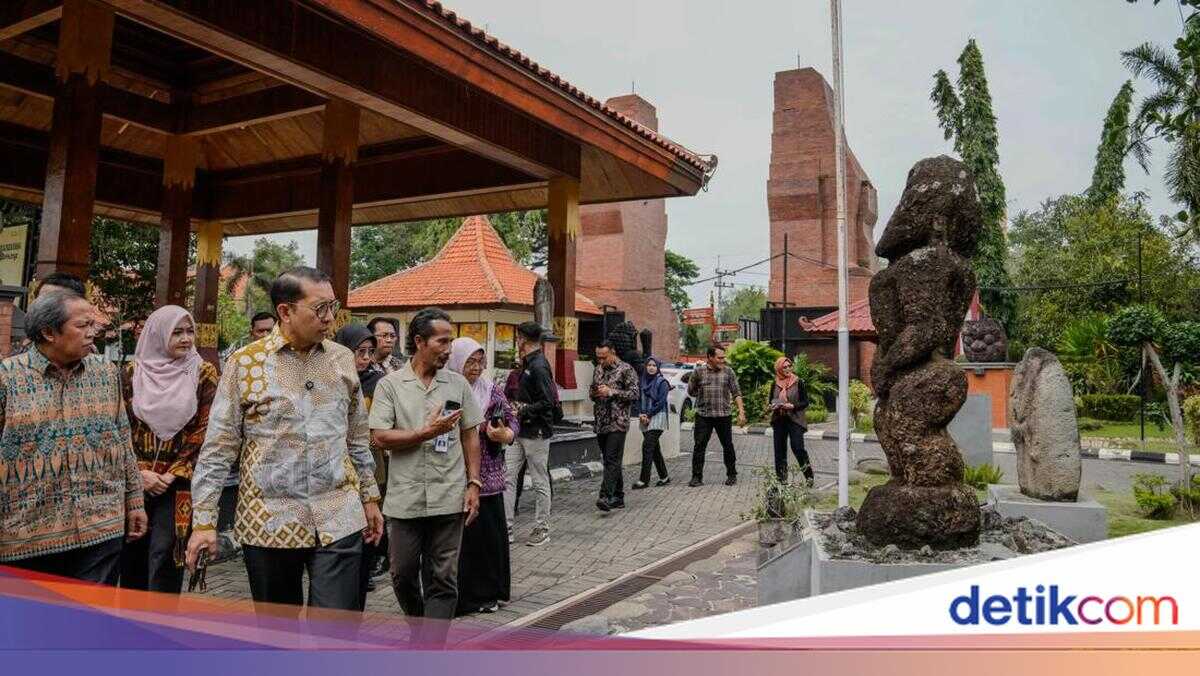
Culture Minister Fadli Zon conducted a working visit to the Mpu Tantular State Museum in East Java to inspect its collections, facilities, and potential for development as an educational and cultural centre.
During the visit on Saturday (21/2), Fadli directly inspected the museum, which houses a significant collection representing the historical journey and civilisation of East Java from prehistoric times through the colonial era.
The Mpu Tantular Museum was previously located in Surabaya and has occupied its new site in Sidoarjo since 2004. The museum currently holds approximately 15,000 items, of which 1,100 are on public display.
Several premier items have been designated as national cultural heritage, including Garudeya-motif jewellery, the Durga Mahisasuramardhini statue, and Homo erectus fossils from Ngawi.
“The Mpu Tantular State Museum is a fairly large museum with grounds of approximately three hectares. It contains a great many items and was historically founded by a Dutch figure named GH Von Faber,” Fadli explained in a written statement on Sunday (22/2/2026).
“This exceptionally valuable collection is vital to preserve,” he added.
Fadli stressed that the Mpu Tantular State Museum is a major institution with an extremely valuable collection and strong potential for development as a centre for historical and cultural learning. He also expressed appreciation for the museum’s standardisation, noting it has regained its Type A museum classification.
According to Fadli, the upgraded status must be accompanied by improved management, particularly in how collections are presented to the public.
“With such an extraordinary collection, we need a strong storyline, a strong narrative, and strong literacy. Revitalisation of exhibition design is an essential requirement to make the museum more appealing to younger generations,” Fadli explained.
“Additionally, proper lighting, exhibition layout, and storyline are needed to make the museum more attractive,” he added.
Beyond exhibition improvements, Fadli also emphasised the importance of developing creative products based on museum collections as part of strengthening the museum ecosystem. According to Fadli, merchandise is important, as objects in the museum can become intellectual property, such as the Garudeya ornaments and various other collection pieces.
Furthermore, Fadli expressed his hope that the Mpu Tantular State Museum could evolve into a living cultural activity space — not merely a storage and exhibition venue, but also an educational centre, information hub, and cultural activity space.
To that end, Fadli stressed the importance of collaboration between the central government, regional governments, and the private sector in supporting museum revitalisation. He noted that central government support would be provided through various non-physical programmes, including educational activities and museum development through special allocation funds.
Fadli also encouraged the involvement of the private sector and philanthropists in museum development across Indonesia. This collaborative approach has already been applied in the development of museums and national cultural heritage sites, yielding positive results with many entrepreneurs voluntarily contributing through grants.
The Ministry of Culture is committed to continuing its support for museum development to fully benefit the public and play an active role in cultural preservation. Various development efforts continue to be pursued, with the involvement of multiple stakeholders serving as the primary key to advancing Indonesia’s museum sector.
The event was attended by East Java Provincial Head of Culture and Tourism Evy Afianasari, Head of Culture Division Sadari, and Mpu Tantular State Museum Head Rica Puspita. Fadli was accompanied by Special Staff for Protocol and Household Affairs Rachmanda Primayuda, Director of History and Museums Agus Mulyana, and Head of Cultural Preservation Centre XI East Java Endah Budi Heryani.