
Culture Minister States Indonesian Music Has Great Potential for Continued Growth
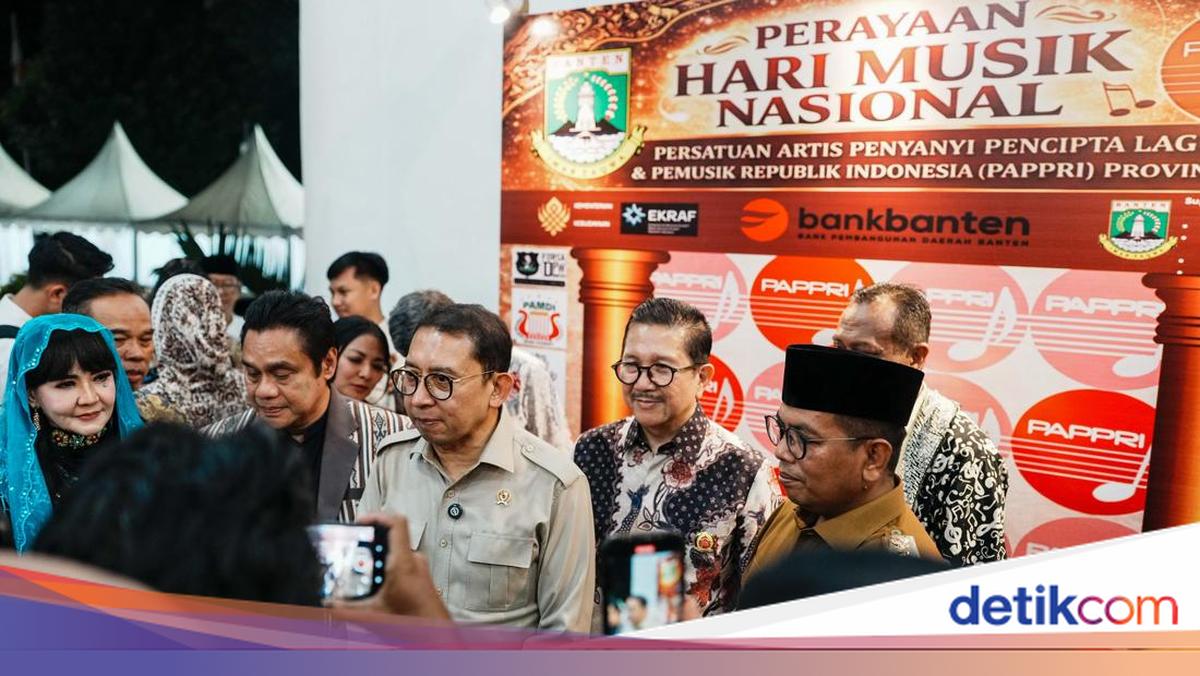
Commemorating National Music Day 2026 on 9 March, Indonesia’s Culture Minister, Fadli Zon, stated that Indonesian music possesses extraordinary wealth. This richness ranges from traditional music to contemporary genres that continue to develop alongside the strengthening of the national music industry ecosystem.
He emphasised the importance of collaboration between musicians, artists, cultural figures, and government at various levels to strengthen the position of Indonesian music both domestically and on the international stage.
According to him, Indonesia possesses immense cultural diversity, including in the field of music. With a population comprising 1,340 ethnic groups and hundreds of traditional instruments, Indonesia’s musical potential is substantial.
“Indonesian music, from tradition to contemporary, has great potential for continued development. We hope the ecosystem improves further through collaboration between musicians, artists, cultural figures, and government at various levels,” said Fadli Zon in a written statement on Tuesday (10 March 2026).
Fadli Zon spoke whilst attending the commemoration of National Music Day 2026, organised by the Association of Indonesian Singers, Songwriters and Musicians (PAPPRI) at Banten State Building on Monday (9 March).
Fadli assessed that music could become one of Indonesia’s cultural strengths in international diplomacy. Several Indonesian musicians have introduced their work on the world stage and opened opportunities for the emergence of an Indonesian music wave at the global level.
“We hope Indonesian music can become one of the cultural frontliners on the international stage. Like other nations that use music as soft power, we also hope to see an ‘Indonesian wave’ emerge from our music,” he stated.
The government continues to give attention to the preservation and development of traditional music, including through the National Talent Management programme. Traditional music constitutes part of cultural identity that must be continuously maintained, especially for young generations.
On the same occasion, the Minister of Creative Economy, Teuku Riefky Harsya, also delivered remarks via video message, stating that National Music Day serves as a momentum to strengthen Indonesian music’s identity whilst expanding its influence on the global stage.
According to him, Indonesian music possesses cultural wealth and the creativity of young generations that is substantial enough to become a force in the creative economy sector as well as national soft power.
“Indonesian music has cultural richness, creativity, and the extraordinary energy of young generations to become a force in creative economy as well as soft power in the world,” said Teuku Riefky Harsya.
Meanwhile, the Labour Minister, Yassierli, stated that music is not merely an expression of culture and creativity, but also constitutes an important part of the national creative economy that contributes to public welfare.
According to him, the government is committed to encouraging the creation of a professional and inclusive creative industry ecosystem, whilst ensuring music workers receive labour protection and appropriate social security.
“Music is not merely an expression of culture and creativity, but also an important part of the creative economy that contributes to public welfare,” said Yassierli.
Meanwhile, Banten Governor, Andra Soni, stated that the commemoration of National Music Day represents appreciation for musicians and efforts to preserve culture and strengthen the role of music as a unifying force for the nation.
He noted that 9 March was chosen as National Music Day as it coincides with the birth date of Wage Rudolf Supratman, the composer of Indonesia’s national anthem “Indonesia Raya”.
“Through music, lyrics, and prayers that we recite together, art can become a language of humanity that unites hearts whilst becoming a force of culture and economy,” said Andra Soni.
PAPPRI’s General Chairman, Tony Wenas, also stated that the concept of National Music Day was first initiated by PAPPRI in 1997. After undergoing various processes, the proposal was finally established officially through Presidential Decree Number 10 of 2013.
He assessed that the momentum of National Music Day represents an important opportunity to preserve cultural identity whilst strengthening the national music industry ecosystem.
“Through Nada Nusantara, we hope to send Indonesia’s resonance throughout the world,” concluded Tony Wenas.
The series of activities was enlivened with various artistic, cultural, and musical performances, including performances from the music group SNADA and singer Ita Purnamasari. The activities concluded with religious exhortation and prayers together accompanied by renditions of Terebeng Gede, one of Banten’s traditional art forms.
Those present on the occasion included the Director General for Cultural Development, Utilisation, and Empowerment, Ahmad Mahendra; the Director of Film, Music and Arts, Syaifullah; the Director of Bank Banten, Muhamad Busthami, and the General Secretary of PAPPRI, Dwiki Dharmawan.
Through the commemoration of National Music Day, the Ministry of Culture remains committed to continuously strengthening the national music ecosystem, both in terms of preserving traditional music and developing contemporary music so that Indonesian music increasingly serves as a cultural force widely recognised on the international stage.