
Culture Minister states commemoration of Sheikh Yusuf's 400th anniversary enters UNESCO agenda
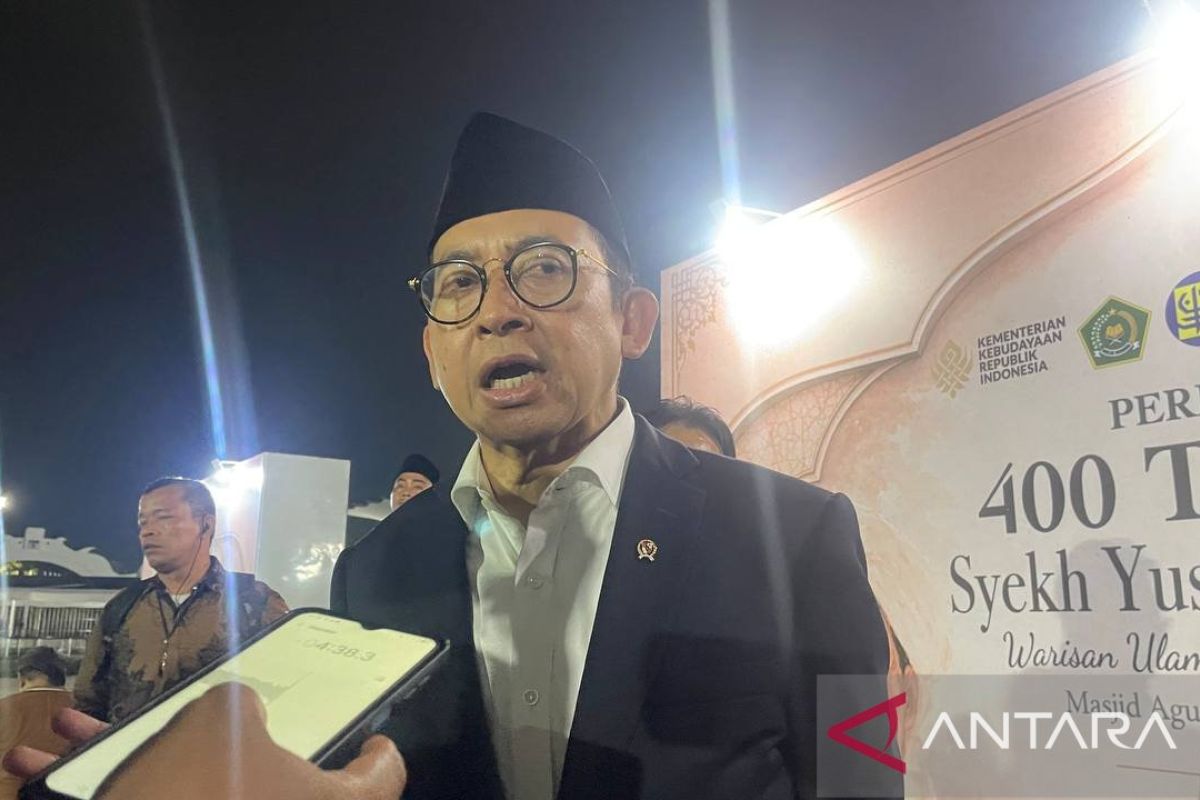
Culture Minister Fadli Zon stated that the commemoration of the 400th anniversary of national hero Sheikh Yusuf Al-Makassari has been officially accepted and included in the agenda of the international organisation UNESCO. “This recognition serves as proof of the historical significance of the scholar-fighter on the world stage of civilisation,” said Fadli Zon during the Commemoration of the 400th Anniversary of Sheikh Yusuf Al-Makassari in the Banten Lama area, Serang City, Banten, on Tuesday evening. He explained that the proposal had been submitted since last year and is now part of the global agenda. According to him, Sheikh Yusuf is an extraordinary figure with a record of struggle across geographies, from the land of Banten, Batavia, Sri Lanka, to the southern tip of the African continent in Cape Town. “In South Africa, Sheikh Yusuf is not merely a religious figure, but a symbol of resistance against racist Apartheid politics,” he stated. According to him, his struggle serves as inspiration for great world figures, including Nelson Mandela, in fighting white oppression that has lasted for decades in the region. In addition to physical development, Fadli emphasised the importance of reviving literacy related to Sheikh Yusuf’s thoughts. He encouraged the publication of the Murshid’s works and supported the idea of producing a feature film so that his exemplary values can be easily accessed by the current generation. Regarding the spread of Indonesian descendants in South Africa, Fadli mentioned a potential of up to 2.7 million people known as the “Cape Malay” community. This number far exceeds previous administrative data, showing the vast impact of the presence of Nusantara fighters who were exiled as political prisoners or slaves during the colonial era. Domestically, the Ministry of Culture is committed to accelerating the status of several sites in Banten Lama to become National Cultural Heritage. Iconic sites such as the Surosowan Palace, Kaibon Palace, and Speelwijk Fort will be studied for restoration in accordance with their historical patterns to be utilised more optimally. “This preservation step is a constitutional mandate under Article 32 Paragraph 1 of the 1945 Constitution to advance national culture amid world civilisation,” he explained. The government hopes that collaboration between the central government, regional authorities, and the community can continue to protect and develop cultural values that form the nation’s identity.