
Culture Minister Inspects Sewu Temple Complex and Ratu Boko Palace, Urges Acceleration of Restoration
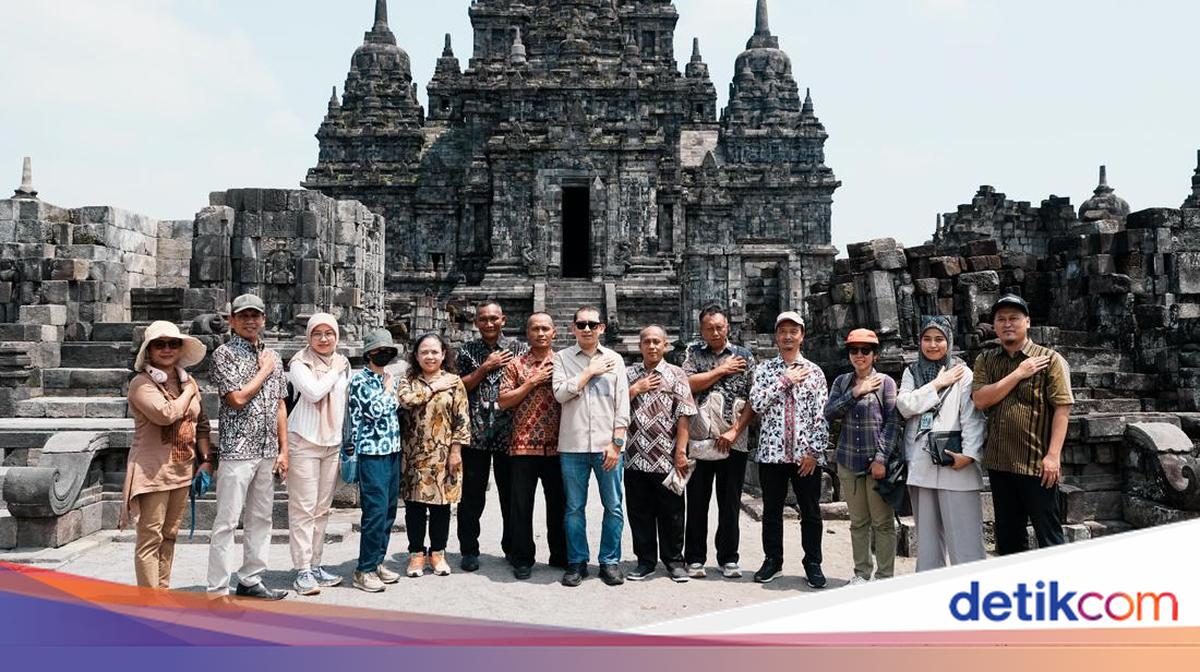
Indonesian Culture Minister Fadli Zon inspected the Sewu Temple Complex and Ratu Boko Palace during his working visit to Central Java and the Special Region of Yogyakarta. During the visit, Fadli stressed the importance of accelerating the restoration of the temple structures.
The existence of the Sewu Temple Complex has been recorded since ancient times in the Manjusrigrha Inscription dated 792 AD. This temple complex consists of one main temple, eight flanking temples, and 240 subsidiary temples.
Fadli stated that Sewu Temple has great potential and requires an acceleration of the restoration process involving various parties. “Proactive strategies are needed to seek support from various parties, namely the central government, local governments, and the private sector, to fund further restoration,” Fadli explained in a written statement on Saturday (18/4/2026).
Furthermore, Fadli affirmed that this commitment is taken because restoration not only relates to preservation but also serves as a strategic investment to enhance cultural, historical, and religious tourism. He hopes that these efforts can provide economic impacts and make the Sewu Temple Complex more intact in the coming years.
Continuing his working visit, Fadli also visited Ratu Boko Palace, which is a national cultural heritage asset spanning approximately 16 hectares in Sleman, Special Region of Yogyakarta. This site is one of the assets of the Ministry of Culture and affirms its position as a node of heritage as well as tourism.
On that occasion, Fadli explained that the attractions of Ratu Boko Palace include the gate architecture, bathing pools, pavilions, and an authentic combination of Hindu-Buddhist structures. Based on inscriptions found, this site was built in the 8th century AD, with a landscape that remains very original.
“We hope that more and more people will visit Ratu Boko Palace. Because here we can enjoy a journey like ‘time travel’ to the past with the extraordinary relics of our ancestors,” Fadli said.
Fadli emphasised that the Ministry of Culture will continue to strive for the strengthening of preservation and utilisation of cultural heritage as part of the national cultural development strategy that is sustainable.