
Culture Minister Highlights Indonesia's Cultural Wealth at UMSURA Studium Generale
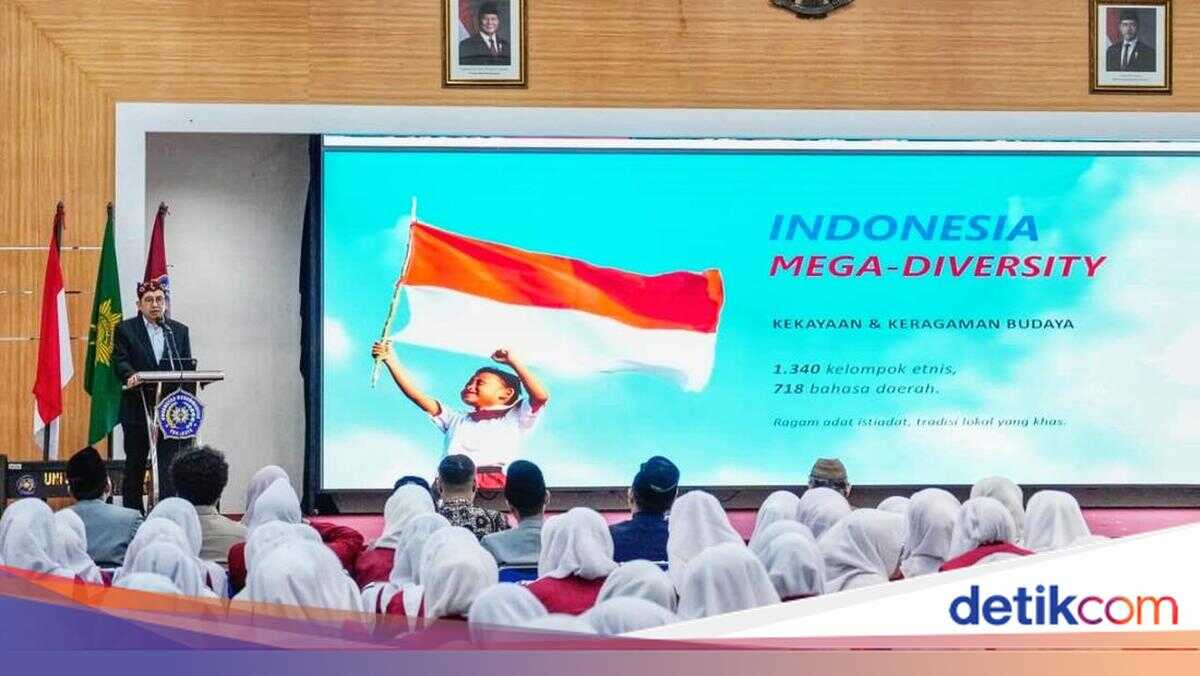
Culture Minister Fadli Zon made a working visit to East Java, attending a Studium Generale at Muhammadiyah University of Surabaya (UMSURA). The event, which formed part of the 2026 Baitul Arqam Mahasiswa programme, was held at the At-Tauhid Tower building under the theme ‘Vision and Strategy for the Advancement of Islamic Culture in Indonesia’.
Baitul Arqam Mahasiswa is an intensive development and cadre-training system mandatory for members, leaders, and the academic community of Muhammadiyah, aimed at strengthening Islamic ideology, commitment to the Muhammadiyah movement, and leadership perspectives.
During the occasion, the minister conveyed that Indonesia possesses an immense and diverse cultural wealth. This richness encompasses languages, oral traditions, manuscripts, customs, rituals, traditional knowledge, local cuisine, traditional games, and the arts.
“With more than 17,000 islands, approximately 1,340 ethnic groups, and hundreds of regional languages, Indonesia is described as a nation of cultural megadiversity, giving it the potential to become a global cultural centre and a superpower in the field of culture,” Fadli explained in a written statement on Sunday (22/2/2026).
He further explained that Indonesia represents a fusion of diverse cultures. Throughout various historical periods, he noted, there were no major cultural conflicts. Islam entered the archipelago peacefully by embracing local traditions and culture. Islam did not destroy traditions except those conflicting with monotheistic principles. Outward forms may change, but the essence is preserved.
Furthermore, he affirmed that Indonesia deeply upholds diversity and tolerance. Islam likewise teaches strong values of tolerance. In the past, Indonesia was dominated by Hinduism and Buddhism, yet Muslims did not damage the existing cultural and historical heritage.
As examples, Borobudur Temple, Prambanan Temple, Mendut Temple, and Plaosan Temple continue to be maintained and preserved to this day as part of the nation’s cultural wealth.
“It is precisely this kind of tolerance that enabled Islam to be readily accepted in various places, including in the archipelago,” he explained.
According to the minister, cultural advancement requires collaboration between central government, regional governments, universities, students, the private sector, and the community. He stressed that culture must become an economic force through the development of culture-based economies and industries. Additionally, culture serves as an instrument of diplomacy and a shaper of national identity.
Meanwhile, UMSURA Rector Mundakir introduced the campus’s new identity with the tagline ‘Home of Champions’. This tagline replaces the previous slogan, ‘Campus of a Million Innovations’, reflecting the aspiration to produce outstanding students and alumni in their respective fields, from academics to sports at the national level.
“Every process here is about becoming a champion. Whether it is track athletes, rock climbers, volleyball players, or students in other academic fields, we encourage them to become champions by the time they graduate,” said Mundakir.
Also present at the event were UMSURA Rector Mundakir, UMSURA Vice Rector I Muhammad Anas, UMSURA LPI Chairman Mungkaiyat Al-Amin, East Java PWM LHKP Chairman Jai Mirdasih, and the wider UMSURA academic community.
Accompanying the minister were Special Staff for Protocol and Household Affairs Rachmanda Primayuda, Director of History and Museums Agus Mulyana, and Head of the East Java Cultural Preservation Centre XI Endah Budi Heryani.
The Culture Minister’s visit was welcomed by the academic community as a strategic moment to strengthen collaboration. UMSURA expressed its readiness to work in synergy with the Ministry of Culture in building national character through the educational pathway, both in student character development and in realising a better cultural vision for the future.