
Culture Minister Emphasises Culture as Future Strength of the Nation
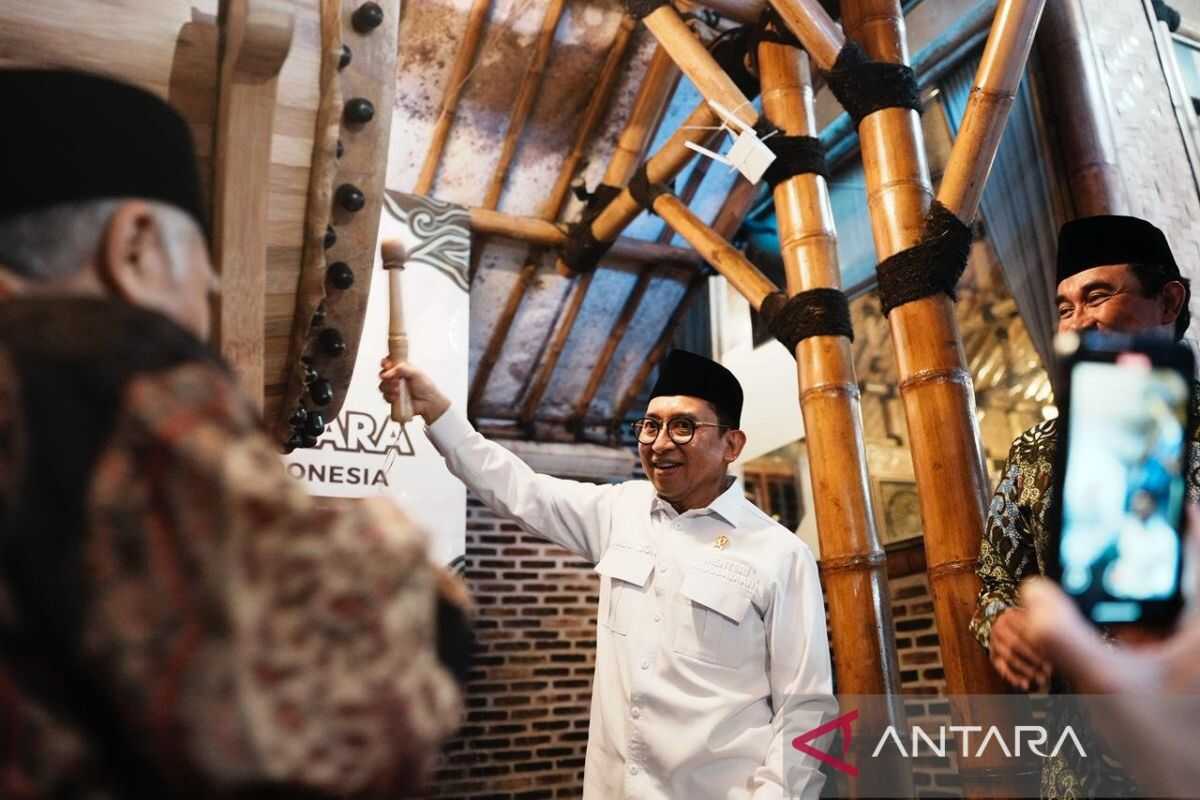
Jakarta — The Culture Minister Fadli Zon has emphasised that culture must become Indonesia’s present and future in order to serve as a strategic force through cultural and creative industries (CCI) and an intellectual property-based economy.
“Culture is a strategic resource and a diplomatic soft power tool. In the cultural sphere, we possess an extremely solid foundation,” Fadli stated in remarks received in Jakarta on Monday.
In the context of national identity, Culture Minister Fadli affirmed that Pancasila represents the crystallisation of the nation’s cultural values excavated by the nation’s founders.
He stated that Pancasila is not merely five principles, but rather the result of deep reflection on the long history of Indonesian civilisation.
Fadli emphasised that Indonesia is a nation with extraordinary cultural wealth, both in terms of quantity and the depth of its historical heritage.
“We possess intangible cultural heritage and cultural properties spread from Sabang to Merauke, from Miangas to Rote Island. Our culture is not only rich, but also ancient,” he said.
The Culture Minister cited recent findings that reinforce Indonesia’s position as a nation with a long civilisation, specifically a publication in the journal Nature on 22 January 2026 regarding the discovery of the world’s oldest known cave paintings, aged 67,800 years, found in Muna, South-East Sulawesi.
According to him, this discovery affirms that Nusantaran civilisation has existed tens of thousands of years ago.
Meanwhile, East Kalimantan’s deputy governor, Seno Aji, stated that the East Kalimantan provincial government continues to place culture as a unifying force in the region’s development vision through the tagline “East Kalimantan Success Towards a Golden Generation”.
He conveyed that East Kalimantan has established a Cultural Park that is utilised by all ethnic groups as a space for cultural expression and interaction.
Deputy Governor Seno Aji also affirmed traces of ancient civilisation in his region through the existence of the 4th-century Kutai Kingdom, evidenced by the Yupa Inscription at Muara Kaman, and its historical continuity from Kutai Martadipura to the Kutai Kartanegara Ing Martadipura Sultanate.
He added that there are 56 cultural properties in East Kalimantan that have been designated by the Ministry of Culture, both tangible and intangible, including recognition of the region’s distinctive cuisine.